
China Top 10 Anti Crack Membrane Manufacturers?

China’s construction market is large, but choosing an anti crack membrane is not a simple brand exercise. The National Bureau of Statistics of China reported construction-industry output of RMB 31.59 trillion in 2023, up 5.8% year on year. That scale supports a broad supplier base, but it does not prove that every product suits every project.

Performance depends on substrate movement, temperature changes, moisture exposure, installation quality, and compatibility with adjoining materials. A membrane suited to a concrete roof may be wrong for a tunnel joint or tiled wet area. Small details matter. Check elongation, tensile strength, crack-bridging capacity, thickness, and the test methods behind each value. UNEP and the Global Alliance for Buildings and Construction reported that buildings and construction accounted for about 32% of global energy use and 34% of energy- and process-related CO₂ emissions in their 2024 Global Status Report. That wider context makes durable material choices relevant, though it cannot prove one membrane is environmentally superior.

This guide examines ten China-based manufacturers, comparing product focus, documented capabilities, quality controls, and export experience. Public market reports rarely separate anti-crack membranes from broader waterproofing categories, so a precise sales ranking would be misleading. This is a practical shortlist, not a definitive league table. Buyers should verify specifications against site conditions and applicable standards before ordering. Even a strong membrane can fail when substrate preparation is poor or detailing is rushed. No product is perfect. The goal is to identify credible suppliers and ask better questions before samples, site trials, and procurement decisions.

China Top 10 Anti Crack Membrane Manufacturers?

What Is Anti-Crack Membrane and How Does It Work?

What Is Anti-Crack Membrane and How Does It Work?

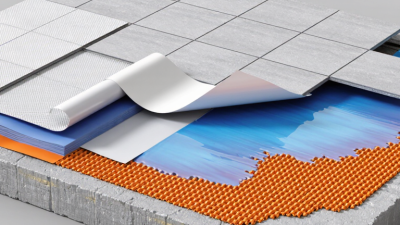
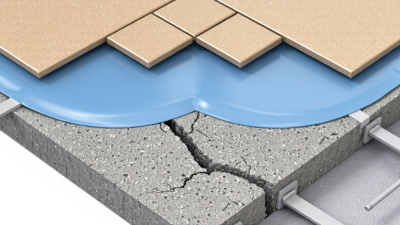
An anti-crack membrane is a flexible layer between a substrate and its finish. It helps accommodate small movements and limits crack transfer into tile or other surface materials. Concrete may shrink as it cures, while temperature changes can make slabs expand and contract. The membrane stretches across minor gaps instead of letting every movement reach the finish. Small movement matters. It does not repair unstable concrete or stop structural movement.

Performance depends on the product, thickness, preparation, and installation details. EN 14891:2012 assesses crack-bridging ability for waterproofing products beneath tiled finishes, with test thresholds of 0.75, 1.5, and 2.5 mm. These are laboratory benchmarks, not a promise that every installed floor can tolerate the same opening. ACI 224R-01 also discusses how concrete cracking relates to restraint, shrinkage, and temperature. On site, dust, pinholes, or thin coverage can weaken the system. A passing test result is useful, but it cannot replace sound substrate inspection.

Tips: Check the membrane’s test standard and rated crack width. Follow the stated coverage and curing time, especially around corners and drains. Photographing the substrate before installation can help document its condition.


How Are Chinese Anti-Crack Membrane Manufacturers Evaluated?

How Are Chinese Anti-Crack Membrane Manufacturers Evaluated?

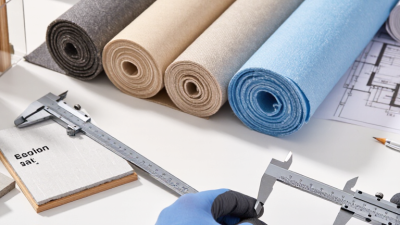
Evaluating Chinese anti-crack membrane manufacturers starts with measurable performance, not catalogue claims. Buyers should request crack-bridging, tensile strength, elongation, water-resistance, and low-temperature flexibility results. Ask which test method and specimen thickness were used. For liquid-applied products, ASTM C1305 measures crack-bridging ability; results should match the intended application. Numbers are context. Grand View Research estimated the global waterproofing membrane market at USD 31.2 billion in 2023, with projected growth through 2030. That market estimate signals demand, not product quality.

Factory review matters too. Check whether the manufacturer controls raw-material batches, production conditions, and finished-product sampling. Request dated test reports from an accredited laboratory, plus technical data and installation instructions. Compare reported performance with the same standard and test conditions. A high elongation figure alone can mislead if the sample was unusually thin. Small details matter. Inspect packaging seals, labels, and stored samples; ask how the product performs after heat and water aging. Paperwork can still look convincing. A trial installation on a representative substrate can reveal handling issues, weak adhesion, or cracking at joints. Record results, and verify that the supplied batch matches the tested formulation.

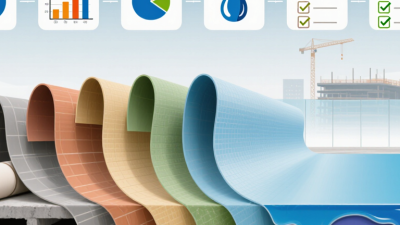
How Chinese Anti-Crack Membrane Manufacturers Are Evaluated

Suggested evaluation framework — proposed weighting of key criteria, not a ranking or measured data for specific manufacturers.

Assess membrane performance using product-appropriate test methods, including crack-bridging capacity, mechanical properties, and durability. Also review installation compatibility, batch-to-batch quality controls, and supporting technical documentation. The weighting should be adjusted to suit the project, substrate, and exposure conditions.

Profiles of 10 Leading Anti-Crack Membrane Manufacturers in China

China’s anti-crack membrane manufacturers are best compared through technical profiles, not a simple ranking. The National Bureau of Statistics reported that China’s construction industry recorded 31.6 trillion yuan in output value in 2023, up 5.8% year on year. This scale signals substantial demand for durable building materials, but it does not prove that every membrane performs well. A useful review of ten manufacturers should examine product focus, production capacity, quality control, and documented project experience.

Some manufacturers specialize in polymer-modified bitumen sheets; others focus on self-adhesive membranes or reinforced composite products. Compare crack-bridging performance, elongation, aging resistance, and seam adhesion under relevant test conditions. Ask how results are verified and whether test documents match the product batch. A profile should also explain substrate requirements and installation limits. These details matter on a cold, damp site, where even a strong membrane can fail if the surface is poorly prepared.

Tips: Check applicable test standards and request current, traceable reports before comparing suppliers. Review warranty terms and installation guidance, too. No datasheet can remove site risk; a tidy specification may still overlook workmanship or substrate preparation. That gap deserves attention.

How Do These Manufacturers Compare in Products and Capabilities?

China’s top ten anti-crack membrane manufacturers differ less by catalogue size than by material design and verified performance. Some focus on self-adhesive or modified-bitumen sheets; others offer liquid-applied polyurethane and acrylic systems. These formats suit different details, from broad roof areas to awkward corners and pipe penetrations. Fit matters.

A useful comparison checks crack-bridging capacity, tensile strength, elongation, low-temperature flexibility, and water resistance. Ask for test reports that identify the method, sample thickness, and conditioning; figures without these details are hard to compare. The ASTM International standards for roofing and waterproofing tests provide useful reference points, but laboratory results do not guarantee field performance. Substrate preparation, joint movement, and installation quality still matter.

The market context is expanding, though estimates cover more than anti-crack products alone. Grand View Research’s 2023 waterproofing membrane market analysis valued the global market at about US$31.1 billion and projected a 6.8% compound annual growth rate from 2024 to 2030. That broad forecast cannot rank individual suppliers. For a shortlist, compare production capacity, batch traceability, technical support, and documented project experience. One weakness in many comparisons is overreliance on headline specifications; actual site conditions can expose gaps.

How to Choose an Anti-Crack Membrane Manufacturer in China?

Choosing an anti-crack membrane manufacturer in China starts with the project, not a catalogue. Describe the substrate, expected movement, water exposure, temperature range, and installation method. A membrane suited to a stable indoor slab may not perform well on an exterior deck. Request technical data sheets and independent test reports. Confirm that the test methods match your intended application. Details matter.

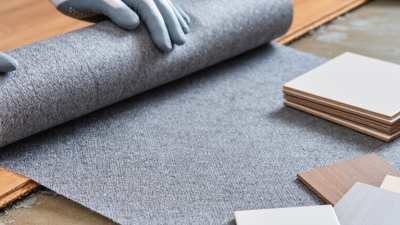
Ask for a sample roll and check its thickness, flexibility, surface, and bonding with your actual adhesive or coating. A small trial on concrete can reveal peeling, wrinkles, or difficult seams before a large order arrives. Ask how the manufacturer controls raw materials, batch consistency, and final inspection. Useful evidence includes dated inspection records, batch labels, and clear procedures for handling defects. Do not rely on a polished brochure alone.

Visit the production site when practical, or arrange a live video walkthrough. Check whether staff can explain production steps and answer technical questions clearly. Confirm lead times, packaging, shipping protection, and post-delivery installation support. Compare two or three quotations against the same specification; the cheapest offer may mean thinner material or weaker documentation. No checklist is perfect. Keep key details in writing, and question assumptions that sound convenient.

China Top 10 Anti Crack Membrane Manufacturers? – How to Choose an Anti-Crack Membrane Manufacturer in China?

A brand-neutral comparison framework: use these ten criteria to assess manufacturers. Standards and evidence should be checked against the intended product type and project requirements.

No. Evaluation dimension What to verify Useful evidence or reference Practical selection check
1 Product type and intended use Confirm whether the product is a sheet membrane, liquid-applied membrane, or another system, and whether it is intended for floors, walls, wet areas, or exterior installations. Technical data sheet (TDS), installation instructions, and stated substrate and application limits. The product documentation should match the project’s substrate, finish, exposure, and installation method.
2 Crack-isolation performance Check whether the product has been evaluated for crack isolation and whether the test method and claimed performance apply to the supplied product. ANSI A118.12 is a recognized specification for crack-isolation membranes used beneath ceramic tile. Request the full test report and confirm the product name, test method, laboratory, and report date.
3 Waterproofing performance For wet-area applications, verify water impermeability, treatment of seams and corners, and compatibility with drains and penetrations. ANSI A118.10 addresses load-bearing, bonded, waterproof membranes for thin-set ceramic tile and dimension stone installations. EN 14891 covers liquid-applied water-impermeable products beneath ceramic tiling. Check that the applicable standard and test scope correspond to the membrane type and intended installation.
4 Independent testing and traceability Establish whether performance claims are supported by a test report for the exact formulation and production source being offered. Complete laboratory reports identifying the sample, methods, results, testing date, and issuing laboratory. Treat a certificate or summary without product identification and supporting results as incomplete evidence.
5 Manufacturing quality management Review documented controls for incoming materials, production, inspection, batch identification, and handling of nonconforming products. A current ISO 9001 certificate can indicate a quality-management system; verify its scope, validity, and issuing certification body. Ask for batch-level quality records and the process for investigating and resolving product complaints.
6 Installation guidance and system compatibility Confirm substrate preparation, primer requirements, adhesive or mortar compatibility, coverage guidance, curing conditions, and detailing instructions. Current installation manual, compatible-product list, and written technical support for the proposed assembly. Prefer a manufacturer that documents the complete assembly rather than making unsupported claims about the membrane alone.
7 Environmental and health documentation Review product composition disclosures, safety information, emissions claims, and applicable regulatory documentation for the destination market. Safety Data Sheet (SDS), technical documentation, and third-party environmental or emissions reports where relevant. Verify that documents apply to the specific product and market; do not assume one certificate covers every formulation.
8 Production capacity and consistency Assess the supplier’s ability to meet forecast quantities while keeping product specifications and packaging consistent between batches. Production plan, sample batch records, capacity statement, and agreed inspection or pre-shipment procedures. Confirm lead times, order-change controls, and how specification changes are communicated and approved.
9 Packaging, storage, and logistics Check packaging protection, labeling, shelf-life information, storage conditions, and suitability for the planned transport route. Product labels, packaging specifications, shipment documents, and written storage and handling instructions. Agree on packaging, shipment inspection, and responsibility for transit damage before placing an order.
10 Technical service and after-sales support Determine how the supplier handles sample requests, installation questions, site issues, complaints, and corrective actions. Written support process, named technical contact, warranty terms, and documented complaint-resolution procedure. Request written responses to project-specific questions before ordering and confirm support availability in the destination market.

Note: This framework does not rank or identify individual companies. Always verify current certificates, test reports, and product claims directly with the supplier and the relevant standards body.

Resources

Copyright © CUSTOM Building Products 2025
Products | Resources | Interactive Tools | Warranties | Privacy Policy | Terms of Use | Technical Training