
China Top Crack Suppression Membrane Suppliers?

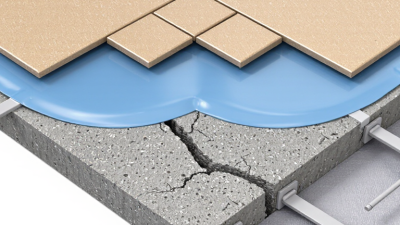
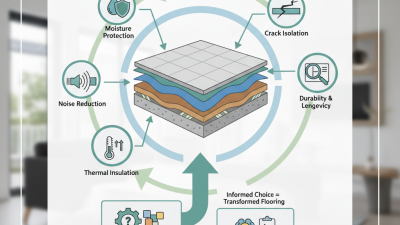
Choosing among China’s top crack suppression membrane suppliers requires more than comparing prices or glossy product photographs. The right membrane must match the substrate, climate, movement level, and installation method. A concrete deck near the coast faces different risks from an indoor warehouse floor. Salt, moisture, thermal cycling, and poor surface preparation can quietly weaken performance.

Professor Victor C. Li, a leading researcher in engineered cementitious materials, has stated, “Crack control should be designed into materials, not left to chance.” This principle matters when evaluating every crack suppression membrane. Look for documented tensile strength, elongation, thickness tolerance, vapor resistance, and compatibility with adhesives or coatings. Independent test reports are valuable. So are traceable factory records and completed projects.

Supplier claims still need careful questioning. Ask whether the membrane was tested after aging, not only when new. Request installation guidance, batch numbers, warranty terms, and technical support contacts. A supplier that explains limitations may be more reliable than one promising universal protection. That detail often reveals experience.

There is no perfect membrane.

Even reputable products can fail when concrete remains dusty, damp, or structurally unstable. Buyers should therefore assess quality control, production capacity, export experience, and response times together. This guide examines leading Chinese manufacturers through those practical criteria. It also considers where evidence remains incomplete, because a confident catalogue cannot replace site performance.
China Top Crack Suppression Membrane Suppliers?

Market Scope: What Defines a China Crack-Suppression Membrane Supplier?

China’s crack-suppression membrane supplier market covers more than factory production. It includes formulation, reinforcement, testing, installation guidance, and export documentation. Grand View Research valued the global construction chemicals market at approximately US$86 billion in 2023. Its forecast also indicates continued growth through 2030. This expansion increases demand for dependable crack-isolation systems.

A qualified Chinese supplier should show membrane thickness, tensile strength, elongation, water resistance, and crack-bridging results. Test methods should reference standards such as ASTM C627, ASTM C920, or relevant EN procedures. Independent laboratory reports matter more than attractive product sheets. Factory audits should examine coating lines, curing controls, batch traceability, and storage conditions. Small details matter.

Experience is visible on site. Ask for records from tiled floors, balconies, wet rooms, and large commercial areas. The supplier should explain substrate preparation, primer selection, seam treatment, and temperature limits. The China Construction Industry Association has repeatedly emphasized quality control and durability in building projects.

Yet a laboratory result does not guarantee field performance. I have seen specifications ignore dusty concrete, poor drainage, and rushed installation. That weakness deserves scrutiny.

A strong supplier should admit limitations, provide corrective procedures, and retain samples from every production batch. Cost alone is a poor market definition. Reliability is built through repeatable evidence.


Material Classes: PVC, TPO, HDPE, and Liquid-Applied Membranes

China Top Crack Suppression Membrane Suppliers?

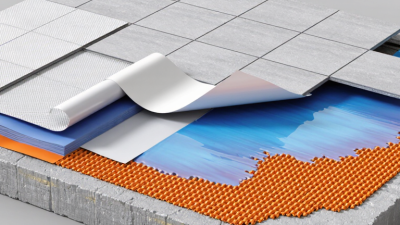
Selecting crack suppression membrane suppliers in China requires more than comparing price lists. Project conditions decide whether PVC, TPO, HDPE, or liquid-applied systems perform reliably. A qualified supplier should provide technical data, batch records, installation guidance, and test results from recognized laboratories.

PVC membranes offer flexible seams and practical detailing around drains. They suit many roofs and below-grade applications. TPO systems provide strong weather resistance and heat-welded joints. Their performance depends heavily on welding temperature and surface cleanliness. HDPE membranes resist chemicals and moisture well. However, their stiffness can make corners and penetrations difficult to detail.

Liquid-applied membranes form a continuous layer around irregular surfaces. They can work well on balconies, joints, and repaired concrete. Moisture in the substrate may cause blistering or weak adhesion. Field checks matter.

Do not trust samples alone.

Experienced suppliers should explain crack-bridging results, elongation, thickness tolerance, and aging tests. Ask for project references with similar climate and substrate conditions. On site, inspect overlap width, primer coverage, weld quality, and membrane thickness. Small installation errors can defeat an otherwise capable material.

A practical concern remains: laboratory results rarely capture every site problem. I would request a trial area before full installation. It may reveal dust, trapped moisture, or unsuitable detailing that drawings overlook. Supplier communication after delivery also matters, especially when construction conditions change.

Performance Benchmark: ASTM C836 Requires About 300% Elongation

China Top Crack Suppression Membrane Suppliers?

For crack suppression membranes, elongation is a practical performance signal, not just a catalog number. ASTM C836 commonly points to about 300% elongation for suitable elastomeric waterproofing systems. This allows the membrane to stretch as concrete moves, shrinks, or develops small cracks. In site inspections, poor flexibility often appears around joints, corners, and uneven substrates. A strong supplier should provide current test reports, batch traceability, and clear curing conditions.

Tips: Ask whether the 300% figure applies to the finished membrane or a laboratory sample. Check test temperature, specimen thickness, tensile strength, and recovery after stretching. Review the technical data sheet carefully. Small details matter.

A reliable Chinese manufacturer should connect laboratory results with production discipline. Look for controlled raw materials, consistent mixing, and documented quality checks. Request recent ASTM-based testing from an independent laboratory when possible. Also examine adhesion, water resistance, low-temperature flexibility, and crack-bridging behavior. These properties work together on real roofs and below-grade structures. A membrane may reach 300% elongation and still fail because the surface was damp or contaminated. That part is easy to underestimate. I have seen specifications look excellent while application guidance remained vague. Better suppliers explain limits, preparation steps, and repair procedures without hiding weaknesses. Performance should be judged by evidence, not confident wording.

Compliance Check: GB/T 23457, ISO 9001, and Factory Quality Controls

China Top Crack Suppression Membrane Suppliers?

When evaluating Chinese crack suppression membrane suppliers, compliance should come before price or marketing claims. GB/T 23457 may define relevant waterproofing performance, but buyers must confirm the applicable product category and test requirements. A valid report should show product specifications, testing dates, laboratory details, and measured results. ISO 9001 demonstrates a quality management system, not automatic product compliance. This distinction is often overlooked.

A reliable factory should control raw materials, coating thickness, tensile strength, elongation, dimensional stability, and aging resistance. During a factory visit, check calibrated testing equipment, sealed sample storage, and batch records. Production labels should link each roll to raw material lots and inspection results. Factory staff should explain failed-batch procedures clearly. Vague answers are warning signs. Independent testing can add confidence, especially for large construction projects.

Tips: Request recent GB/T 23457 test evidence and the supplier’s ISO 9001 certificate. Compare certificate details with the actual factory address. Ask for three consecutive batch records, not one perfect sample. Inspect membrane thickness at several points across one roll. Small variations matter. A supplier may pass a laboratory test yet struggle with daily process control. Buyers should also review installation guidance, storage conditions, and complaint records. No audit is flawless; even experienced teams can miss humidity changes or inconsistent substrate preparation. Reflective evaluation remains necessary before approving long-term supply.

China Top Crack Suppression Membrane Suppliers? - Compliance Check: GB/T 23457, ISO 9001, and Factory Quality Controls

This checklist is designed for supplier screening. GB/T 23457-2017 applies to pre-applied waterproofing sheets; applicability must be confirmed against the product structure, intended use, and declared technical specification. No supplier-specific certification or performance claim is made in this table.
Compliance Area Verification Point Objective Evidence to Request Acceptance Basis Screening Status
Product Standard Declared applicability of GB/T 23457-2017 Current product technical specification, declaration of conformity, and test report identifying the exact product construction Product scope and construction are consistent with the applicable edition of GB/T 23457 Verify
Product Standard Dimensions and appearance Incoming and finished-product inspection records covering length, width, thickness, roll condition, surface defects, and visible damage Results comply with the approved product specification and the applicable standard requirements Verify
Product Performance Tensile strength and elongation Third-party or qualified in-house laboratory report with test direction, conditioning, method, sample identification, and measured results Measured values meet the approved grade and product specification; test method is traceable Verify
Product Performance Water tightness and resistance to hydrostatic pressure Test report stating pressure level, duration, specimen preparation, failure criteria, and result No leakage or failure under the conditions required by the applicable specification Verify
Product Performance Peel strength and interface compatibility Peel or bonding test records using the declared concrete or substrate condition, including curing and test-age details Results meet the approved product specification and intended installation system requirements Verify
Quality Management ISO 9001:2015 certification validity Certificate showing legal manufacturing entity, certified site address, scope, certification body, certificate number, issue date, expiry date, and surveillance status Certificate is current, independently verifiable, and its scope covers manufacture of the offered membrane or waterproofing product Verify
Quality Management Document and change control Controlled specifications, drawings, formulas or bill of materials, revision history, approval records, and engineering-change notices Only approved revisions are used in production, inspection, packaging, and customer documentation Verify
Incoming Control Raw-material identification and inspection Approved supplier list, certificates of analysis, incoming inspection records, lot identification, and quarantine procedure Materials are released only after defined checks and remain traceable to the finished roll or batch Verify
Process Control Production parameter monitoring Batch records covering temperature, line speed, coating or lamination conditions, material ratios, and operator sign-off where applicable Critical parameters have defined limits, are recorded, and trigger corrective action when out of control Verify
Laboratory Control Testing equipment calibration Calibration certificates, equipment register, calibration intervals, reference standards, and out-of-calibration assessment records Equipment is calibrated or verified at planned intervals with traceability to recognized measurement standards Verify
Final Inspection Lot release and sampling plan Inspection plan defining lot size, sample quantity, test frequency, acceptance criteria, nonconforming-product controls, and release authorization Every released lot has documented acceptance evidence and a unique production or batch code Verify
Traceability Roll, batch, and shipment traceability Sample label, production record, raw-material lot linkage, inspection report, packing list, and shipment record A shipped roll can be traced backward to production date, materials, operators, test results, and release decision Verify
Corrective Action Complaint and nonconformity management Nonconformity reports, root-cause analysis, corrective-action records, effectiveness reviews, and customer complaint log Problems are contained, investigated, corrected, and reviewed for recurrence prevention Verify
Supplier Audit Factory capability and audit readiness Manufacturing-flow diagram, equipment list, quality organization chart, internal-audit reports, and recent production records with sensitive data redacted Declared capacity, process flow, personnel, equipment, and quality controls are consistent and auditable Verify
Recommended decision rule: approve a supplier only after the certificate scope, product-standard applicability, representative test reports, calibration status, batch traceability, and factory quality records have been independently verified for the exact product offered.

Supplier Ranking: Compare Crack Bridging, Thickness, Capacity, and Projects

A credible ranking of China’s crack suppression membrane suppliers should compare verified performance, not catalogue language. EN 1062-7 classifies crack bridging from A1 to A5, making test class more useful than the phrase “high elasticity.” A 2024 Grand View Research market report identifies construction chemicals as a growing global sector, with renovation and infrastructure supporting demand. That growth also increases the risk of rushed supplier selection.

Crack bridging is the first filter. Ask for third-party results at the intended temperature, substrate, and film thickness. A membrane that bridges 2 mm at 23°C may behave differently at 5°C. Thickness needs equal attention. Wet-film and dry-film values should be listed separately, with application tolerance included. Some technical sheets look precise. Field application is not.

Production capacity should be checked through audited records, not stated monthly output. Request batch size, quality-control frequency, and recent delivery evidence. Project references should show climate, substrate type, membrane consumption, and repair history. A 2023 McKinsey infrastructure review noted persistent cost and schedule pressure across construction markets, so supply reliability matters alongside laboratory performance. Supplier rankings can therefore score crack bridging, thickness control, annual capacity, and documented projects separately. Weighting them equally may be convenient, but not always correct. For a coastal bridge deck, durability and temperature testing deserve more weight than factory scale.

Resources

Copyright © CUSTOM Building Products 2025
Products | Resources | Interactive Tools | Warranties | Privacy Policy | Terms of Use | Technical Training