
Top 10 Crack Suppression Membranes for Global Buyers

Choosing a crack suppression membrane is not simply a matter of picking the highest-rated product. Buyers need to match the membrane to the substrate, finish, and expected movement. A concrete slab beneath ceramic tile may need different protection from a timber floor or a balcony exposed to temperature changes. Details matter. Look for clear guidance on crack-bridging capacity, thickness, coverage, curing time, and compatible adhesives. These figures help turn a product sheet into a practical comparison.

This guide introduces ten options for global buyers, using published product information as a starting point rather than a universal verdict. Availability, installation requirements, and local building standards can vary by market. Check current technical data sheets, warranty terms, and relevant test reports before specifying a product. Where possible, compare documented performance with installer experience on similar projects. Some product sheets are less clear than buyers need; that deserves scrutiny. A ranked list can simplify research, but it cannot replace project-specific review. Consider shipping conditions, language support, and access to technical assistance, too. The best choice is usually the one whose evidence, installation method, and supply chain fit the job—not simply the one with the boldest claims.

Top 10 Crack Suppression Membranes for Global Buyers

What Crack Suppression Membranes Are and How They Work

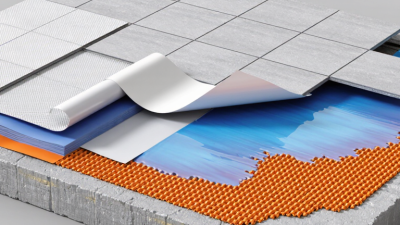
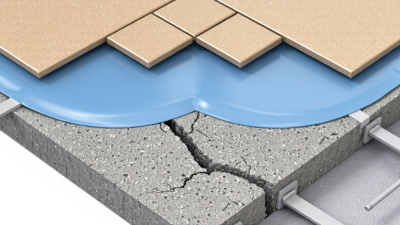
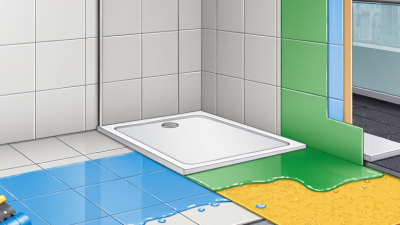
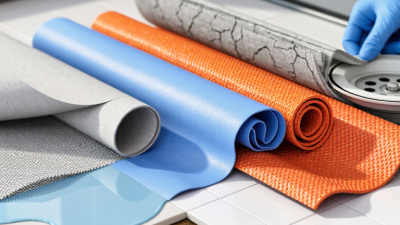
Crack suppression membranes are flexible or semi-flexible layers installed between a prepared substrate and finished flooring. They help limit the transfer of small cracks into tile or stone. They do not repair a moving or structurally unstable slab. That distinction matters. Membranes may come as sheets or liquid-applied coatings, with selection depending on crack width, moisture conditions, substrate, and flooring system.

When concrete shifts slightly from temperature changes, drying, or building movement, a membrane can deform across a crack and reduce stress on the surface layer. Some use elastomeric materials; others pair fabric reinforcement with a coating. Performance depends on full coverage, proper thickness, and reliable bonding. Dust, pinholes, or rushed curing can leave weak spots. Small details matter.

Before installation, assess whether a crack is dormant or actively widening. These membranes generally address limited, in-plane movement, not structural problems. Follow project-specific testing and installation instructions, including primer, seam overlap, and cure time. There is no universal solution. Even a carefully installed membrane can fail if movement exceeds its rating or moisture pressure is overlooked. I would still inspect the substrate twice. Once is easy to regret.


Main Membrane Types and Their Construction

Crack suppression membranes differ by material and installation method. A stress-absorbing membrane interlayer, or SAMI, is usually a sprayed, rubber-modified asphalt layer covered with aggregate chips. It creates a flexible cushion between old pavement and a new overlay. Geotextile systems use a fabric sheet bonded with tack coat. The surface must be clean and dry; wrinkles, poor adhesion, and uneven overlaps can create weak spots. Small defects matter.

Geogrids have open apertures that help the asphalt layers interlock. Composite systems combine a grid with a nonwoven fabric, pairing reinforcement with separation and stress relief. FHWA’s Long-Term Pavement Performance program follows nearly 2,500 pavement sections, showing the value of evaluating distress over time and across varied conditions. Its field data are a useful reminder: traffic, climate, and existing crack movement all affect design choices. A membrane is not a universal fix. Construction quality counts, too. Even careful specifications cannot erase uncertainty when the underlying pavement is badly deteriorated.

Performance Factors That Shape Membrane Selection

Membrane selection begins with the crack, not the catalogue. Is it a fine, stable line or a joint that moves with seasonal temperature changes? A membrane must accommodate expected movement while remaining bonded to the substrate. Check the product’s stated elongation and crack-bridging test conditions; a high number alone does not predict field performance.

Substrate condition matters just as much. Dust, residual moisture, weak concrete, or uneven surfaces can undermine adhesion. A small test patch can reveal problems before crews cover a large area. Also compare application temperature, curing time, and compatibility with primers and surfacing layers. Details matter.

Exposure changes the decision. Roofs and exterior decks may face standing water, ultraviolet light, and repeated heating and cooling. Interior floors may instead need to handle foot traffic or later coverings. Review technical data and test methods, and confirm they match the project conditions. Roll width and installation sequence affect labor and seams, too. Cost is only part of the calculation.

Ratings still have limits. Laboratory results cannot capture every site condition, and buyer comparisons can be imperfect. Ask what each test measures, then weigh it against the substrate, climate, movement, and installation plan. A membrane that performs well on paper may disappoint if the surface preparation is rushed.

Crack-Bridging Classes: A Key Membrane Selection Factor

Minimum crack widths associated with EN 1062-7 static crack-bridging classes. Higher values indicate a greater tested crack-bridging capability.

A1 is plotted at 0.1 mm as its upper limit; the class is defined as below 0.1 mm. Actual system performance depends on the tested product build-up and conditions.

How Global Buyers Compare Products and Suppliers

Global buyers should compare crack suppression membranes against the movement expected in the actual structure. A product tested only on a rigid panel may not reflect a slab exposed to temperature swings or repeated loading. Check reported crack-bridging capacity, elongation, adhesion, thickness, and test conditions. Details matter. Results at one temperature may not predict performance in a cold warehouse or sunlit roof.

Supplier evaluation needs the same care. Request current technical data, independent test reports, batch quality controls, and installation instructions. Compare stated values only when methods and conditioning are similar. Ask how the supplier handles production changes, damaged packaging, and delayed shipments. A clear answer is useful; a vague promise is not. Samples can help, but they cannot replace documented testing.

Before a large order, apply the membrane to a representative site area. Record substrate moisture, primer use, application thickness, curing time, and surface preparation. Then inspect adhesion and continuity after curing. Small differences in workmanship can alter results. A neat comparison sheet can still hide an assumption, especially when local crews use different tools or methods. Ask who will support installation questions, and how quickly they can provide a practical response.

Top 10 Crack Suppression Membranes for Global Buyers - How Global Buyers Compare Products and Suppliers Comparison of common membrane formats for tile and stone installations. Entries describe product categories, not ranked brands or guaranteed specifications.
No. Membrane Type Typical Format Primary Function Common Applications Key Buyer Checks Main Trade-Off
1 Fleece-backed sheet crack-isolation membrane Flexible sheet installed in a compatible setting mortar Helps reduce transfer of certain in-plane substrate cracks to the tile finish. Interior floors and other uses specified by the membrane manufacturer. Request test documentation against ANSI A118.12 where applicable; confirm approved mortar, substrate preparation, crack limits, and seam details. Requires careful sheet placement and treatment of seams; performance depends on the complete installation system.
2 Uncoupling sheet membrane Profiled or structured sheet, commonly bonded to the substrate with mortar Provides an uncoupling layer intended to reduce stress transfer between substrate and tile. Tile floors over suitable substrates, subject to the product’s installation instructions. Check whether crack-isolation performance is expressly documented; verify approved tile sizes, mortar, substrate types, and load limitations. “Uncoupling” does not by itself establish compliance with a crack-isolation standard or waterproofing performance.
3 Self-adhered sheet membrane Pressure-sensitive or peel-and-stick sheet with a bonded backing Creates a flexible separating layer intended to help isolate specified substrate cracks. Selected interior floor installations where the substrate and temperature conditions are approved. Check bond requirements, primer needs, minimum installation temperature, shelf life, and documented crack-isolation test results. Substrate cleanliness, dryness, and surface condition can strongly affect adhesion.
4 Liquid-applied elastomeric membrane Brush-, roller-, or trowel-applied coating that cures into a continuous layer Forms a flexible layer that may isolate cracks within the product’s tested limits. Floors or other areas explicitly listed in the product’s technical documentation. Verify required wet-film thickness, number of coats, cure time, reinforcement requirements, and ANSI A118.12 documentation where relevant. Uniform thickness and complete curing are installation-critical; coverage estimates are not a substitute for thickness checks.
5 Fabric-reinforced liquid membrane Liquid coating combined with reinforcing fabric at specified areas or across the field Combines a flexible coating with reinforcement to manage movement at cracks or transitions as specified. Details such as cracks, corners, or floor transitions; full-area use only when the system instructions allow it. Confirm fabric type, overlap dimensions, placement, coating thickness, and whether the complete assembly has relevant test documentation. More steps and material coordination than a single-coat system; details must follow the tested assembly.
6 Trowel-applied crack-isolation membrane Spreadable paste or mortar-like layer applied with a specified trowel Creates a bonded layer designed to reduce transfer of certain substrate cracks. Tile or stone installations on approved, properly prepared substrates. Ask for coverage per unit, required thickness, trowel type, cure interval, compatible setting materials, and applicable test results. Application thickness and substrate flatness can affect coverage and performance.
7 Waterproofing membrane with documented crack-isolation capability Liquid or sheet membrane designed for waterproofing and, where tested, crack isolation May provide both water protection and crack isolation when the specific system is documented for both functions. Wet areas or other locations specified by the manufacturer, including compatible floor or wall assemblies. Check separate evidence for waterproofing and crack isolation; ANSI A118.10 and ANSI A118.12 address different performance requirements. Do not assume that every waterproof membrane is a crack-isolation membrane, or vice versa.
8 Sound-control uncoupling membrane with crack-isolation claims Sheet or mat layer intended to provide sound reduction and substrate separation Can combine sound-control functions with crack-isolation performance if the complete system is tested and documented for it. Projects with specified acoustic requirements and compatible tile assemblies. Request acoustic test conditions and crack-isolation documentation separately; confirm floor assembly, tile, mortar, and substrate requirements. Acoustic performance depends on the full floor assembly and should not be inferred from membrane thickness alone.
9 Reinforced sheet membrane for movement-prone areas Composite sheet with a reinforcing layer or fabric integrated into the assembly Designed to manage specified in-plane movement or crack conditions beneath tile. Selected interior applications, subject to the tested system and project design. Check published movement limits, approved crack widths, overlap details, substrate restrictions, and installation method. Capabilities vary significantly by construction; request test reports for the exact membrane assembly.
10 Specialty exterior-rated crack-isolation system Sheet or liquid system approved for defined exterior conditions Helps address specified substrate cracking while accounting for exterior exposure when the system is rated for it. Exterior tile or stone areas only where the membrane, setting materials, drainage, and design are approved for the exposure. Verify UV exposure limits before covering, freeze-thaw suitability, drainage design, temperature range, and local code requirements. Exterior durability depends on the entire assembly; crack isolation cannot compensate for structural movement or poor drainage.
Global sourcing note: Compare technical data sheets, independent test reports, installation manuals, regional compliance documents, batch traceability, shelf life, packaging options, and technical support. Crack-isolation products address only the movement conditions stated in their documentation; structural movement joints must still be designed and maintained as required by the project and applicable local guidance.

Ten Crack Suppression Membranes for Global Buyers

Global buyers comparing ten crack suppression membranes should begin with test evidence, not packaging claims. ANSI A118.12 classifies performance against defined crack movement: standard performance addresses 1/16 inch, while high performance addresses 1/8 inch. These figures help shortlist products, but they are not guarantees for every slab. A moving joint, damp concrete, or dusty surface can still undermine a sound membrane. Details matter.

Compare sheet and liquid-applied systems for substrate compatibility, coverage rate, curing time, and installation conditions. A sheet may offer consistent thickness, but seams need careful treatment. Liquid products can suit awkward corners; missed spots or uneven application remain real risks. The Tile Council of North America Handbook and ANSI standards provide useful technical benchmarks for specification and installation. Buyers should request current test documentation, including the tested substrate and movement rating, rather than relying on a sales summary. Check local temperature limits, packaging language, and availability of compatible mortar. Small print counts. One practical test area can reveal roller marks, pinholes, or poor adhesion before a full floor is covered. That step is easy to skip, and costly to regret.

Resources

Copyright © CUSTOM Building Products 2025
Products | Resources | Interactive Tools | Warranties | Privacy Policy | Terms of Use | Technical Training