China Top 10 Underlayment Membrane Manufacturers?
China’s underlayment membrane market serves roofing projects that must manage rain, wind, and moisture beneath the finished roof. The category includes products with different materials, installation methods, and performance claims. Buyers should compare technical data, not rely on a product name alone.
Grand View Research valued the global roofing market at USD 129.24 billion in 2023 and projected continued growth through 2030. That figure covers roofing broadly; it is not an underlayment membrane market estimate. The distinction matters. For a practical supplier review, performance evidence is more useful than a headline market number. Look for published test results, declared material properties, installation guidance, and documented quality controls. Check how each membrane suits the roof assembly and local climate. A specification that works on a steep roof may not fit every project.
Building-science engineer Joseph Lstiburek has emphasized the enclosure’s role in controlling rain: “Rain control is the most important function of the building enclosure.” That principle makes product compatibility and installation details central to any shortlist. A membrane cannot compensate for poor detailing. Nor does a familiar brand guarantee a suitable specification. There are trade-offs, and product data can leave questions unanswered.
This guide examines ten Chinese manufacturers through their product ranges, technical documentation, manufacturing capabilities, and market presence. It aims to help buyers form a shortlist, not declare one universal winner. Verify claims directly with suppliers before specifying a product.
Underlayment Membranes Defined: Roofing Functions, Materials, and Product Types
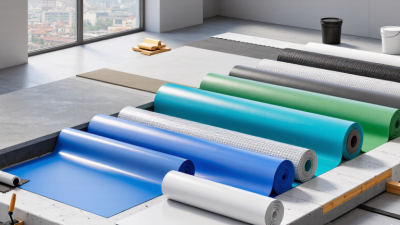
Roofing underlayment is a secondary water-shedding layer installed over the roof deck and beneath shingles, tiles, or metal panels. It can help protect the deck from wind-driven rain and brief weather exposure during installation. It is not a roof. Common materials include asphalt-saturated felt, synthetic sheets, and self-adhered membranes with rubberized asphalt. Each handles moisture, heat, and foot traffic differently.
Product types include mechanically fastened sheets, peel-and-stick membranes, and high-temperature options often selected beneath metal roofing. The right choice depends on roof slope, covering material, local weather, and the deck’s condition. A membrane cannot correct loose sheathing or poor flashing. Small installation details matter: wrinkles can trap water, while misplaced fasteners may create leak paths. Specifications vary, so check the product instructions rather than assuming all underlayments install alike.
Tips: Keep the deck clean and dry before laying the membrane. Overlap courses as directed, and pay close attention around valleys, eaves, and roof penetrations. On a hot roof, some surfaces become slippery or tacky; plan careful handling. I would not treat “waterproof” as a promise that the whole roof is leak-proof. The final result still depends on the roofing system and workmanship.
How to Assess China’s Top 10: Capacity, Certifications, Exports, and Product Range
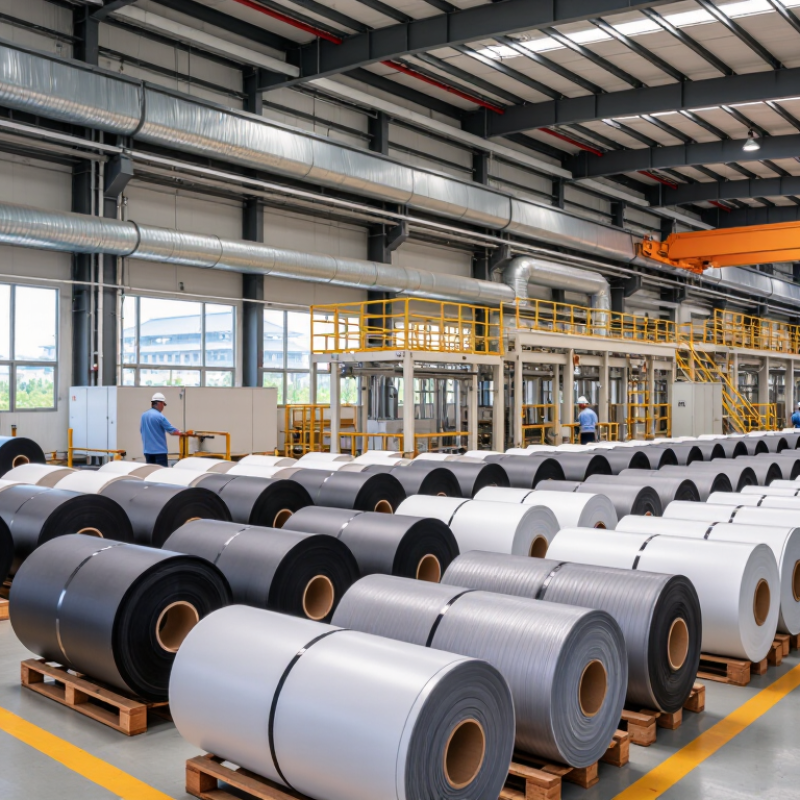
A credible comparison of Chinese underlayment membrane manufacturers starts with real production capacity, not a large number on a brochure. Ask how many lines are running, what monthly output is typical, and whether raw materials are secured for seasonal demand. Check recent lead times and request samples from separate production batches. Consistency matters. A factory may report impressive capacity, yet still struggle with small orders or urgent changes.
Certifications should match the actual product and destination market. Review certificate scope, expiry dates, and independent test reports; a certificate alone does not establish performance. Export experience can reveal useful details, including packaging durability, documentation accuracy, and familiarity with overseas specifications. Request references or shipment records where available. Export volume is evidence of experience, not proof of quality.
Product range also deserves close inspection. Compare membrane types, thickness options, reinforcement, adhesion, and performance data for water resistance, tensile strength, and temperature exposure. Confirm that technical values apply to the exact product being quoted. A broad catalogue can be useful, but it may hide gaps in manufacturing depth. There is no perfectly tidy ranking when suppliers disclose different levels of detail. Treat missing data as a question to investigate, not an automatic failure.
Industry Benchmarks: ASTM D226 Felt Types I and II at 11.5 and 26 lb/100 ft²
China Top 10 Underlayment Membrane Manufacturers?
ASTM D226 offers a useful reference point when comparing asphalt-saturated organic roofing felt. Type I is commonly associated with a nominal weight of 11.5 lb per 100 ft², while Type II is 26 lb per 100 ft². The heavier grade provides more material per area, but weight alone does not establish that a product suits every roof assembly. Check the product data sheet and the applicable project specification.
These figures help buyers compare basic felt categories, not every feature that affects installation. Actual performance also depends on the roof design, exposure, fastening method, and overlap at seams. A roll may look substantial on the pallet, yet poor storage or careless handling can damage it before installation. That distinction is easy to miss. Confirm that the stated ASTM designation matches the supplied product, and avoid treating “heavier” as an automatic substitute for system compatibility.
Tips: Compare the stated weight per 100 ft², roll coverage, and installation instructions together. Keep rolls dry and inspect them for tears before use. Small details matter. ASTM D226 benchmarks support a clearer comparison, but they do not replace project-specific evaluation.
Compare Membrane Performance: Water Resistance, Tear Strength, Flexibility, and Permeance
When comparing underlayment membrane manufacturers in China, look beyond product descriptions. Water resistance should be assessed under consistent test conditions, including exposure time and seam treatment. A membrane may repel water across its surface but still leak at poorly sealed overlaps. Check technical data sheets and request test reports for the exact product grade.
Tear strength matters during installation, especially around fasteners, roof edges, and busy work areas. Ask whether results measure tear initiation or continued tearing; these are not interchangeable. Flexibility also deserves attention. A sample that bends easily at room temperature may stiffen in cold weather. Try folding it around a tight corner, then inspect for cracks or whitening. Small details matter.
Permeance affects how moisture moves through an assembly, so the right value depends on the roof design and ventilation. Higher is not always better. Compare units, test methods, and intended applications before judging figures from different suppliers. Request samples from shortlisted manufacturers and record how they handle cutting, fastening, and seam sealing. It is easy to overvalue one impressive number. I would also verify that production batches remain consistent, because a good sample alone cannot prove reliable supply.
China Underlayment Membranes: Performance Criteria
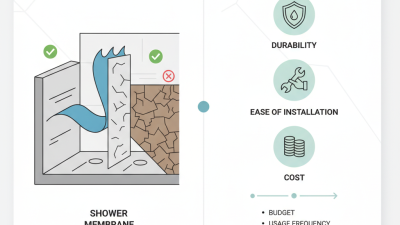
Illustrative comparison of generic membrane types—not measured data or a ranking of manufacturers.
Scores are qualitative, relative ratings on a 1–5 scale based on typical material characteristics. Higher vapor permeance means more vapor can pass through; it is not universally better. Actual water resistance, tear strength, flexibility, and permeance vary by product and should be verified from test reports using comparable methods.
Supplier Selection in China: Testing, Compliance, Lead Times, and Project Fit
China Top 10 Underlayment Membrane Manufacturers?
Supplier Selection in China: Testing, Compliance, Lead Times, and Project Fit
A supplier’s catalogue is only a starting point. Ask for current test reports tied to the exact membrane thickness and product code you plan to buy. For roofing applications, check water resistance, tensile strength, dimensional stability, and water-vapour performance against the project specification. EN 13859-1 covers flexible sheets for roofing underlays; confirm the relevant edition and local requirements with your project team. The UNEP and GlobalABC 2024 Global Status Report estimates that buildings account for 34% of global CO₂ emissions. That makes durability and installation quality practical procurement concerns, not just paperwork. A polished factory visit proves little.
Tips: Request samples from the same production line as the order, then compare their weight, surface, and dimensions with the technical sheet. Ask how long testing and production actually take, including peak-season delays. Confirm packaging, batch identification, and remedies for out-of-spec goods in writing. A fast quotation is not a delivery schedule.
Check project fit before comparing prices. A membrane designed for a ventilated pitched roof may not suit a low-slope assembly or a humid installation site. Share the roof build-up, climate, fixing method, and expected quantities with shortlisted manufacturers. Ask for test evidence, not a general claim of “compliance.” Small gaps remain: published reports may not capture every batch variation, so retain approved samples and inspect incoming rolls.