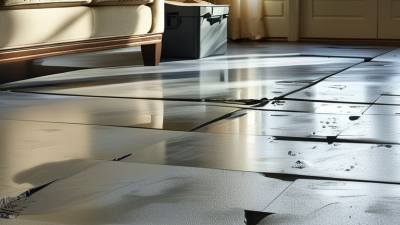
Top 10 Types of Decoupling Membrane What Should Buyers Know?

Choosing the right decoupling membrane is not a simple matter of comparing prices or thicknesses. Each type responds differently to movement, moisture, cracking, heat, and substrate conditions. A residential bathroom may need waterproofing, while a large commercial floor may require stronger stress management. These needs can overlap, but they are not identical.

Michael Byrne, a respected tile installation educator, said, “The substrate is the key to a successful tile installation.” That principle remains practical today. A membrane cannot correct every weak screed, contaminated surface, or poorly prepared concrete slab. Buyers should examine the substrate first. Look closely for cracks, dust, hollow areas, and uneven transitions. Small details matter.

This guide examines ten common types of decoupling membrane and the situations where each may perform best. It considers sheet membranes, liquid-applied systems, waterproofing membranes, sound-control products, and specialized solutions for heated floors. Technical data should be checked carefully. Some products appear similar but differ in movement ratings, vapor control, bonding methods, and installation limits.

The honest part is this: no membrane is universally best. A cheaper option may fail when movement is underestimated. An advanced product may be unnecessary for a stable indoor floor. Buyers should compare manufacturer instructions, independent testing, installer experience, and project conditions. They should also question vague performance claims. A product brochure is not a jobsite inspection. The right choice begins with evidence, not assumptions.

Top 10 Types of Decoupling Membrane What Should Buyers Know?

Decoupling Membranes: Definition, Purpose, and Core Operating Principles

A decoupling membrane is a thin engineered layer installed between a substrate and a tile or stone finish. It separates these materials without creating a hollow, unstable floor. Concrete, plywood, and tile expand, shrink, or bend at different rates. The membrane helps manage that movement before stress reaches grout and tile. Common formats include sheet, fabric-backed, and composite drainage membranes. Their structure affects shear control, moisture handling, and limited crack management.

The purpose is practical: reduce cracking risk, improve installation tolerance, and sometimes control moisture transfer. It is not a cure for a weak or moving substrate. That distinction matters. A membrane can distribute localized stress, but it cannot replace proper framing, fastening, curing, or surface preparation. Some systems also provide drainage or waterproofing, yet these functions must be confirmed in technical documents. Water-resistant and waterproof are not interchangeable terms.

Core operation begins with separation. When the substrate shifts slightly, the membrane absorbs or redirects part of the strain through its plane. Bonded layers then transfer suitable loads while limiting direct stress on the finish. Buyers should check thickness, tensile behavior, seam treatment, adhesive compatibility, and approved substrates. I have seen failures blamed on membranes when dust, dampness, or poor joints caused the damage. Selection is rarely perfect. Laboratory results may not mirror a cold, uneven jobsite. A small test area can reveal that gap early.

How Decoupling Membranes Are Classified by Material and Structure

Decoupling membranes are often grouped by material and structure, not by appearance alone. This matters when tiled floors face movement, moisture, or uneven substrate conditions. Field inspections show a simple pattern: the wrong membrane can hide a sound installation problem. That risk is easy to underestimate.

Material-based classifications include polyethylene, polypropylene, PVC, rubber-modified asphalt, and cement-based composite membranes. Structure-based types include flat sheets, dimpled sheets, fleece-backed sheets, ribbed grids, and mats with drainage channels. Together, these categories create ten practical types for comparison. Some combine materials and structures. Others resist moisture but offer limited crack-bridging performance. A thicker profile is not automatically better.

Buyers should check tensile strength, vapor behavior, compressibility, bond compatibility, and movement capacity. On site, a membrane may sit over concrete, plywood, or a heated floor. Each base changes the selection. Look for tested installation data, clear substrate limits, and documented performance under expected loads.

Do not judge only by color, thickness, or a convincing product photo. That shortcut feels practical. It can become an expensive mistake. Classification helps, but project conditions still deserve a careful second look.

Ten Major Types of Decoupling Membranes and Their Key Differences

Decoupling membranes differ by chemistry, structure, and installation behavior. The ten major types include polyethylene sheet, polypropylene sheet, CPE sheet, PVC sheet, TPO sheet, ECB sheet, acrylic liquid membrane, polyurethane liquid membrane, polymer-modified cementitious membrane, and epoxy-based membrane. Sheet products usually provide consistent thickness and faster coverage. Liquid systems conform better around drains and corners. However, curing time can delay tiling. That difference matters on busy renovation sites.

Polyethylene is light and flexible, while polypropylene often offers stronger dimensional stability. CPE handles moisture well and remains relatively elastic. PVC and TPO provide strong waterproofing, but compatibility with adhesives must be checked. ECB membranes can resist chemicals, yet they may need skilled heat-welding. Acrylic coatings are easy to apply but may need multiple layers. Polyurethane forms a continuous film and bridges small cracks. Cementitious membranes bond well to mineral surfaces, though they are less flexible. Epoxy systems are dense and durable, but sometimes too rigid for moving substrates. Categories can overlap. That is where buyers may make mistakes.

A 2024 Grand View Research assessment valued the global waterproofing membrane market at roughly USD 31 billion in 2023. The report also identified construction renovation and infrastructure as major demand drivers. Buyers should not treat market growth as proof of product suitability.

Tips: Check movement ratings, vapor permeability, coverage thickness, curing time, and substrate limits. Request independent test data, such as crack-bridging or shear-bond results. A cheaper membrane can become expensive after tile failure. I would also question any “universal” claim. Real jobsite conditions are rarely universal.

Top 10 Types of Decoupling Membrane: What Should Buyers Know?

No. Membrane Type Typical Construction Primary Function Waterproofing Movement Accommodation Typical Installation Best-Suited Applications Key Advantages Main Limitations Buyer Considerations
1 Dimpled HDPE Sheet Membrane High-density polyethylene sheet formed with a grid of studs or cavities and a bonding fleece or mortar-contact surface. Separates tile covering from the substrate and helps distribute in-plane stress. Usually available High Bonded to the substrate with thin-set mortar; tiles are installed over the membrane. Concrete slabs, plywood subfloors, heated floors, and residential or commercial tile areas. Strong dimensional stability, good load distribution, and fast dry installation. Requires correct mortar selection, seam treatment, and full substrate coverage. Check compressive strength, fleece adhesion, approved substrates, and tested system details.
2 Dimpled LDPE or LLDPE Sheet Membrane Flexible low-density or linear low-density polyethylene sheet with a molded cavity or stud profile. Provides uncoupling and, in some designs, limited drainage or vapor-management space. Model-dependent High Installed with thin-set mortar or a compatible adhesive, followed by tile or stone installation. Large floor areas, irregular concrete substrates, and installations requiring a flexible sheet. Lightweight, flexible, chemically resistant, and easy to cut. Soft or low-density formulations may require careful handling and adequate support under load. Compare density, thickness, compressive performance, and compatibility with the tile adhesive.
3 Formed Polypropylene Sheet Membrane Rigid or semi-rigid polypropylene sheet with ribs, studs, channels, or a textured bonding surface. Controls differential movement and improves mechanical separation between layers. Model-dependent Medium to High Mortar-bonded or adhesive-bonded, depending on the surface design and installation instructions. Stable tile assemblies, high-traffic floors, and projects needing a robust sheet profile. Good chemical resistance, low moisture absorption, and high temperature tolerance. Some products are less flexible around corners and may need detailed joint treatment. Verify minimum substrate flatness, flexibility classification, and whether the product is waterproof.
4 Fleece-Backed Composite Membrane Polyethylene or polypropylene core laminated with nonwoven fleece on one or both sides. Creates a strong mortar bond while allowing limited lateral movement within the assembly. Model-dependent Medium to High Embedded into thin-set mortar; seams and changes of plane are treated according to the system design. Tile floors and walls where reliable mortar adhesion and easy handling are priorities. Good bondability, simple cutting, low weight, and compatibility with many cementitious mortars. Fleece contamination or insufficient mortar coverage can reduce bond strength. Look for published coverage requirements, fleece pull-off performance, and seam accessories.
5 Drainage-Cavity Decoupling Mat Three-dimensional polymer sheet with interconnected channels or cavities, often covered by a filter or fleece layer. Separates layers while providing a pathway for limited moisture movement or drainage. System-dependent Medium to High Installed over a prepared substrate; perimeter outlets, drainage paths, and compatible setting materials may be required. Exterior balconies, terraces, wet rooms, and assemblies exposed to intermittent moisture. Can reduce moisture accumulation and help manage vapor or drainage beneath tile. Not every drainage mat is waterproof; blocked or poorly detailed channels can undermine performance. Confirm drainage direction, outlet details, slope requirements, and complete waterproofing design.
6 Solid Sheet Crack-Isolation Membrane Thin, relatively solid polymer sheet designed to bridge or isolate limited substrate cracks. Reduces transfer of certain non-structural cracks from the substrate to the tile finish. Usually no Medium Bonded directly to the substrate, often with mortar or an approved adhesive; tile is installed over the sheet. Interior tile areas with localized, dormant, non-structural cracks. Low profile, easy to install, and useful where floor height is restricted. It cannot correct structural movement, active cracks, unstable substrates, or inadequate framing. Check crack-width limits, test methods, substrate conditions, and whether movement joints are still required.
7 PVC Sheet Membrane Flexible polyvinyl chloride sheet, commonly reinforced or laminated with a bonding fleece. Combines waterproofing with separation and crack-bridging performance when used as a tested system. Often available High Installed with compatible mortar or adhesive; seams are heat-welded, chemically joined, or sealed with system components. Wet rooms, showers, balconies, terraces, and areas requiring a continuous waterproof layer. Low water absorption, flexible detailing, and effective protection against liquid water when properly installed. Requires compatible adhesives and careful seam preparation; plasticizers and solvents can affect compatibility. Confirm chlorine resistance, seam method, UV exposure limits, and tile-bonding requirements.
8 CPE Sheet Membrane Flexible chlorinated polyethylene sheet, typically reinforced or fleece-backed for mortar adhesion. Provides waterproofing, crack bridging, and separation in demanding wet-area assemblies. Often available High Mortar-bonded or adhesive-bonded with sealed laps, corners, penetrations, and transitions. Showers, steam rooms, commercial wet areas, and installations requiring durable sheet waterproofing. Good flexibility, strong moisture resistance, and useful performance around complex details. Material and accessory costs can be higher; installation quality is critical at seams and penetrations. Review chemical compatibility, vapor-permeance rating, thickness, reinforcement, and joining procedure.
9 Liquid-Applied Elastomeric Membrane Brush-, roller-, or trowel-applied polymer dispersion, acrylic, rubber-modified, or cementitious-elastomeric coating. Forms a continuous flexible layer for waterproofing, crack isolation, or limited uncoupling. Often available Medium Applied in one or more controlled coats over a prepared substrate; curing time is required before tiling. Bathrooms, shower areas, small irregular spaces, repairs, and locations with many penetrations. Seamless coverage, easy detailing, and minimal material waste around corners and fixtures. Film thickness, curing, pinholes, and substrate moisture can strongly affect performance. Check wet-film and dry-film thickness, recoat time, crack-bridging data, and vapor permeability.
10 Sound-Control Decoupling Mat Resilient rubber, recycled polymer, cork, foam, or composite mat engineered to reduce impact or airborne sound transmission. Improves acoustic performance while providing limited separation between tile and substrate. Usually no Low to Medium Installed beneath tile using the specified adhesive, mortar, or floating method; perimeter isolation may be necessary. Multi-family housing, hotels, offices, and rooms where footfall noise is a major concern. Can reduce impact noise and improve occupant comfort without major structural changes. May add floor height and can require special tile-setting methods; acoustic results depend on the whole floor assembly. Compare tested IIC or ΔIIC data, compressive creep, thickness, fire classification, and tile compatibility.
Buyer note: “Waterproof” and “uncoupling” are not interchangeable claims. Always evaluate the complete tested assembly, including substrate preparation, mortar or adhesive, seams, movement joints, drains, penetrations, and perimeter details.

How to Match Membrane Types with Building Conditions and Applications

Choosing a decoupling membrane starts with the building, not the tile. On a stable concrete slab, a standard crack-isolation membrane may suit ceramic tile and light residential traffic. On timber floors, movement is more likely. Choose a membrane with tested shear strength, flexible joints, and clear installation limits. The TCNA Handbook and ANSI A118.12 emphasize substrate movement and crack-bridging performance, not membrane thickness alone.

Wet rooms need a different decision. Select a waterproofing membrane with sealed seams, compatible drains, and verified water-resistance testing. The U.S. Environmental Protection Agency warns that mold may develop within 24 to 48 hours after moisture remains uncontrolled. A membrane cannot correct poor falls, blocked drainage, or damp framing. That detail is often underestimated.

Commercial corridors, kitchens, and retail floors face rolling loads and repeated impact. Review ASTM C627 Robinson Floor Test results, compressive ratings, and approved tile sizes before buying. A thin membrane may work beneath a bathroom floor but fail under equipment legs or pallet traffic. Outdoor balconies demand greater caution, including thermal movement, drainage, and freeze-thaw exposure. Many products are not intended for exterior use.

Match the system to the risk. Check the substrate moisture, crack width, tile format, traffic level, and movement joints. Do not trust a promising datasheet alone. Installation errors remain common, especially at corners and penetrations. Even experienced contractors should verify compatibility with the mortar and tile assembly.

What Buyers Should Evaluate Before Selecting a Decoupling Membrane

Selecting a decoupling membrane starts with movement, not thickness. On renovation sites, a 1.6 mm crack can appear beneath a rigid tile assembly. ANSI A118.12 classifies crack-isolation performance around 1/16 inch for standard performance and 1/8 inch for high performance. These figures are test limits, not promises for every floor. The 2024 TCNA Handbook also emphasizes substrate preparation, movement joints, and installation conditions. Ignore one, and a premium-looking system may still fail.

Buyers should check substrate type, moisture exposure, tile format, and traffic level. Ask for third-party test reports, not only a product brochure. Review shear bond, peel resistance, water management, and mortar compatibility. ASTM C627 Robinson testing can indicate whether an assembly suits residential or heavier service. Laboratory ratings cannot replicate a cold slab, dusty concrete, or rushed installation. This is the uncomfortable part. Specification quality often depends on workmanship.

Tips: Measure cracks and floor flatness before choosing the membrane. Record lot numbers, mortar type, mixing water, and curing temperature. Confirm the approved thickness range. Inspect transitions around drains and doorways. A field mock-up is cheap insurance, although buyers sometimes skip it. That shortcut deserves reconsideration. Choose documented performance over the highest marketing claim.

Top 10 Types of Decoupling Membrane: What Should Buyers Know?

Typical thickness ranges help buyers compare installation height, protection level, and compatibility before selecting a decoupling membrane. Actual values vary by construction system, so the technical data sheet and applicable installation standard should always be checked.

How to evaluate: Sheet membranes generally offer predictable thickness and fast installation, while liquid-applied systems can better accommodate irregular substrates. Dimpled, foam, cork-rubber, and sound-control mats usually require more finished-floor height. Buyers should also verify crack-isolation performance, waterproofing requirements, vapor management, load compatibility, adhesive compatibility, drainage, movement-joint treatment, and installation conditions.

Resources

Copyright © CUSTOM Building Products 2025
Products | Resources | Interactive Tools | Warranties | Privacy Policy | Terms of Use | Technical Training