| Intended application |
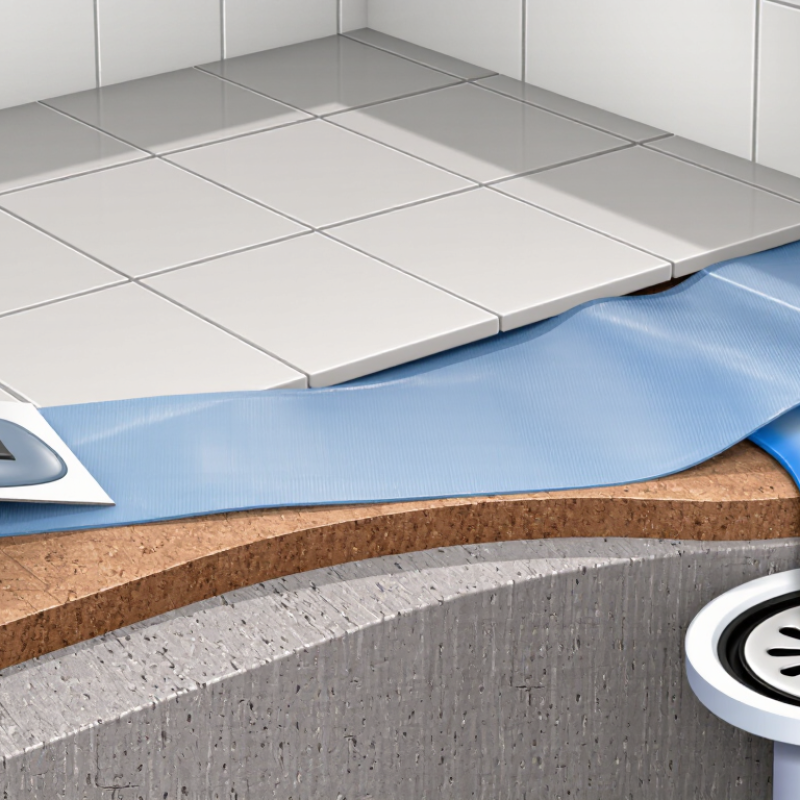
Confirm whether the membrane is designed for installation over existing tiles, under replacement tiles, on roofs, balconies, terraces, bathrooms, or other wet areas. |
The product application must match the substrate, exposure level, drainage design, and final tile system. A bathroom membrane is not automatically suitable for an exposed roof. |
Technical data sheet, installation manual, application limitations, and project-specific compatibility statement. |
Inspect the existing surface, drainage paths, movement joints, edges, penetrations, and areas of standing water before installation. |
| Membrane type |
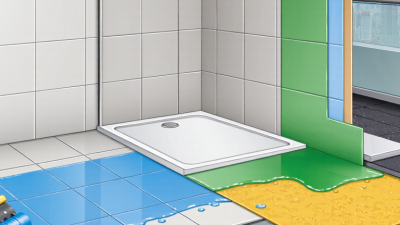
Identify whether the product is sheet-applied, liquid-applied, cementitious, bituminous, polyurethane, PVC, TPO, or another polymer-based membrane. |
The material type determines seam treatment, curing time, movement capability, adhesive selection, and exposure resistance. |
Composition declaration, safety data sheet, product data sheet, and storage instructions. |
Use only the specified primer, adhesive, sealant, reinforcing tape, and compatible tile adhesive. |
| Applicable standard |
Confirm which standard applies to the intended use and whether the test report covers the supplied formulation and thickness. |
For bonded waterproofing membranes under tile, ANSI A118.10 may be relevant. For flexible roofing sheets, EN 13956 or another specified roofing standard may apply. The correct standard depends on the system. |
Complete laboratory test report showing standard number, test method, product identification, test date, and measured results. |
Do not accept a general certificate if it does not identify the exact membrane construction and intended application. |
| Nominal thickness and weight |
Confirm nominal thickness, permitted tolerance, roll or pail quantity, and whether the stated thickness is measured before or after reinforcement. |
Sheet membranes commonly use millimetre-level thickness; liquid membranes are normally specified by minimum dry-film thickness. The required value must follow the system design, not only the catalog description. |
Lot-specific inspection report, calibrated thickness measurement, product label, and packing list. |
Measure installed coverage or dry-film thickness at representative locations where required by the specification. |
| Water impermeability |
Confirm the test method, water pressure, test duration, sample condition, and whether seams and penetrations were included. |
A pass result should be linked to a recognized test method and the actual production specification. “Waterproof” alone is not a measurable performance claim. |
Water-resistance or hydrostatic-pressure test report with acceptance criteria and results. |
Complete a controlled flood test only where the building design permits it; protect areas below and follow local requirements. |
| Tensile strength and elongation |
Confirm machine-direction and cross-direction results, test temperature, specimen type, and the minimum guaranteed values. |
Higher elongation and adequate tensile strength generally improve tolerance to minor substrate movement, but they do not replace movement joints or correct detailing. |
Independent tensile test report and declared minimum performance values. |
Avoid stretching sheet material during installation unless the installation manual specifically permits it. |
| Tear and puncture resistance |
Ask how the membrane performs against sharp tile edges, fasteners, tools, foot traffic, and localized impact during installation. |
The selected system should include a protection layer or approved repair method where puncture risk is high. |
Tear-strength, puncture-resistance, and impact-resistance test results where applicable. |
Remove sharp projections, control site traffic, and repair every cut, hole, blister, or unbonded area before covering. |
| UV, temperature, and weather resistance |
Confirm whether the membrane is intended to remain exposed or must be covered by tiles, screed, insulation, or another protective layer. |
Verify service-temperature range, UV exposure limit, freeze-thaw suitability, and maximum permitted exposure time before covering. |
Accelerated-weathering results, temperature range, outdoor-exposure instructions, and freeze-thaw test data if relevant. |
Do not leave the membrane exposed longer than the stated period; avoid installation during unsuitable weather. |
| Substrate compatibility |
Confirm compatibility with concrete, cement screed, masonry, existing ceramic tile, stone, metal, wood-based panels, coatings, and residual adhesive. |
The substrate must be sound, clean, dry or within the permitted moisture range, and free from oil, dust, laitance, loose coatings, and contaminants. |
Compatibility test results, primer requirements, moisture limits, and approved substrate list. |
Perform adhesion tests on representative areas, especially over existing tiles or unknown coatings. |
| Bond strength |
Confirm bond strength to the actual substrate and the required tile adhesive or bonding compound. |
Bond performance depends on surface preparation, primer, curing, temperature, moisture, and adhesive thickness; catalog values must not be treated as universal site results. |
Pull-off or peel-test results, adhesive compatibility statement, and recommended adhesive class. |
Check for full contact, correct adhesive coverage, and absence of hollow or loose areas before grouting. |
| Seam and joint detailing |
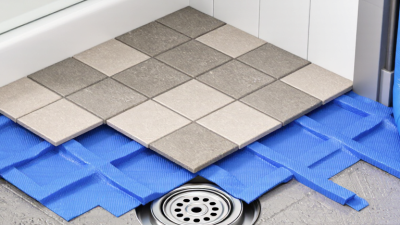
Confirm overlap width, seam adhesive or heat-welding method, corner treatment, joint tape, and repair procedure. |
Overlap dimensions and seam methods must follow the product manual. Corners, drains, changes of plane, and movement joints require dedicated detailing. |
Detail drawings, seam-strength results, accessory list, and installation method statement. |
Inspect seams continuously for wrinkles, fish mouths, voids, contamination, and incomplete bonding. |
| Drain and penetration treatment |
Confirm compatibility with floor drains, roof outlets, pipes, vents, parapets, thresholds, and edge profiles. |
Drain flanges and penetrations must be integrated into the waterproofing layer; surface-applied sealant alone is usually not an adequate system detail. |
Approved detail drawings, accessory specifications, and sealant or collar compatibility data. |
Check positive falls toward drains and ensure no membrane edge terminates where water can migrate behind it. |
| Dimensional stability |
Confirm shrinkage, thermal movement, curling, and dimensional-change performance after temperature or moisture conditioning. |
Low dimensional change helps reduce stress at seams and tile finishes, but structural movement still requires correctly placed movement joints. |
Dimensional-stability test report and movement-joint recommendations. |
Maintain existing structural and perimeter joints through the membrane and tile finish. |
| Roll or package dimensions |
Confirm roll width, roll length, net coverage, packaging quantity, pallet dimensions, and allowable quantity tolerance. |
Calculate order quantity using net coverage plus additional material for overlaps, corners, upstands, waste, and repair pieces. |
Packing list, commercial invoice, pallet information, and roll-by-roll or batch identification. |
Keep rolls upright or flat as specified, protected from moisture, direct sunlight, heat, and deformation. |
| Production batch control |
Confirm production date, batch number, shelf life, formulation consistency, and whether one project can be supplied from the same batch. |
Materials should be traceable from delivery to installation. Expired or unidentified material should not be used. |
Batch certificate, certificate of analysis, production record, and label photographs before shipment. |
Record batch numbers, delivery condition, quantity received, and any visible damage during incoming inspection. |
| Installation temperature and humidity |
Confirm minimum and maximum air, substrate, and material temperatures, as well as humidity and dew-point limitations. |
Application conditions vary by chemistry; the substrate should generally be above the dew point for bonded systems and within the product’s stated temperature range. |
Installation manual, curing chart, weather limitations, and site testing requirements. |
Measure and record site temperature, substrate temperature, relative humidity, and surface moisture before application. |
| Curing and covering time |
Confirm open time, drying or curing time, permitted rain exposure, waiting period before tile installation, and maximum time before covering. |
Curing time is affected by temperature, humidity, coat thickness, ventilation, and substrate absorption; a fixed time without conditions is unreliable. |
Curing schedule, recoat interval, covering requirements, and site acceptance criteria. |
Protect the membrane from rain, contamination, puncture, and premature traffic until the required cure is achieved. |
| Tile and grout compatibility |
Confirm compatibility with tile size, tile type, adhesive, grout, movement-joint sealant, and expected traffic or thermal exposure. |
Large-format or low-absorption tiles may require a specified deformable adhesive and particular coverage requirements. |
System compatibility statement, adhesive recommendation, grout recommendation, and tile-installation instructions. |
Verify adhesive coverage and avoid puncturing or mechanically fixing through the waterproofing layer unless specifically designed for it. |
| Quality-control plan |
Agree on inspection points, sampling frequency, allowable defects, test responsibility, and acceptance criteria before production. |
Quality control should cover appearance, dimensions, weight or thickness, seam condition, water resistance, and packaging integrity. |
Approved inspection and test plan, pre-shipment inspection report, photographs, and corrective-action procedure. |
Use hold points before covering the membrane, after detailing, and before final tile or screed installation. |
| Warranty and technical support |
Confirm warranty duration, exclusions, required installer qualifications, maintenance obligations, and claim documentation. |
A material warranty may not cover failures caused by substrate movement, poor drainage, incorrect preparation, incompatible adhesives, or unauthorized detailing. |
Signed warranty, installation checklist, technical contact details, repair procedure, and maintenance requirements. |
Keep delivery records, batch numbers, photographs, site conditions, test results, and as-built details for future claims. |