2026 Top Paintable Waterproof Membrane Types
Choosing a waterproofing system is rarely as simple as selecting the thickest coating. In 2026, paintable waterproof membrane products serve bathrooms, balconies, basements, roofs, and exterior walls. Each application faces different moisture pressure, movement, temperature changes, and surface conditions.
This guide examines leading membrane types, including acrylic, polyurethane, cementitious, elastomeric, and hybrid formulas. It considers adhesion, crack-bridging ability, vapor behavior, drying time, paint compatibility, and long-term maintenance. A reliable paintable waterproof membrane should match the substrate, exposure level, and final decorative finish. Concrete, gypsum board, masonry, and previously painted surfaces do not behave the same way.
Practical installation details matter. A dusty wall can weaken an excellent product. A balcony may need reinforced corners, sealed joints, and sufficient slope toward drainage. Indoor bathrooms require careful attention around pipes, thresholds, and floor-to-wall transitions. Product labels, technical data sheets, and local building requirements should guide every decision.
Performance claims still deserve scrutiny. Laboratory results may not represent a wet, poorly prepared jobsite. Some membranes remain flexible for years, while others become difficult to repaint after repeated movement. The “best” option is not always the most expensive one. Sometimes, the wrong primer causes the failure.
The following overview compares membrane categories through a practical and technical lens. It highlights suitable uses, limitations, preparation requirements, and common installation mistakes. Readers can then choose with clearer expectations, rather than relying on attractive packaging or incomplete online reviews. Experiences may vary, and that uncertainty should remain part of responsible product selection.
Liquid-Applied Membranes: Chemistry, Curing, and ASTM D6083 Testing
Liquid-applied waterproof membranes rely on polymer chemistry, not thickness alone. Acrylic, polyurethane, silicone, and hybrid chemistries cure differently. Acrylic systems usually release water through evaporation. Polyurethane systems react with moisture or chemical crosslinkers. Silicone systems tolerate damp conditions better, but surface adhesion still needs verification. The 2024 Global Waterproofing Membrane Market report estimated the sector at about USD 25 billion in 2023. That scale increases pressure for dependable testing, not attractive product claims.
Curing changes film performance. Temperature, humidity, substrate moisture, and coat thickness can alter the final membrane. A cool, shaded roof may remain soft after the surface appears dry. Real sites are less tidy. ASTM D6083/D6083M evaluates liquid-applied acrylic roofing coatings through properties such as tensile strength, elongation, weathering, and water resistance. Testing should use representative samples, controlled conditioning, and documented film thickness. One pass result is not truth. Repeated testing is wiser.
Field teams should inspect pinholes, weak laps, blistering, and adhesion loss after curing. ASTM D6083 testing supports quality control, but it does not replace roof-specific design judgment. The International Energy Agency reported that buildings and construction consumed roughly 30% of global energy in 2022. A durable, reflective membrane can support roof-service performance and reduce heat gain, depending on climate and assembly design. However, laboratory values may disappoint on contaminated concrete or poorly prepared metal. That uncomfortable gap deserves attention.
2026 Top Paintable Waterproof Membrane Types
Liquid-Applied Membranes: Chemistry, Curing, and ASTM D6083 Testing
The chart shows typical minimum and maximum field curing windows at approximately 23°C and 50% relative humidity. Acrylic systems cure mainly through water evaporation, while polyurethane and silicone systems rely primarily on moisture-driven reactions. PMMA systems use catalytic polymerization and generally reach service readiness faster. Actual curing time varies with film thickness, substrate moisture, temperature, humidity, ventilation, and formulation.
ASTM D6083/D6083M is a specification for liquid-applied acrylic coating used in roofing. Passing the specification requires laboratory testing of properties such as tensile strength, elongation, weathering resistance, and water-related performance; curing time alone does not establish compliance.
Polyurethane Membranes: 1.5–2.0 mm Thickness and ASTM C836 Compliance
Polyurethane membranes remain a practical choice for paintable waterproofing in 2026. A 1.5–2.0 mm cured layer can bridge small cracks and follow concrete movement. ASTM C836/C836M-18(2023) covers cold, fluid-applied, elastomeric waterproofing membranes. Compliance, however, depends on the complete system, not thickness alone. Product testing should confirm tensile strength, elongation, adhesion, water resistance, and curing behavior.
Thickness control matters on site. A wet-film gauge can expose thin areas around corners, drains, and vertical transitions. One millimeter too little may create a weak path. One millimeter too much may trap solvent or moisture. The International Concrete Repair Institute recommends documented surface preparation and inspection practices for repair work. Industry research also shows continued construction growth in regions with intense rainfall, increasing demand for resilient waterproofing systems. The exact market forecast varies between reports. That uncertainty deserves attention.
Tips: Clean concrete to remove laitance, oil, and loose dust. Check substrate moisture before application. Reinforce corners with compatible fabric when specified. Apply two controlled coats instead of guessing one heavy coat. Allow proper curing before painting. A site inspection with photographs helps, although photographs cannot replace adhesion testing. Small mistakes remain common.
2026 Top Paintable Waterproof Membrane Types - Polyurethane Membranes: 1.5–2.0 mm Thickness and ASTM C836 Compliance
| Membrane Type |
Typical Finished Thickness |
Approx. Solids by Volume |
Typical Cure Profile |
Typical Elongation |
ASTM C836 Position |
Common Application Areas |
| One-Component Moisture-Cure Polyurethane |
1.5–2.0 mm |
Approximately 80–90% |
Skin formation commonly within 4–8 hours; full cure often 3–7 days, depending on temperature and humidity |
Approximately 300–700% |
May be formulated and tested for ASTM C836 requirements; compliance must be confirmed from the project-specific test report |
Below-grade walls, foundation slabs, planters, balconies, and protected concrete decks |
| Two-Component Polyurethane |
1.5–2.0 mm |
Approximately 85–100% |
Working time commonly 20–60 minutes; light service is often possible after 12–24 hours; full cure commonly 3–7 days |
Approximately 250–600% |
Often selected for cold liquid-applied elastomeric waterproofing systems; ASTM C836 compliance is product- and assembly-specific |
Large decks, podium slabs, parking structures, tunnels, and areas requiring rapid installation |
| Aromatic Polyurethane |
1.5–2.0 mm |
Approximately 80–100% |
Typically touch-dry within several hours; final properties generally develop over 3–7 days |
Approximately 300–600% |
Can satisfy ASTM C836 performance criteria when the complete membrane system is tested and approved for that standard |
Protected waterproofing, foundations, retaining walls, and areas not directly exposed to sunlight |
| Aliphatic Polyurethane Topcoat System |
1.5–2.0 mm total membrane system |
Approximately 80–100% |
Recoating commonly within 6–24 hours; full cure often 3–7 days |
Approximately 200–500% |
The polyurethane base membrane and topcoat should be evaluated as a complete assembly; a topcoat alone does not establish ASTM C836 compliance |
Exposed balconies, terraces, pedestrian decks, and surfaces requiring improved color and weathering retention |
| Polyurethane–Bitumen Hybrid |
1.5–2.0 mm |
Approximately 70–95% |
Surface drying commonly within 4–12 hours; full cure often 3–7 days |
Approximately 250–500% |
ASTM C836 applicability depends on the formulation, solids content, reinforcement, and tested membrane assembly |
Foundations, buried concrete, retaining walls, roof details, and damp or intermittently wet substrates |
Technical note: ASTM C836 is a specification for high-solids-content, cold liquid-applied elastomeric waterproofing membranes used with a separate wearing course. The thickness, tensile strength, elongation, water resistance, adhesion, low-temperature flexibility, curing conditions, and complete system configuration should be verified through the current product data sheet and independent test documentation. The values above are representative industry ranges, not guaranteed performance values for every formulation.
Cementitious Membranes: EN 14891 Crack Bridging from 0.75 mm
2026 Top Paintable Waterproof Membrane Types
Cementitious Membranes: EN 14891 Crack Bridging from 0.75 mm
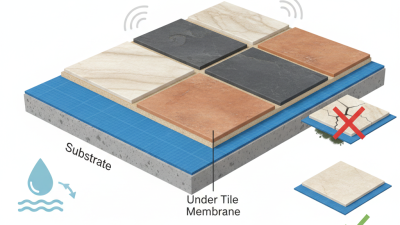
Cementitious waterproof membranes remain a practical choice beneath tiles and compatible decorative coatings. They mix with water or a liquid polymer, then spread across concrete, masonry, or cement boards. An EN 14891-tested product may achieve crack bridging from 0.75 mm under specified test conditions. That measurement matters. It shows controlled movement tolerance, not unlimited structural flexibility.
On site, surface preparation decides much of the result. Dust, curing compounds, loose mortar, and sharp ridges can weaken adhesion. I usually dampen absorbent concrete without leaving standing water. Then I apply the first coat evenly, pressing material into pores and corners. Reinforcing tape helps at joints, but it cannot repair a moving crack. The substrate still needs proper construction movement control.
A second coat is normally applied after the first has cured sufficiently. Film thickness must match the technical data, not visual judgment. Too little material can reduce performance. Too much may trap moisture or dry unevenly. This is where many installations become uncertain.
If the membrane will be painted, verify coating compatibility, alkalinity, vapor behavior, and curing time. EN 14891 primarily addresses waterproofing beneath ceramic tiling. It does not automatically approve every paint finish. A small test area can reveal poor adhesion before the whole surface is covered. That extra check feels slow, but skipping it is often more expensive.
Hybrid Silane Membranes: VOC Limits, Adhesion, and 2026 Selection Metrics
Hybrid silane membranes are gaining attention for paintable waterproofing because they combine elastic movement tolerance with strong mineral-surface bonding. Selection should begin with VOC classification, not marketing language. US EPA rules distinguish coating and sealant categories, while regional limits can differ sharply. Under South Coast Air Quality Management District Rule 1168, waterproofing sealants are limited to 250 g/L VOC. The category must be verified before specification.
Adhesion is equally important. ASTM D7234 pull-off testing can reveal weak concrete, contamination, or poor curing. On site, a clean, dry slab should show cohesive substrate failure rather than a clean membrane release. ASTM C794 peel testing adds useful evidence for flexible systems. A practical 2026 specification should record substrate moisture, primer use, curing time, peel strength, and pull-off results. Numbers without test conditions can mislead.
Energy and carbon pressures also influence material choices. The 2024 Global Status Report for Buildings and Construction reports that buildings and construction consume about 32% of global energy and produce approximately 34% of energy-related carbon emissions. Lower-VOC chemistry can support safer application, but it does not automatically improve durability. I would compare VOC content, adhesion retention after water immersion, elongation, crack-bridging ability, and repaintability. Classification matters. Some membranes look similar in a datasheet yet behave differently over damp concrete. A small trial panel is still wiser than a confident assumption.