



A porch railing is touched every day, yet its value often becomes clear only after years of sun, rain, and seasonal wear. Aluminum Porch Railing offers a practical balance: it is relatively light, resists corrosion, and can frame a porch without hiding the view. Its finish and fasteners still matter. Poor installation can spoil a good material.
Industry data helps explain aluminum’s appeal. The Aluminum Association’s report Aluminum: The Element of Sustainability states that recycling aluminum uses about 5% of the energy required to produce primary aluminum. That figure concerns recycling, not the energy or environmental impact of every railing product. Still, it highlights a useful material advantage. Buyers should also check the product’s alloy, coating, warranty, and installation guidance, rather than relying on “maintenance-free” claims.
A railing is not magic. It needs sound posts, secure connections, and care suited to its finish. John Weritz, the Aluminum Association’s vice president of standards and technology, is a relevant technical authority on aluminum standards. However, I could not verify a published statement from him specifically about porch railings, so attributing a direct quotation to him would be misleading. That restraint matters. This guide looks at durability, appearance, upkeep, and value, while keeping product claims grounded in evidence. A simple test helps: compare specifications, then picture the railing through a wet winter and a bright summer.
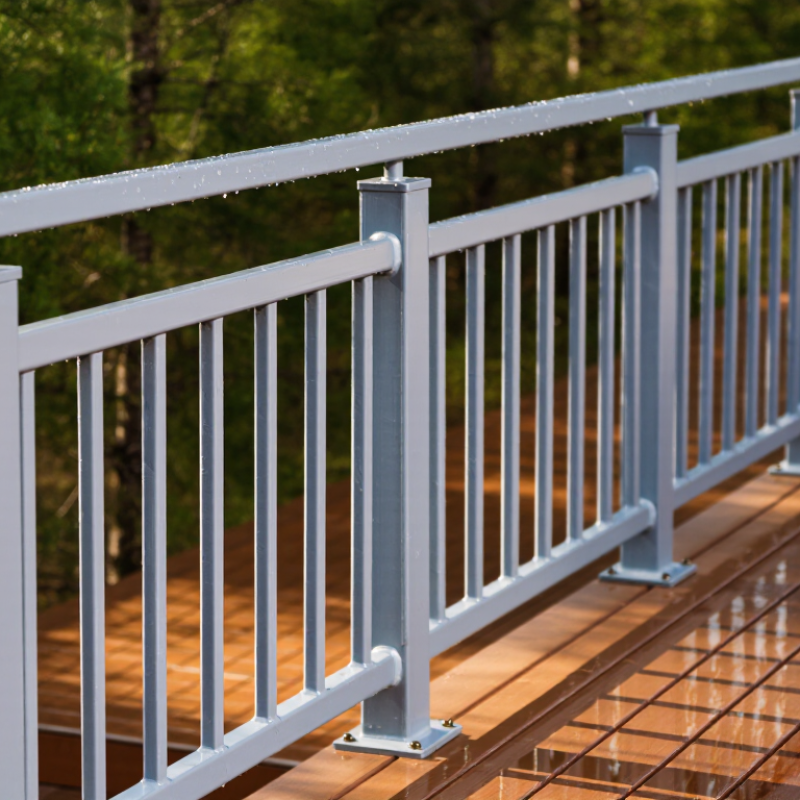
Aluminum porch railing is a barrier system made from shaped aluminum components. It typically includes vertical posts, top and bottom rails, and evenly spaced pickets or panels. Its open layout preserves sightlines while defining the porch edge. Aluminum resists rust, but its finish can still scratch or fade. Details matter.
Manufacturers usually cut or form aluminum sections, then assemble them with brackets, screws, or concealed connectors. Posts connect to the porch structure; rails span between them, and pickets fit into the rails or attach individually. Some systems arrive as preassembled panels, while others require on-site measuring and assembly. A level, secure fit depends on accurate spacing and suitable fasteners.
Installation details vary with the porch surface. Posts may attach to framing or masonry, and each requires an appropriate connection. The anchoring method matters as much as the railing itself. Local building requirements may set rules for railing height, openings, and load resistance, so check them before ordering. This is easy to underestimate. Even a clean-looking installation can feel loose if the supporting structure or connections are weak. And aluminum is not maintenance-free: inspect joints, remove dirt, and touch up finish damage as directed.
| Aspect | Typical Material or Construction Detail | Practical Benefit or Consideration |
|---|---|---|
| What it is | A porch guardrail system made primarily from aluminum components, commonly including posts, top and bottom rails, and vertical pickets or infill panels. | It provides a protective barrier at an elevated porch. The exact design and required dimensions depend on local building codes and the site. |
| Main components | Posts anchor the system; rails connect the posts; pickets, panels, or other infill close the openings. Brackets, fasteners, and post caps complete the assembly. | Components are designed to work together. Mixing parts from different systems can affect fit, strength, and installation requirements. |
| How it is made | Many architectural aluminum profiles are produced by extrusion, in which heated aluminum is pressed through a shaped die. Profiles are then cut, drilled, and assembled. | Extrusion can create consistent shapes for rails and posts. Construction details vary by railing design and manufacturer. |
| Common alloy | Alloy 6063 is commonly used for architectural aluminum extrusions, though railing products may use other alloys or material combinations. | The alloy alone does not establish system strength; profile design, connections, anchorage, and testing also matter. |
| Protective finish | Exterior systems may have a powder-coated finish or an anodized surface. Preparation and coating specifications vary. | A suitable finish helps protect the surface and provides color. Periodic cleaning and inspection are still recommended. |
| Corrosion behavior | Aluminum naturally forms a thin oxide layer. Coatings can provide additional surface protection. | Aluminum does not rust like iron or steel, but it can corrode in some conditions. Salt, chemicals, trapped moisture, and contact with dissimilar metals require attention. |
| Typical guard height | Residential guard heights are often 36 inches or more, while some locations or applications require 42 inches or more. | These are common code-related dimensions, not universal rules. Confirm the applicable local code before selecting or installing a system. |
| Opening size | Many residential guard requirements limit openings so a 4-inch-diameter sphere cannot pass through, with different rules possible at stairs and other locations. | Check local requirements and measure the finished installation, including openings near the walking surface and stair treads. |
| Attachment | Posts may be surface-mounted to a structurally suitable deck or porch, or attached at the side of the framing. The system uses specified brackets and fasteners. | Secure attachment to adequate framing is essential. Fastener type, spacing, and installation details should follow approved instructions and local requirements. |
| Maintenance | Routine care generally includes washing with mild soap and water and checking fasteners, joints, coatings, and anchorage. | Aluminum usually does not need paint to prevent rust, but damage, loose connections, or coating wear should be addressed. |
| Why choose it | Aluminum railing is relatively lightweight, available in multiple finishes and styles, and typically needs less rust-prevention maintenance than uncoated steel. | Compare the system’s tested performance, finish, installation requirements, and suitability for the exposure conditions—not appearance alone. |



Copyright © CUSTOM Building Products 2025
Products | Resources | Interactive Tools | Warranties | Privacy Policy | Terms of Use | Technical Training
