



Exterior Decorative Wall Panels do more than give a building a finished face. They can add texture, color, and visual rhythm, while helping define entrances, balconies, or ground-floor zones. On a plain façade, a ribbed panel can catch afternoon light; a stone-look surface can create a warmer street-level impression. Looks matter.
Building-science expert Joseph Lstiburek offers a useful reminder: “All buildings leak.” His point is not about decorative panels alone, but it highlights why appearance must be considered alongside drainage, flashing, ventilation, and installation. A panel is not automatically a weather barrier. The wall assembly behind it still needs careful design, compatible materials, and workmanship suited to local exposure.
These panels are used on homes, offices, shops, and public buildings to refresh façades, emphasize architectural features, or coordinate new additions with existing finishes. Some systems are lightweight and quick to install; others need stronger supports, precise joints, and more maintenance. The right choice depends on substrate, climate, fire performance, budget, and the manufacturer’s tested details. Details matter.
There is a less glamorous truth: a beautiful sample may look different across a large wall, especially under changing daylight. Owners and designers should inspect full-size samples and ask how corners, openings, water, and repairs will be handled. Exterior Decorative Wall Panels can make a building more distinctive, but they cannot fix a weak wall design. Their best use is both visual and practical, with expectations kept realistic.
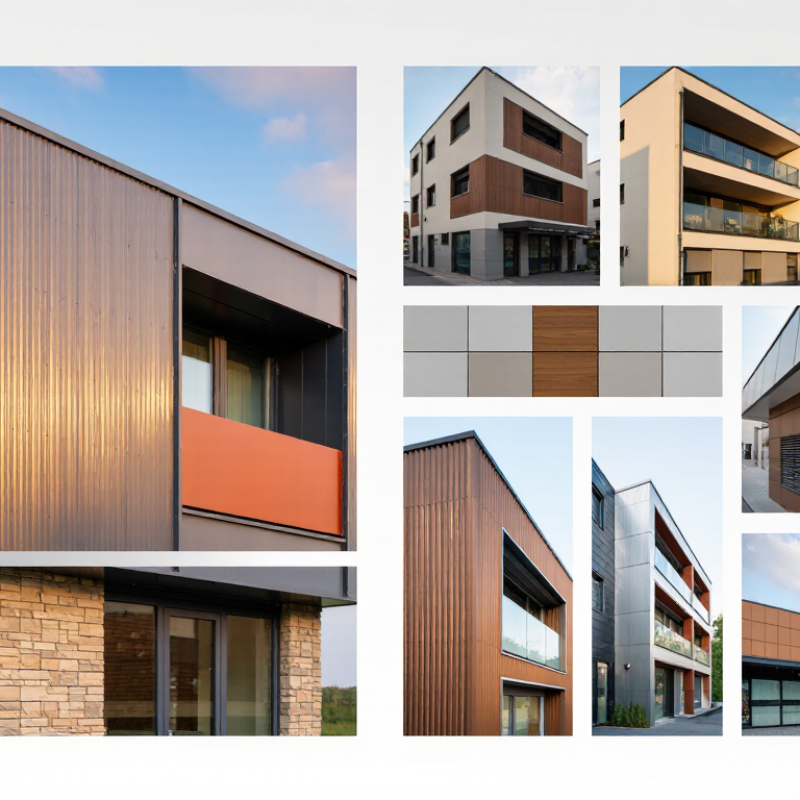
What Exterior Decorative Wall Panels Are: Exterior decorative wall panels are manufactured facing pieces attached to an outside wall’s supporting structure. Common options include fiber cement, metal, engineered wood, and polymer composites. Their finishes can resemble timber, stone, or smooth concrete. Narrow joints may create crisp shadow lines across a façade. Panels usually form the visible cladding layer; they are not automatically the wall’s waterproofing system. That distinction is easy to overlook.
These panels are used to refresh façades, add texture, and shield underlying surfaces from direct weather exposure. In some assemblies, they sit over a ventilated cavity, with flashing and a water-resistive barrier behind them. Details matter. The 2024 Global Status Report for Buildings and Construction, published by UNEP and GlobalABC, reports that buildings and construction accounted for 34% of global energy demand and 37% of energy- and process-related carbon dioxide emissions in 2022. This is context, not proof that decorative panels save energy. Their thermal effect depends on the complete wall assembly and installation.
Tips: Check panel weight, fire classification, fixing method, and maintenance needs before specifying a system. Ask how corners, window openings, and panel joints shed water. A sample can look different in full daylight. Inspect it outdoors.



Copyright © CUSTOM Building Products 2025
Products | Resources | Interactive Tools | Warranties | Privacy Policy | Terms of Use | Technical Training
