

What Are the Top Types of Racks and Rigs?

Strength training has moved from specialist gyms into home studios, school facilities, and small performance centers. The American College of Sports Medicine’s Worldwide Survey of Fitness Trends 2025 places traditional strength training among the leading global fitness trends. The Sports & Fitness Industry Association also reports strong participation in fitness activities, showing sustained demand for reliable resistance equipment. These findings make the question practical: what are the top types of Racks Rigs, and where does each design work best?

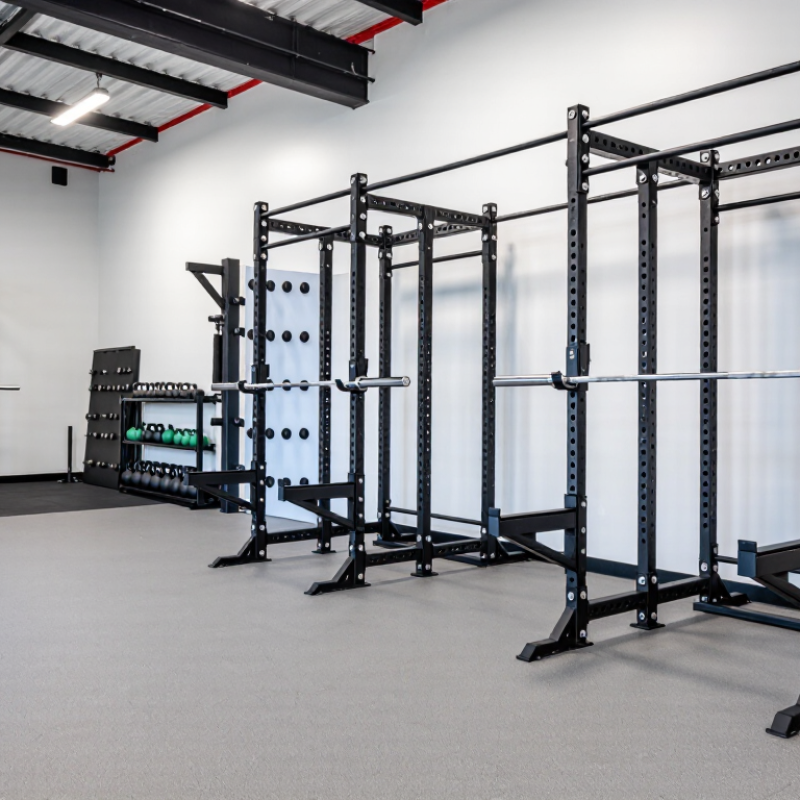
Power racks provide four-post stability, adjustable safety arms, and a controlled space for squats, presses, and rack pulls. Half racks use less floor space, while open squat racks improve access and visibility. Wall-mounted rigs suit compact training rooms, but their anchors must match the wall structure. Freestanding rigs offer flexibility for pull-ups, storage, and multiple training stations. Functional rigs can also support rings, cable systems, landmine attachments, and suspension tools.

The details matter. A 3-by-3-inch steel upright feels different from a lighter 2-by-2-inch frame. A 1-inch hole pattern offers finer adjustment than widely spaced holes. Small differences affect bar position, spotting height, and user confidence. ASTM F2276 and relevant EN fitness-equipment standards provide useful safety references, although compliance claims require verification from manufacturers or testing bodies.

No single rack fits every facility. A compact half rack may suit a garage, but it can limit attachments and shared training. A large rig may improve group flow, yet consume valuable floor space. Buyers should compare steel thickness, rated capacity, anchor requirements, warranty terms, and documented testing. Some marketing language remains vague. Careful inspection is still necessary.
What Are the Top Types of Racks and Rigs?

Rack and Rig Basics: Definitions, Functions, and Key Differences

What Are the Top Types of Racks and Rigs?

A rack is a structured frame that stores, organizes, or supports equipment. Common examples include pallet racks, cantilever racks, server racks, and power racks. Each type solves a different practical problem. Pallet racks hold boxed goods on adjustable levels. Cantilever racks support long materials, such as pipes or timber. Server racks protect electronic hardware while allowing airflow and cable management. Power racks create a stable training area for barbell exercises.

A rig is usually a larger, connected framework built for movement, suspension, lifting, or technical work. Fitness rigs may include pull-up bars, squat stations, rings, and attachment points. Lighting and production rigs support fixtures above a working space. Industrial rigs can combine platforms, rails, supports, and safety systems. Their design depends heavily on load direction, movement, height, and access.

A rack often stores or supports. A rig often enables activity. The difference is not always perfectly clear. Some modular racks can become training rigs with added beams and attachments. A storage rack may also need guarding, anchoring, and inspection when workers operate nearby. In practice, measure the available floor area, check the expected load, and review how people will use the structure. Small errors matter. A crowded aisle, loose anchor, or poorly placed attachment can reduce safety and efficiency. Material strength, connection quality, and routine inspection should guide the final choice.


Storage Racks: Main Designs and Their Common Applications

What Are the Top Types of Racks and Rigs?

Storage racks should match the load, aisle width, and handling method. Selective pallet racks offer direct access to every pallet. They suit warehouses with many product lines and frequent picking. Drive-in racks use deep lanes and reduce aisles. They work better for high-volume goods with fewer stock-keeping units. Cantilever racks support long items, such as pipes, timber, and metal profiles. Their open fronts make loading easier, but poor weight balance can create hazards.

According to the 2024 MHI Annual Industry Report, more than 1,000 supply chain professionals identified labor availability and operational efficiency as continuing concerns. Rack design can reduce unnecessary travel, but it cannot fix poor inventory discipline. A 2023 U.S. Bureau of Labor Statistics profile recorded more than 1.8 million jobs in warehousing and storage, showing how many workers interact with storage systems daily. Rack safety therefore depends on training, inspections, load labels, and controlled forklift routes.

Tips: Measure the largest load first. Check floor capacity before installation. Keep heavy pallets low. Inspect upright frames after impacts. Do not assume a denser layout is automatically better. I have seen compact storage increase travel time when product locations were poorly planned. Review picking data after several weeks, then adjust beam levels or aisle spacing.

Industrial Rigs: Core Types and Specialized Uses

Industrial Rigs: Core Types and Specialized Uses

Industrial rigs support lifting, storage, testing, drilling, and controlled assembly. Common types include fixed overhead rigs, mobile gantries, pipe racks, pallet racking, and test stands. Fixed overhead systems suit repetitive lifting across a defined work zone. Mobile gantries work better where loads and access points change. Pipe racks keep long materials elevated, visible, and protected from vehicle impact.

Specialized rigs demand closer engineering. Drilling rigs need stable foundations, torque control, and emergency shutdown planning. Test rigs require calibrated sensors, guarded moving parts, and repeatable loading conditions. Assembly rigs often use adjustable fixtures to hold heavy components within millimeter-level tolerances. OSHA 1910.176 requires stored materials to remain stable and secure where hazards exist. The 2024 MHI Annual Industry Report found that 55% of surveyed supply-chain leaders planned to increase technology investment. That supports smarter inspection systems, but automation does not remove structural risks. A sensor can detect overload; it cannot correct poor installation. I have seen that assumption fail.

Tips: Match the rig to load weight, height, movement, and floor capacity. Check anchor points before each shift. Record deformation, unusual noise, and damaged welds. Schedule professional inspections for critical lifting equipment. The right design is rarely the cheapest one. It is the one operators can use consistently. Some projects still over-specify equipment, creating cost and training burdens. Others under-specify it, which is worse. Review the decision after installation, not only on paper.

Choosing the Right Rack or Rig for Specific Requirements

Choosing the right rack or rig starts with the work, not the appearance.

A server rack suits enclosed technical equipment, while an open equipment rack improves ventilation and quick access. Pallet racks handle warehouse storage, but they need clear aisles and verified floor capacity. A modular rig works better for changing tools, cables, or inspection equipment.

Measure the load before comparing models.

Record each item’s weight, height, depth, and center of gravity. Leave space for airflow and maintenance.

For example, a 600-millimeter-deep cabinet may not support a device with rear cabling. Small details matter. Check the rated load per shelf, not only the total frame capacity. Uneven loading can create dangerous stress.

The environment also changes the decision.

Use corrosion-resistant materials in damp rooms. Choose lockable sections where unauthorized access is a concern. Mobile racks help temporary work areas, but their casters need reliable brakes. Fixed systems usually provide greater stability.

Experienced installers also inspect anchors, floor conditions, and emergency access before assembly. A perfect choice is rare. Sometimes a cheaper rack becomes expensive after poor ventilation, awkward servicing, or future expansion. I would review the layout again after installation, because real equipment rarely fits the original plan perfectly.

Safety, Capacity, and Maintenance Considerations

Choosing a rack or rig starts with the load, movement pattern, and working environment. Pallet racks suit organized warehouse storage, while cantilever racks handle long materials such as pipes, timber, or metal sections. Mobile racks save floor space but need stable tracks and controlled movement. Lifting rigs require stronger inspection routines because suspended loads can shift without warning.

Safety depends on accurate capacity information. Never judge capacity by appearance alone. Check the frame rating, beam condition, anchor points, and floor strength. Loads should remain centered, with heavier items stored lower whenever possible. Clear aisles reduce collision risks, especially around forklifts and hand trucks. A small impact can weaken a joint before damage becomes visible.

Maintenance should follow a written schedule, not memory. Inspect welds, bolts, guards, pins, wheels, and locking devices at regular intervals. Remove damaged components from service immediately. Keep surfaces clean and dry; dust can hide cracks, while moisture accelerates corrosion. Records should include inspection dates, findings, repairs, and the person responsible. In practice, labels sometimes fade and inspection intervals slip. That is a weakness worth admitting, then correcting with durable signs and simple checklists. A monthly review may also reveal changing loads, uneven floors, or new traffic patterns that the original layout never considered.

What Are the Top Types of Racks and Rigs? - Safety, Capacity, and Maintenance Considerations

Rack or Rig Type Typical Application Typical Capacity Range Space Efficiency Key Safety Considerations Maintenance Requirements Best Use Case
Selective Pallet Rack General warehouse storage for palletized goods with frequent product access. Approximately 1,000–5,000 lb per beam level, depending on design. Moderate; provides direct access to every pallet position but uses more aisles. Install column guards, observe beam-load limits, keep aisles clear, and inspect for bent frames or damaged connectors. Regular visual inspections; tighten or replace damaged components and verify anchors and beam safety locks. Warehouses with many SKUs and high access frequency.
Drive-In Rack High-density storage of large quantities of the same or similar products. Commonly about 1,500–4,000 lb per pallet position, subject to engineering. High; reduces aisles by allowing forklifts to enter storage lanes. Use trained forklift operators, control entry speed, protect uprights and guide rails, and follow the required loading sequence. Inspect rails, bracing, upright frames, and floor anchors; repair impact damage before continued use. Last-in, first-out inventory with relatively few product varieties.
Push-Back Rack Multi-pallet storage where loading and unloading occur from the same aisle. Often about 1,500–3,000 lb per cart or pallet position. High; stores pallets several positions deep while maintaining front access. Confirm pallet compatibility, control forklift movement, and prevent overloading or uneven placement on carts. Check carts, rollers, rails, stops, and retaining devices; remove debris from channels. Medium-turnover products requiring greater density than selective rack.
Pallet Flow Rack First-in, first-out storage for boxed, case, or palletized products. Commonly about 1,000–3,000 lb per lane level. High; uses gravity rollers or wheels to move loads toward the picking face. Use load-rated flow components, install lane separators and speed controllers where needed, and keep stop mechanisms functional. Inspect rollers, wheels, brakes, lane dividers, and pallet stops; clean tracks and replace worn parts. Perishable goods and operations requiring dependable FIFO rotation.
Cantilever Rack Long, bulky, or irregular materials such as pipe, timber, sheet goods, and profiles. Typically about 500–6,000 lb per arm, depending on arm length and column design. Good for long loads; eliminates front columns but requires suitable aisle and handling space. Balance loads across arms, secure unstable materials, respect arm capacity, and protect the rack from vehicle impact. Inspect arms, column bases, braces, pins, and anchors; check for deflection or loose connections. Storage of long products that cannot be handled efficiently on standard pallets.
Carton Flow Rack Manual picking of cartons, totes, and small parts using gravity-fed lanes. Usually about 100–1,000 lb per lane, depending on the flow deck. High for small-item picking; supports dense forward-pick areas. Prevent overloading, keep replenishment and picking zones separated, and ensure cartons are compatible with the rollers or wheels. Clean and inspect rollers, wheels, lane dividers, and stop bars; replace damaged flow components. Order picking, e-commerce fulfillment, and parts distribution.
Mobile Storage Rack High-density storage where rack sections move on floor rails to open a single access aisle. Often about 1,000–4,000 lb per level, engineered for the moving base. Very high; can reduce fixed aisle space while retaining access to stored loads. Use interlocks, aisle-presence sensors, emergency stops, and floor-level controls; never enter a closing aisle. Inspect drive systems, rails, wheels, limit switches, sensors, and emergency controls on a scheduled basis. Facilities with expensive floor space and moderate access frequency.
Material-Handling Lifting Rig Controlled lifting and positioning of machinery, structural components, molds, or other heavy loads. From several hundred pounds to many tons; capacity must be established by a qualified design. Not primarily a storage system; designed for safe lifting reach and load positioning. Verify the rated load, center of gravity, sling angles, attachment points, inspection status, and exclusion zones before lifting. Inspect wire rope, chains, hooks, shackles, welds, pins, brakes, and structural members; remove defective parts from service. Maintenance shops, construction areas, production lines, and equipment installation.
Portable A-Frame Rack Temporary or mobile storage and transport of panels, glass, doors, and sheet materials. Commonly about 500–4,000 lb per frame, depending on size and construction. Good for flexible storage but less space-efficient than fixed pallet systems. Distribute loads evenly, secure materials against tipping, lock casters where provided, and avoid exceeding the frame angle or height limit. Check casters, locking devices, welds, protective padding, and frame alignment before use. Short-term projects, fabrication areas, glazing operations, and material staging.
Mezzanine Storage Platform Additional elevated floor space for inventory, workstations, or light industrial operations. Often designed for approximately 100–250 lb per sq. ft.; project-specific engineering is required. Very high vertical utilization, but it requires adequate building height and compliant access routes. Use guardrails, toe boards, compliant stairs or gates, visible load signage, and approved material-handling equipment. Inspect decking, columns, beams, stairs, guardrails, gates, and connections; verify that unauthorized alterations have not been made. Facilities needing extra usable floor area without expanding the building footprint.

Capacity figures are typical planning ranges rather than universal ratings. Actual safe working loads depend on the equipment design, dimensions, materials, load distribution, anchoring, operating environment, and applicable local regulations. Always use the manufacturer’s or qualified engineer’s rated capacity and inspection requirements.

Article Source:

Resources

Copyright © CUSTOM Building Products 2025
Products | Resources | Interactive Tools | Warranties | Privacy Policy | Terms of Use | Technical Training