



In 2026, selecting a Foam-Filled Mooring Buoy is about matching its shape and fittings to real working conditions. A buoy beside a sheltered dock faces different demands from one exposed to passing vessels, changing tides, and rougher water. The best choice is not always the largest or most heavily equipped. It is the one that suits the mooring layout, line loads, water depth, and maintenance plan.
This guide compares common types, including cylindrical Mooring Buoys, pick-up buoys, and larger offshore or heavy-duty designs. Each serves a different purpose. A pick-up buoy helps crews locate and handle a mooring line; a cylindrical model can provide a clear, stable float for many routine applications. Details matter: inspect the lifting eyes, attachment points, outer shell, and stated buoyancy. Also check whether the hardware suits the rope or chain used on site. Small details matter.
Foam filling can help a buoy retain flotation if its shell is damaged, but it does not make every design suitable for every load or sea state. That distinction deserves attention. Product descriptions may sound similar, while construction, fittings, and intended duty vary. We will look at those differences and the practical trade-offs buyers should weigh. The comparisons are a starting point, not a substitute for checking manufacturer specifications and site conditions. I would be cautious about any “top” list that ignores those factors.
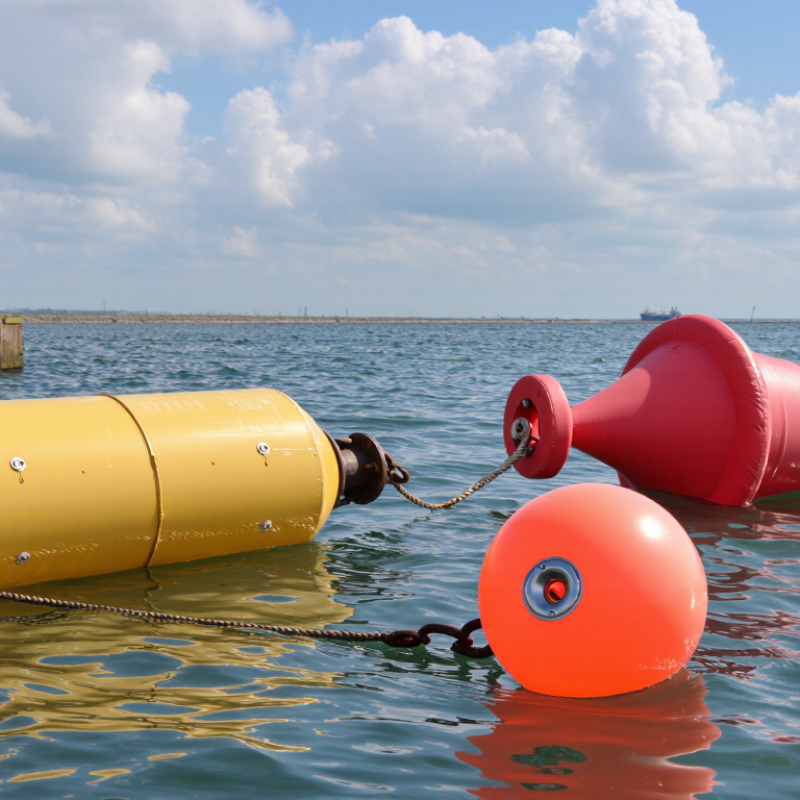
A foam-filled mooring buoy works by displacing water. Its sealed outer shell gives the buoy shape, while closed-cell foam helps preserve flotation if the shell is punctured. The mooring eye transfers tension from the chain or rope into the buoy body. This connection deserves careful inspection; a strong float cannot compensate for a damaged fitting.
UNESCO/IOC’s TEOS-10 manual puts typical seawater density near 1,025 kg/m³, varying with temperature and salinity. So one cubic metre of submerged volume provides roughly 1,025 kilograms-force of gross buoyancy before subtracting the buoy’s own weight and attached load. That estimate is clean. The sea is not. Waves, current, and changing immersion add forces; the USACE Coastal Engineering Manual describes these environmental loads as key design considerations.
Foam-filled types vary by shape, volume, foam density, shell material, and mooring-point reinforcement. A compact marker buoy may suit lighter line loads, while a larger body can provide greater reserve buoyancy and visibility. Yet bigger is not automatically safer: excess exposed area can increase wave and current forces. Operators should check the manufacturer’s load and immersion data, then inspect for cracks, foam exposure, and movement at the mooring eye. A small defect can grow quietly.



Copyright © CUSTOM Building Products 2025
Products | Resources | Interactive Tools | Warranties | Privacy Policy | Terms of Use | Technical Training
