


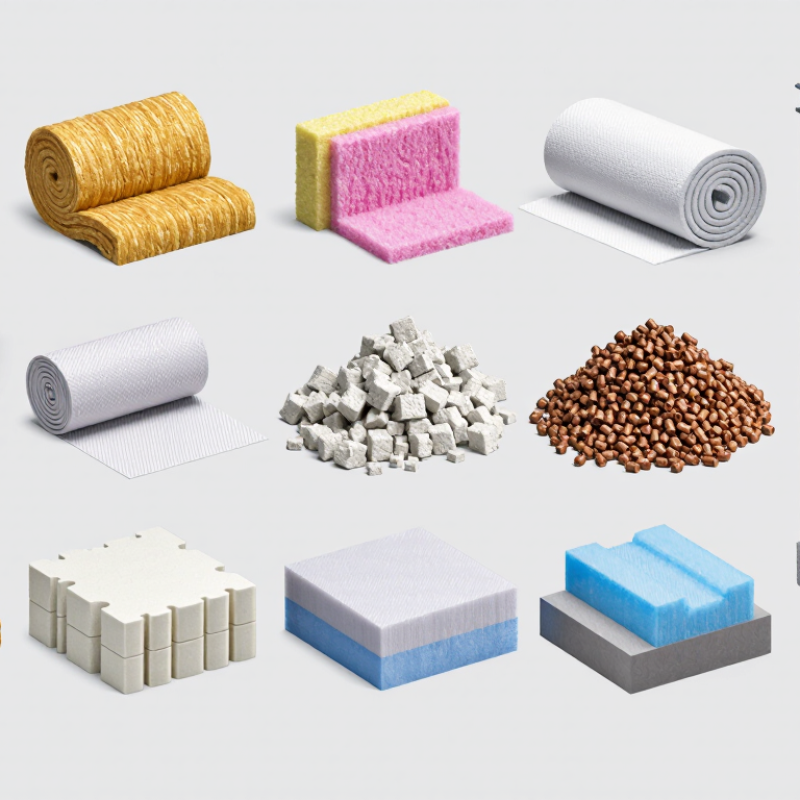
Choosing the right Fireproof Insulation requires more than comparing product prices or temperature ratings. Global buyers must examine material composition, fire-test results, installation conditions, and long-term performance. A ceramic fiber blanket may protect a furnace wall, while mineral wool can suit external building assemblies. Calcium silicate boards offer rigidity, but they may require careful handling during cutting and fitting.
Performance depends on the application. A high-temperature pipe room, commercial façade, ship compartment, and industrial kiln face different risks. Buyers should review flame spread, smoke development, thermal conductivity, moisture resistance, and service temperature. Independent laboratory reports provide stronger evidence than unsupported marketing claims. Certification should also match the destination market and the intended construction system.
Details matter. A poorly sealed joint can let heat pass through an otherwise excellent barrier. Wet insulation may lose efficiency. Compressed batts may create gaps around steel framing. These small failures often appear during installation, not during showroom demonstrations. This guide compares ten widely used materials through practical criteria, including safety, durability, handling, availability, and lifecycle value. It considers products such as mineral wool, fiberglass, ceramic fiber, perlite, vermiculite, and calcium silicate.
No material is perfect. That deserves attention. Some options resist extreme heat but need protective surfaces. Others install easily but perform poorly under severe exposure. Buyers should confirm local building requirements, obtain current technical data, and consult qualified fire-safety professionals before specifying a system. The final choice should reflect verified testing, realistic site conditions, and responsible installation—not a single impressive number.
“Fireproof” insulation is not automatically fireproof in every building condition. It usually means limited combustibility, low flame spread, or a tested resistance period. The 2023 National Fire Protection Association fire-loss report recorded about 1.5 million fires in the United States, with property damage near $18.1 billion. These figures explain why insulation ratings deserve careful attention.
Testing methods measure different risks. ASTM E136 evaluates whether a material remains noncombustible under high heat. ASTM E84 measures flame spread and smoke development across a surface. In Europe, EN 13501-1 classifies products from A1 to F, while ISO 1182 supports noncombustibility assessment. A high rating helps, but it does not guarantee a complete wall assembly will resist fire for the same duration. That distinction is often missed.
Thickness, density, moisture, facings, joints, and installation quality can change performance. Mineral-based insulation may remain stable near extreme temperatures, while some polymeric products need protective layers. However, every product has weak points. Gaps around pipes can act like small chimneys. Compressed sections may reduce thermal protection. Fire resistance tests, such as ASTM E119 or EN 1363-1, evaluate assemblies rather than loose insulation alone. Global buyers should request test reports, application limits, aging data, and certification scope. Laboratory results are valuable, but real projects remain less tidy.


Copyright © CUSTOM Building Products 2025
Products | Resources | Interactive Tools | Warranties | Privacy Policy | Terms of Use | Technical Training
