

Top Food Bristol Paper Suppliers for Global Buyers?

Choosing reliable Food Bristol Paper suppliers requires more than comparing prices on a polished catalogue. Global buyers need paper quality, traceability, and practical shipping experience. Bristol paper is known for its smooth surface, firm structure, and clean print performance. These features support food sleeves, bakery boxes, menu inserts, labels, and lightweight packaging components. However, not every Bristol board is suitable for direct food contact. That distinction matters.

A dependable supplier should provide clear product specifications, including grammage, thickness, whiteness, moisture resistance, and available sheet sizes. Buyers should also request food-contact declarations, migration test reports, and details about coatings, inks, adhesives, and recycled content. Requirements may differ between destination markets. Verification is essential. Supplier audits can reveal storage conditions, production controls, and whether batch records are maintained consistently. Small details matter, such as wrapped pallets, corner protection, and moisture barriers during ocean transport.

Experience also helps when selecting export partners. A supplier serving overseas customers should explain lead times, minimum order quantities, sample procedures, and claims handling without vague promises. Ask for recent references or documented case examples. Some suppliers may offer competitive pricing but lack stable production capacity. Others may communicate well but provide inconsistent shade or caliper results. No supplier is perfect. Buyers should leave room for testing and reassessment.

This guide examines leading Food Bristol Paper suppliers for global buyers, focusing on material reliability, customization, compliance documentation, export readiness, and long-term value. The goal is not to praise the largest company automatically. It is to identify suppliers that can perform steadily when real orders become complicated.
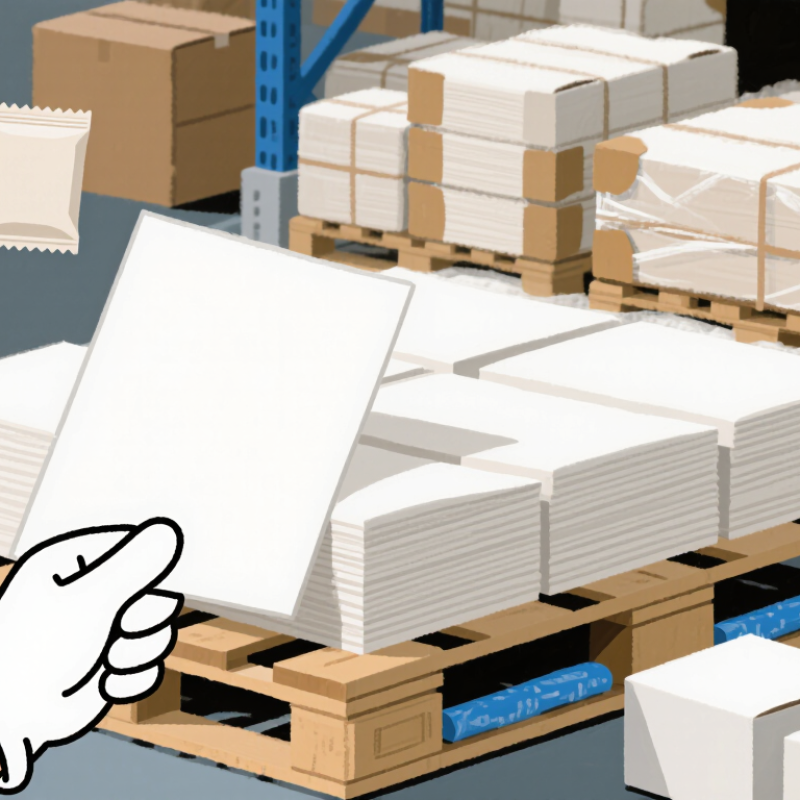
Top Food Bristol Paper Suppliers for Global Buyers?

What Is Food-Grade Bristol Paper and Where Is It Used?

Top Food Bristol Paper Suppliers for Global Buyers?

What Is Food-Grade Bristol Paper and Where Is It Used?

Food-grade Bristol paper is a smooth, stiff paperboard made for food-contact packaging. Its layered structure gives cartons strength without excessive thickness. Typical applications include bakery boxes, takeaway sleeves, dry-food cartons, confectionery packaging, and paper trays. However, “food-grade Bristol” is not a universal legal classification. Compliance depends on fibers, additives, inks, adhesives, coatings, and intended food contact.

The board should resist grease, moisture, and surface scuffing during packing and transport. A water-based barrier may suit dry pastries, while stronger grease protection is needed for oily foods. Buyers should request migration tests, pulp declarations, and batch traceability. The U.S. food-contact framework includes requirements for paper and paperboard components under 21 CFR 176.170 and 176.180. European buyers may also require documentation under applicable food-contact material rules.

Packaging choices matter because food loss remains substantial. The FAO’s State of Food and Agriculture 2019 estimated that 13.2% of food is lost between harvest and retail. Better packaging cannot solve every cause, but suitable board can protect products from crushing and contamination. UNEP’s Food Waste Index Report 2024 estimated 1.05 billion tonnes of food waste in 2022. That figure makes material performance more than a design issue. Still, one laboratory test can mislead. Real warehouse humidity, freezer exposure, and stacking pressure deserve practical trials before purchasing.


Key Standards for Evaluating Bristol Paper Suppliers

Global buyers should judge Bristol paper suppliers by measurable standards, not polished catalogues. The FAO Forestry Production and Trade database places global paper and paperboard output at roughly 410 million tonnes in 2022. That scale makes consistency essential. Ask suppliers for recent batch records, not only sample sheets.

Start with basis weight, thickness, stiffness, and moisture. ISO 536 verifies grammage, while ISO 534 measures thickness. ISO 8791-4 helps assess roughness. These details affect folding, die-cutting, ink coverage, and shipping damage.

A practical test includes stacking sheets for 24 hours, checking curl, and measuring moisture near the edges. Small variations become obvious on a production line.

Sustainability also needs evidence. The FAO data shows why responsible fibre sourcing matters across a huge supply chain. Request fibre-origin statements, recycled-content calculations, and current chain-of-custody documents. Suppliers should explain whether coatings affect recyclability. Their answers should be specific.

Reliability includes delivery performance. Compare lead times, minimum order quantities, packaging protection, and complaint response procedures. Smithers’ folding-carton market research identifies premium print quality and sustainability as continuing industry pressures. Yet a supplier may still provide beautiful samples and inconsistent commercial batches. I would request three production lots before approval. One test is not enough. A careful audit can feel slow, but rejected cartons cost more than laboratory testing.

Leading Bristol Paper Supplier Categories for Global Buyers

Global buyers usually search for Bristol paper suppliers by product category, not by appearance alone. The main category is coated Bristol board, valued for smooth printing and crisp color reproduction. It suits folders, invitations, presentation covers, and retail cards. Uncoated Bristol paper offers a softer touch and better writing performance. Buyers should compare GSM, caliper, surface finish, and sheet size before requesting prices.

Recycled Bristol board is another growing category. It can support sustainability goals, but its shade may vary slightly between production batches. That detail matters when matching previous packaging or printed materials. Specialty suppliers may provide colored, textured, water-resistant, or archival-grade Bristol paper. Ask for physical samples. Digital images often hide surface differences.

From practical sourcing work, export-ready suppliers usually explain minimum order quantities, pallet protection, moisture control, and lead times clearly. Strong suppliers also provide technical data sheets and consistent batch records. Check grain direction when the paper will be folded or laminated. A small mistake can cause cracking along the fold. I have seen buyers focus too heavily on unit price and overlook port handling costs. That approach is understandable, but incomplete. Confirm packing dimensions, documentation, payment terms, and delivery conditions before placing a large order.

Top Food Bristol Paper Suppliers for Global Buyers? - Leading Bristol Paper Supplier Categories for Global Buyers

Bristol Paper Supplier Category Typical Basis Weight Common Sheet Formats Surface Finish Food-Contact Suitability Typical Food Packaging Uses Printing Compatibility Key Buyer Checks
Food-Grade Folding Boxboard 230–400 gsm 640 × 900 mm; 700 × 1000 mm; custom sheets or reels White coated top side with a white or natural reverse side Suitable only when the supplied grade, coating, inks, adhesives, and intended use comply with the destination market’s food-contact requirements Dry-food cartons, bakery boxes, cereal cartons, confectionery sleeves, and takeaway packaging Offset, flexographic, digital, and gravure printing, depending on coating and converting requirements Food-contact declaration, migration test results, odor and taste testing, moisture resistance, and traceability
Coated One-Side Bristol Board 200–350 gsm Common commercial sheets from approximately 450 × 640 mm to 720 × 1020 mm Gloss, silk, or matte coating on one side; uncoated reverse side May be used for indirect-contact packaging when the complete packaging structure is compliant; not automatically food-safe Product sleeves, paper bands, bakery inserts, menu cards, and secondary packaging Excellent image reproduction on the coated side; suitable for offset and digital printing Coating composition, rub resistance, folding performance, print-side requirements, and regulatory documentation
Uncoated Food-Grade Bristol Board 180–400 gsm Standard sheets, guillotine-cut sheets, and custom dimensions Natural, smooth, or machine-finished surface Can be suitable for direct or indirect food contact only with an appropriate grade and verified compliance documentation Paper trays, dry-food cartons, bakery packaging, dividers, and food-service accessories Offset, flexographic, letterpress, and digital printing; absorbs ink more than coated board Absorbency, stiffness, fiber origin, cleanliness, odor, and performance after die-cutting and folding
Recycled Bristol Board 250–600 gsm Commonly supplied in standard industrial sheet sizes or made-to-order formats Grey-back, white-back, coated, or uncoated surfaces Generally more appropriate for secondary packaging unless a specific food-contact grade has been tested and approved Outer cartons, transport sleeves, display packaging, separators, and non-contact food packaging Offset and flexographic printing; surface uniformity varies by recycled fiber content Recycled content percentage, de-inking process, odor, heavy-metal limits, stiffness, and sustainability certificates
Cupstock and Liquid-Packaging Board 180–350 gsm Reels and sheets sized for cup, carton, or pouch-converting equipment Polymer-coated, dispersion-coated, or barrier-coated surface Designed for approved liquid or food-contact applications when the coating and board combination meet applicable regulations Paper cups, beverage cartons, soup containers, ice-cream packs, and chilled-food packaging Flexographic, offset, and rotogravure printing, subject to coating and converting specifications Barrier type, heat-sealing temperature, leakage resistance, coating weight, odor, and migration performance
Grease-Resistant Bristol Board 230–450 gsm Sheets or reels; dimensions depend on the intended die-cutting line Uncoated, clay-coated, dispersion-coated, or specialty barrier finish Suitable for food applications only where grease resistance and food-contact compliance are confirmed for the entire structure Pizza boxes, pastry boxes, fried-food packs, sandwich cartons, and snack trays Flexographic and offset printing; surface treatment can affect ink adhesion and drying Kit or grease-resistance value, heat performance, moisture resistance, odor transfer, and folding-crack resistance
High-Stiffness Display Bristol Board 350–700 gsm Large-format sheets, mounted sheets, and custom die-cut blanks Coated, laminated, embossed, or textured surface Normally intended for secondary packaging or point-of-sale use unless an approved food-contact grade is specified Counter displays, retail multipacks, shelf-ready packaging, and premium outer sleeves Offset, digital, screen, and specialty finishing processes Caliper, bending stiffness, flatness, scoring quality, lamination adhesion, and pallet stability
Custom-Converted Bristol Packaging Board Specification-based; commonly 200–600 gsm Die-cut blanks, folded cartons, reels, sheets, and customer-defined formats Selected according to the package design: matte, gloss, uncoated, embossed, or barrier-treated Depends on the board grade, inks, coatings, adhesives, and production process used for the finished package Private-label cartons, bakery packs, takeaway boxes, subscription food packaging, and promotional packs Printing and finishing are selected according to artwork, run length, and packaging machinery Technical drawing approval, tolerance control, sample validation, batch consistency, packing method, and export documentation

Buyer note: Basis weight, board structure, barrier performance, and food-contact status should be confirmed through a current technical data sheet and compliance documentation for the destination market. Food-contact suitability cannot be determined from paper weight or appearance alone.

How to Compare Quality, Pricing, and Production Capacity

Top Food Bristol Paper Suppliers for Global Buyers?

How to Compare Quality, Pricing, and Production Capacity

Global buyers should compare food paper suppliers through documented performance, not attractive quotations alone. Request recent test reports for food-contact safety, grease resistance, moisture barriers, and print durability. Ask for batch traceability, raw material details, and quality-control records. A reliable supplier should explain testing methods clearly. Vague answers deserve caution.

Inspect physical samples under realistic conditions. Fill a paper container with hot soup, then check its seams after thirty minutes. Rub printed areas with a damp cloth. Look for ink transfer, curling, or softening. Small defects matter. However, one perfect sample proves little. I once treated sample quality as final evidence, and that judgment was too optimistic.

Pricing requires a complete cost comparison. Check paper grade, coating type, printing colors, tooling, minimum order quantity, packaging, and shipping terms. A lower unit price may hide high setup fees or excessive production waste. Request prices at several volumes, such as 50,000, 200,000, and 500,000 units. Then compare the actual landed cost.

Production capacity also needs practical evidence. Ask for monthly output, average lead times, peak-season schedules, and backup equipment. Confirm whether the supplier can maintain the same quality during urgent orders. Review their delivery history when possible. Capacity claims can sound impressive, but consistent records are more useful than promises.

Top Food Paper Supplier Benchmarks for Global Buyers

This benchmark compares anonymous supplier profiles using three practical purchasing factors: quality consistency, price competitiveness, and production capacity. Scores are normalized on a 0–100 scale to help global buyers balance product performance, landed cost, and supply stability.

What to Check Before Importing Bristol Paper Internationally

Top Food Bristol Paper Suppliers for Global Buyers?

When importing Bristol paper internationally, begin with measurable specifications, not attractive samples. Ask for grammage, caliper, stiffness, brightness, moisture, and surface smoothness. A 300 gsm sheet may still perform poorly on a folding line. Request laboratory results using recognized methods, such as ISO 536 for grammage and ISO 534 for thickness. Check the latest batch, not an old certificate. That distinction matters.

Market scale also deserves attention. FAO’s Global Forest Products Facts and Figures 2023 recorded roughly 417 million tonnes of global paper and paperboard production in 2022. CEPI’s 2023 statistics placed European production near 79.5 million tonnes, a 2.3% decline. These figures suggest supply is substantial, but regional capacity can change quickly. Confirm monthly output, lead time, minimum order quantity, and backup production capacity. Promises are not specifications.

For food-related use, request a clear food-contact declaration and applicable migration test results. Confirm whether the coating, ink, adhesive, and recycled fiber are included in the assessment. Inspect pallet wrapping, corner protection, container loading, and moisture barriers with photos before shipment. Check tolerances for sheet size and squareness, because small errors can create costly press waste. Independent pre-shipment inspection is sensible, although I have seen buyers treat it as optional. That is an expensive assumption. Verify the certificate issuer, production date, test method, and destination-country requirements before signing. Surface appearance can pass inspection while runnability fails.

Resources

Copyright © CUSTOM Building Products 2025
Products | Resources | Interactive Tools | Warranties | Privacy Policy | Terms of Use | Technical Training