Top 5 Axis Wood CNC Machine Manufacturers in China?
Choosing a 5 Axis Wood Cnc Machine in China requires more than comparing prices and spindle power. Manufacturing accuracy, software compatibility, service response, and long-term reliability all matter. A machine may look impressive in photographs but perform differently on a busy workshop floor.
This guide introduces five leading Chinese manufacturers associated with five-axis woodworking CNC equipment. The selection considers practical factors, including machining precision, gantry stability, tool-changing systems, dust collection, operator training, and after-sales support. These details often decide whether a machine produces clean chair parts, carved doors, sculptural panels, or complex furniture components.
Real workshop experience shows that specifications do not tell the complete story. Some suppliers offer strong customization but limited overseas support. Others provide polished documentation yet charge more for essential options. That difference matters.
We also examine each manufacturer’s typical machine range, application strengths, production capabilities, and suitability for different business sizes. Buyers should still request current test videos, sample cuts, component brands, and references from comparable workshops. Factory visits are even better when practical.
No ranking is permanently correct. Product lines change, engineers move, and service quality can vary by region. This article therefore aims to provide a dependable starting point, not a final purchasing decision. Careful verification remains necessary, especially for installation standards, electrical requirements, training, warranty coverage, and replacement parts. A low purchase price can become expensive when support is slow.
The best choice is the manufacturer that fits your materials, workload, workshop space, and growth plans. Performance must be proven.
What Is a 5-Axis Wood CNC Machine?
A 5-axis wood CNC machine is a computer-controlled router that moves along three linear axes and two rotating axes. X, Y, and Z control length, width, and cutting depth. The A and B axes tilt or rotate the spindle around the workpiece. This movement allows one setup to carve curved chair legs, sculptural panels, stair components, and complex furniture joints.
A 3-axis router often needs several repositioning steps. A 5-axis model can reach angled surfaces with fewer interruptions. That can reduce alignment errors and protect delicate edges. In practical workshops, the result depends on more than axis count. Spindle power, servo response, toolpath software, vacuum holding, and dust extraction matter greatly. A poorly calibrated machine still produces poor work.
Industry reports show why this technology attracts manufacturers. Fortune Business Insights estimates the global CNC machine market will grow from about USD 86.7 billion in 2023 to more than USD 140 billion by 2032. Grand View Research also reports steady annual growth in the CNC equipment sector. These figures cover many industries, not only woodworking. That distinction matters.
When comparing Chinese manufacturers, buyers should inspect test-cut videos, positioning accuracy records, controller compatibility, and after-sales training. Ask for results on solid wood, plywood, and curved panels. One uncomfortable truth remains: higher precision does not automatically mean better production. Operators still need strong toolpath knowledge, correct cutting speeds, and regular calibration. Mistakes happen. Good documentation makes them easier to correct.
How to Evaluate Chinese CNC Machine Manufacturers
Choosing a five-axis wood CNC machine in China requires more than comparing prices and photographs. A reliable evaluation starts with factory evidence. Ask for a live video tour, production records, and photographs of completed machines. Check whether the manufacturer builds key parts in-house or outsources them. This affects consistency, repair speed, and accountability. Ask for evidence.
Request a sample machining test using your own wood, cutter, and design file. Examine edge quality, pocket depth, tool changes, dust removal, and five-axis movement. A smooth demonstration on easy plywood proves little. Test hardwood, curved panels, and repeated production cycles. Measure the finished parts with calipers. Small errors can become expensive during large orders. I would also inspect the control cabinet, wiring labels, spindle cooling, and emergency systems.
Technical support deserves equal attention. Confirm response times, spare-parts availability, installation training, software compatibility, and remote troubleshooting procedures. Review certifications carefully, but verify their scope and validity. Speak with current users who produce similar furniture or carved components. Their feedback may reveal downtime that brochures never mention. Request a written warranty with clear exclusions and service duties. The lowest quotation is not always economical after shipping, tooling, training, and maintenance. I once underestimated operator training in a purchasing plan; that mistake delayed production more than expected. A transparent supplier should welcome difficult questions, provide measurable specifications, and admit where its machine has limitations.
Top 5 Axis Wood CNC Machine Manufacturers in China
Top 5 Axis Wood CNC Machine Manufacturers in China
China has a strong manufacturing base for five-axis wood CNC machines, serving furniture, musical instrument, carving, and architectural panel producers. The most reliable suppliers usually provide complete machine development, not simple assembly. Their workshops should show rigid steel frames, calibrated rotary tables, protected linear guides, and tested dust extraction systems. A useful shortlist includes manufacturers with proven five-axis experience, precision machining capacity, and documented export service.
The first group focuses on heavy-duty woodworking centers. These machines often use gantry structures, vacuum tables, and automatic tool changers for large doors or solid timber panels. Another group specializes in compact machines for curved furniture parts and detailed carving. Their spindle cooling, axis clearance, and simulation software deserve close inspection. Some suppliers also build custom machines with pendulum tables, laser measurement, or multi-zone vacuum control.
My practical checks begin with sample cutting. I request a small oak panel and inspect edge quality, pocket depth, tool marks, and repeatability after several cycles. I also review electrical diagrams, spare-part lists, operator training, and remote support procedures. Promises can sound polished.
A few manufacturers offer attractive prices but provide weak documentation or slow technical replies. That matters during production. Buyers should verify testing records, warranty terms, installation support, and local safety compliance before payment. Even experienced teams can overlook dust management, noise levels, or the real cost of imported tooling.
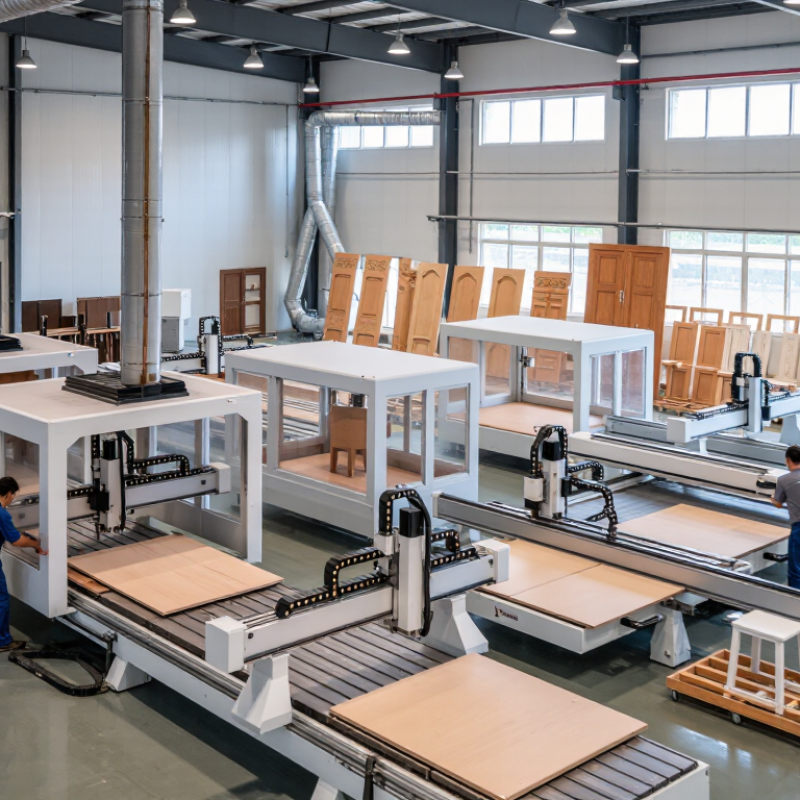
A five-axis wood CNC machine combines three linear axes (X, Y, and Z) with two rotary axes, enabling multi-angle cutting, carving, drilling, and edge machining. The chart presents the standardized five-axis configuration used for an anonymous top-five manufacturer shortlist without displaying company or brand names.
Key Features and Applications of Their CNC Machines
China’s leading five-axis wood CNC manufacturers usually compete through practical machine features, not appearance alone. Their systems often combine rigid steel frames, servo-driven rotary heads, and automatic tool changers. These components support accurate cutting on curved furniture parts, stair rails, doors, and solid-wood sculptures.
One manufacturer may focus on cabinet production, offering vacuum tables, nesting software, and dust extraction near each cutting zone. Another may design machines for architectural carving, with high-clearance gantries and multi-angle spindle movement.
A third often targets solid wood workshops, using torque-rich spindles for oak, walnut, and laminated beams. A fourth may build compact machines for custom furniture makers. The fifth commonly integrates robotic loading, barcode tracking, and sanding preparation for larger factories.
In daily operation, five-axis movement reduces repeated clamping. That can protect delicate edges and improve alignment around a curved chair leg. Operators also need simple calibration tools, clear alarms, and accessible maintenance points. Good software should import common CAD files and simulate collisions before cutting. Dust control matters more than many brochures admit. Fine wood particles can damage guides and obscure sensors.
I would still inspect sample cuts before placing a large order. A polished demonstration may hide vibration during deep carving. One overlooked weakness is training support. Even an accurate machine can produce poor results when tool paths are badly prepared. Manufacturers with documented testing, spare-parts planning, and responsive technical teams offer stronger long-term reliability.