


Choosing among the 10 Best OEM Artificial Sports Turf Manufacturers requires more than comparing catalog photos. A bright green field may look impressive, yet its yarn can flatten quickly under repeated training. The better question concerns performance, consistency, and honest technical support.
This guide examines manufacturers through practical criteria. These include fiber shape, pile height, stitch rate, backing strength, drainage design, infill compatibility, and shock-pad options. It also considers factory quality control, laboratory testing, customization capacity, production experience, and after-sales service. A dependable OEM partner should provide clear specifications, stable batch quality, and samples that match delivered rolls. Small details matter. A loose backing seam can become a costly field problem.
Dr. Wendy Gelernter, a respected turfgrass scientist and sports-field consultant, has stated, “There is no one-size-fits-all solution.” That principle guides this comparison. A football training ground needs different performance characteristics from a school pitch or a landscaped rooftop court. Climate, user intensity, maintenance budgets, and local installation skills can change the final decision.
This ranking is not absolute. It reflects available technical evidence, manufacturing capability, communication quality, and suitability for different buyers. Some manufacturers may offer excellent customization but weaker documentation. Others may provide strong testing records while charging more. That trade-off deserves attention. Buyers should verify current certifications, inspect production samples, and request references before signing an OEM agreement. Even a promising supplier can disappoint without careful specification control.
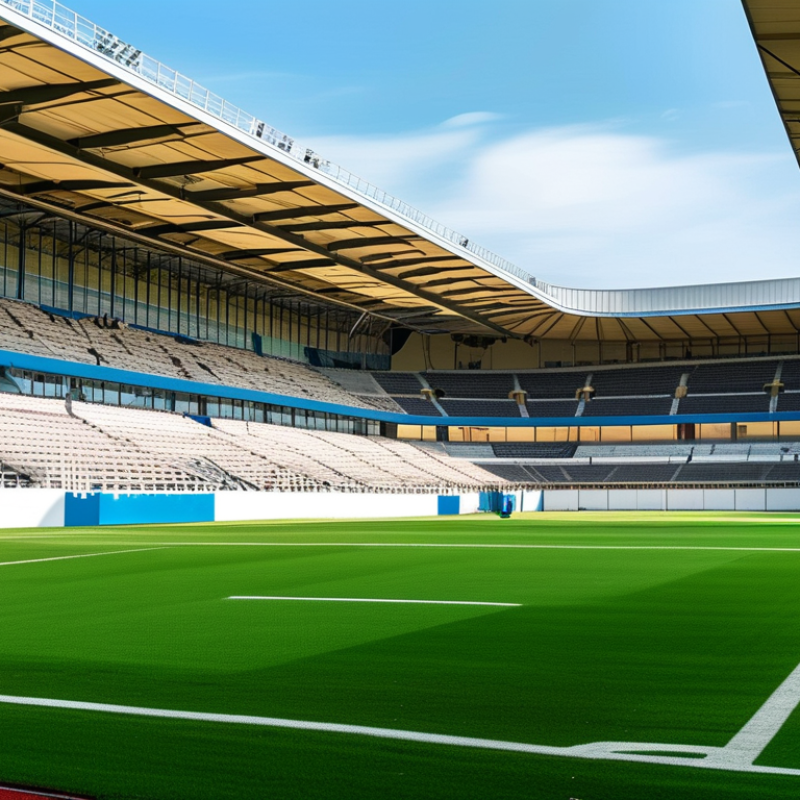
OEM artificial sports turf manufacturing means producing turf to another company’s technical design, performance targets, and packaging requirements. It is more than adding a customer’s label. The manufacturer may develop yarn shape, pile height, backing structure, coating, color blend, and roll dimensions. Scope can also include installation manuals, product testing, sample approval, and shipment preparation.
A practical OEM process starts with the sport and site conditions. Football fields may require resilient fibers, stable seams, and controlled ball response. Training grounds often need strong abrasion resistance and efficient drainage. A manufacturer should check fiber recovery, tensile strength, UV resistance, water flow, shock absorption, and dimensional stability. Factory records matter. So do batch samples and independent laboratory reports. Small changes in coating weight can affect roll flexibility and field performance.
Experience shows that specifications rarely survive unchanged. A prototype may feel too firm underfoot. A color may look different under stadium lighting. This is normal, but it needs careful revision. Some buyers focus heavily on price and overlook infill compatibility or maintenance access. That can create avoidable problems later. Reliable OEM production uses clear drawings, signed samples, controlled raw materials, and traceable inspections. It also requires honest communication when a requested feature is impractical. A cheaper yarn may pass an initial check yet lose recovery faster than expected. Field trials remain valuable, even when laboratory results appear excellent.


Copyright © CUSTOM Building Products 2025
Products | Resources | Interactive Tools | Warranties | Privacy Policy | Terms of Use | Technical Training
