



China’s 3d Wall Panel market serves projects ranging from hotel lobbies to compact apartment renovations. Buyers compare more than appearance. They check substrate consistency, surface finish, panel weight, installation method, and delivery reliability. A textured sample under warm showroom lighting can look different beside a real window. Small details matter.
Grand View Research’s wall panels market coverage offers useful context on market direction and product categories. However, broad wall-panel data should not be mistaken for a dedicated 3D panel sales count. That distinction matters. This overview therefore focuses on practical supplier factors rather than unsupported market-size claims: product range, material options, manufacturing capability, customization, quality documentation, and export experience. These points help readers compare manufacturers, but they cannot replace sample testing or factory verification.
Building researcher Stewart Brand wrote, “A building is not something you finish. A building is something you start.” His observation concerns buildings, not 3d Wall Panel products specifically, but it captures a useful idea: interior surfaces must work after installation, not just in a catalogue. The manufacturers below are considered through that longer view. Their panels may differ in relief depth, edge accuracy, coating, and installation support. Some differences are easy to photograph. Others only become clear during fitting. This list is a starting point, not a guarantee; supplier claims deserve careful checking.
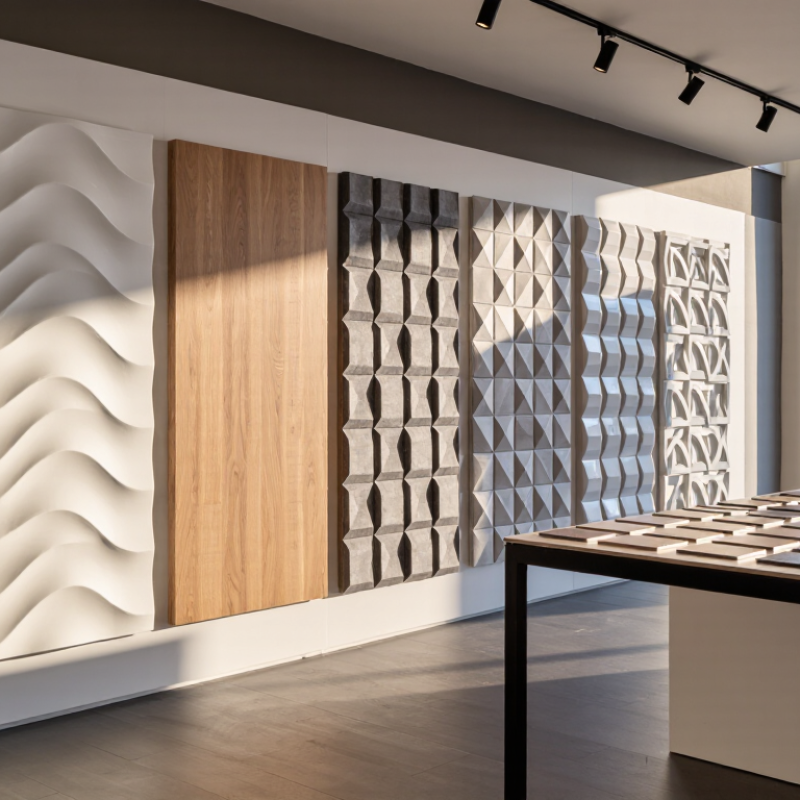
Three-dimensional wall panels use raised patterns to add depth, texture, and visual rhythm to a flat wall. Common materials include gypsum, wood, PVC, and plant-fiber composites; each differs in weight, moisture tolerance, finish, and maintenance needs. The pattern may be geometric, softly waved, or deeply sculpted. Small details matter.
Their applications range from hotel lobbies and retail displays to living rooms, offices, and reception areas. A shallow pattern can add interest behind a bed without dominating the room. Deeper relief creates stronger shadows, especially beside windows or under directional lighting. That effect can also reveal dust and uneven installation more clearly.
Before choosing a panel, consider the wall substrate, room humidity, cleaning routine, and how edges will meet corners or outlets. A full-size sample helps show how color and shadows change in the actual room. It is easy to overestimate a dramatic pattern from a small sample; some designs can feel busy across a whole wall. Check product specifications and installation guidance, since suitability varies by material and intended setting.



Copyright © CUSTOM Building Products 2025
Products | Resources | Interactive Tools | Warranties | Privacy Policy | Terms of Use | Technical Training
