



For global buyers, choosing a Tatami Mat 4cm involves more than checking thickness and appearance. A four-centimetre profile can change floor comfort, edge stability, shipping weight, and installation requirements. It may suit yoga rooms, meditation spaces, guest rooms, children’s areas, and Japanese-inspired interiors. However, “4cm” is not a complete specification. Core density, surface material, moisture resistance, and border construction deserve equal attention.
Kenji Sato, a veteran tatami craftsman and technical consultant to Japanese flooring retailers, notes, “A good tatami mat should feel balanced underfoot, not simply thick in the hand.” That practical point matters. A dense straw-style core feels different from compressed wood fibre or lightweight foam. Natural igusa offers a distinct scent and woven texture. Synthetic facing can provide easier cleaning and more consistent colour. Some models include anti-slip backing, while others require a separate underlay. Small details become important.
This guide examines the top 10 types of Tatami Mat 4cm for international buyers. It compares traditional, modern, foldable, waterproof, lightweight, and custom-sized options. Each type has strengths and limitations. None is perfect. A natural mat may absorb humidity. A waterproof surface may feel less authentic. A lightweight model may sacrifice firmness. Buyers should verify dimensions, tolerances, packaging, fire-safety documentation, and care instructions before ordering. Regional standards also differ, so product claims require careful review. Measure the room twice. Then question the specification sheet.
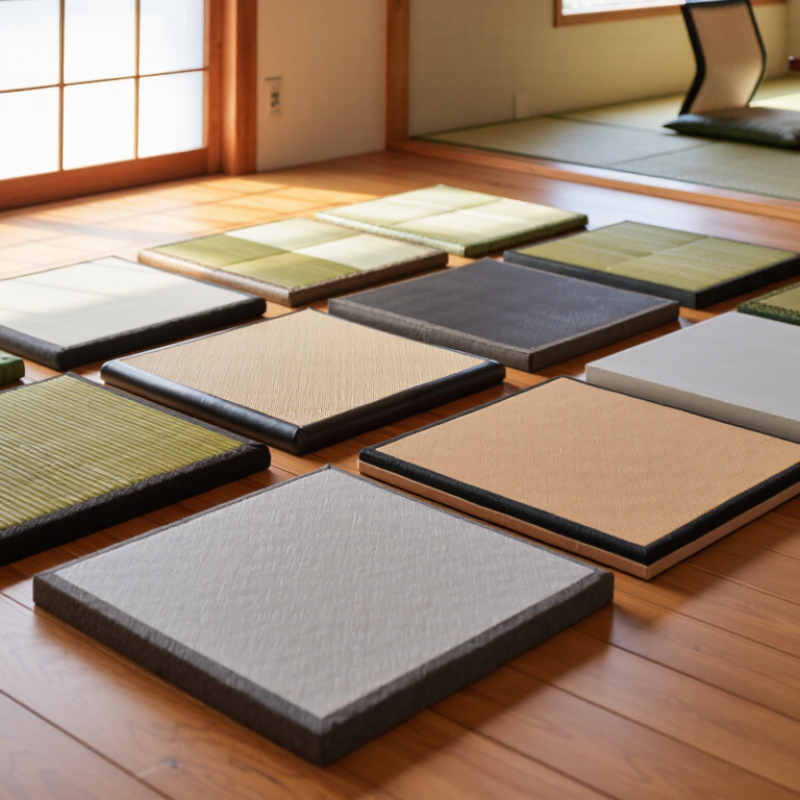
A 4 cm tatami mat combines a woven surface, a supporting core, and a reinforced underside. The surface may use woven rush, paper fiber, or synthetic material. Its texture should feel firm, dry, and slightly resilient underfoot. The core often contains compressed plant fiber, wood fiber, or layered foam. Construction varies by supplier and market. Common dimensions include 90 × 180 cm, 88 × 176 cm, and custom sizes. Actual measurements may differ by several millimeters.
Thickness affects comfort, weight, and floor clearance. A 4 cm mat can soften kneeling pressure while providing stable support for sitting, sleeping, or light exercise. The underside should resist sliding and allow limited airflow. Edge binding needs tight stitching, especially around corners. In practical inspections, I check the mat on a level floor. It should not rock, bow, or release a strong chemical odor. No mat is perfectly rigid. Small gaps matter.
Tips: Confirm size tolerance, core material, surface finish, edge strength, and moisture resistance before ordering. Ask for a cross-section photo or sample when possible. Measure doorways and storage spaces first. A thick mat may look compact online, yet occupy more room when stacked. Also, do not assume greater density always means better comfort. It may feel durable, but overly hard support can reduce daily usability.



Copyright © CUSTOM Building Products 2025
Products | Resources | Interactive Tools | Warranties | Privacy Policy | Terms of Use | Technical Training
