



Stainless Steel Plates support demanding work where strength, hygiene, and corrosion resistance matter. Their uses range from commercial kitchens to bridges, chemical equipment, and ship structures. A thick plate can form a pressure vessel, while a thinner section may become a worktable or machine cover.
In fabrication shops, professionals select plates by grade, thickness, surface finish, and operating environment. Grade 304 often suits food-processing equipment and indoor applications. Grade 316 performs better near saltwater because molybdenum improves resistance to pitting. Duplex grades can offer higher strength for selected industrial structures. These choices require more than a quick material comparison. Engineers should review load calculations, welding procedures, temperature limits, and applicable ASTM or EN requirements.
The details become visible on a busy factory floor. Welders shape bright sheets beside sparks, while installers check flatness with calibrated tools. A brushed finish may hide handling marks, but a polished surface supports easier cleaning. In coastal equipment, a small design mistake can trap salt and cause corrosion. Maintenance teams still need regular inspection.
No single grade fits every project. That matters. Stainless steel is durable, but it is not maintenance-free or automatically suitable for every chemical. This introduction offers a practical starting point, not a substitute for qualified engineering advice. The best choice connects real service conditions with verified specifications, competent fabrication, and reliable supplier documentation. That approach helps Stainless Steel Plates deliver long-term value without overstating their performance.
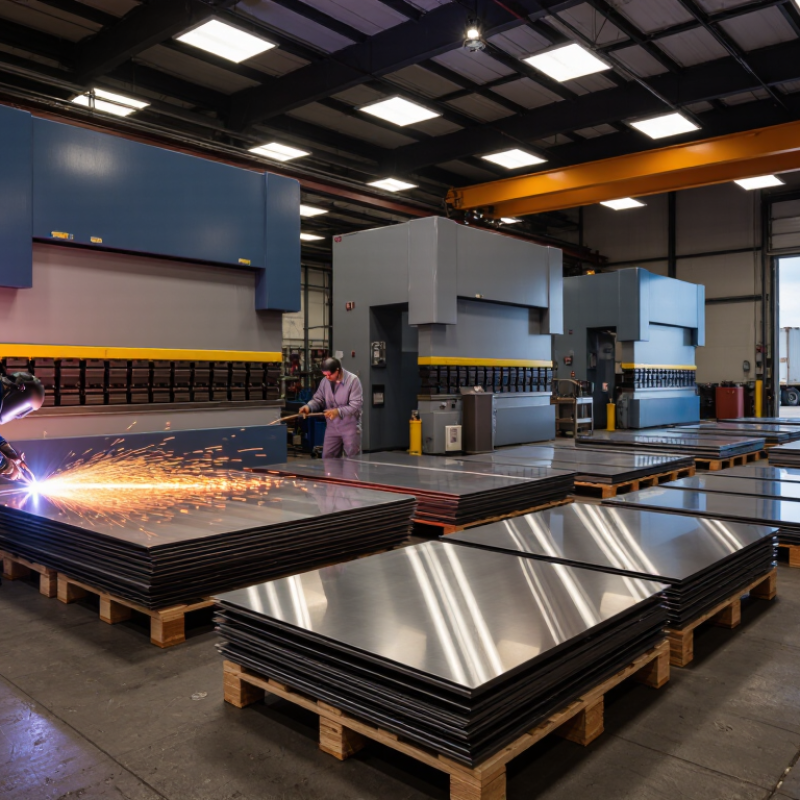
Stainless steel plate is a thick, flat-rolled iron alloy containing at least 10.5% chromium, according to ISO 15510. Chromium forms a thin passive oxide film on the surface. This film repairs itself when oxygen is present. The result is strong resistance to rust, staining, and many industrial chemicals. Nickel can improve toughness and formability. Molybdenum can improve resistance to chloride corrosion. Not every grade performs equally.
The World Stainless 2023 statistics reported about 58.4 million tonnes of stainless crude steel production worldwide. That scale reflects demand from construction, food processing, transport, energy, and chemical equipment. Plate becomes tanks, pressure vessels, bridge components, machine bases, and architectural cladding. Its smooth surface is easier to clean. Its durability also reduces replacement work in demanding environments.
In field use, grade selection matters more than appearance. A plate exposed to seawater may need molybdenum-bearing stainless steel. A heated vessel may require careful attention to creep strength and thermal expansion. ASTM A240 specifications help control chemical composition, mechanical performance, and dimensional quality. Still, stainless steel is not maintenance-free. Chloride deposits, rough welds, and poor drainage can trigger pitting. I have seen bright plate fail around neglected joints. That detail is easy to underestimate. Surface finishing, welding practice, and regular inspection remain essential.



Copyright © CUSTOM Building Products 2025
Products | Resources | Interactive Tools | Warranties | Privacy Policy | Terms of Use | Technical Training
