



A Solid Surface Counter Top can look deceptively simple: a smooth white plane, a nearly invisible seam, and a softly rounded edge. Underneath, however, it combines acrylic or polyester resin with mineral fillers. That composition creates a nonporous surface that resists everyday stains and supports integrated sinks. It also allows fabricators to repair light scratches through careful sanding. Small details matter.
Aaron Crowley, a veteran solid-surface fabricator and former ISFA president, puts it plainly: “Fabrication quality is what makes or breaks the material.” His point deserves attention. Even a premium sheet can disappoint when seams are poorly joined, edges are rushed, or cabinets cannot support the finished weight. A countertop is not only a product choice. It is an installation decision.
This guide examines what Solid Surface Counter Top means in practical terms. It considers appearance, durability, cleaning, heat resistance, cost, and repairability. Picture a busy kitchen with coffee rings, chopped herbs, and a warm baking tray near the sink. The material may handle some moments well, but it is not indestructible. Hot cookware still needs protection. Sharp knives still require a cutting board.
The honest question is not whether solid surface is perfect. It is whether its strengths match your habits, budget, and expectations. That answer may change from one household to another. Even experienced homeowners can overlook installation quality. A beautiful sample cannot reveal everything.
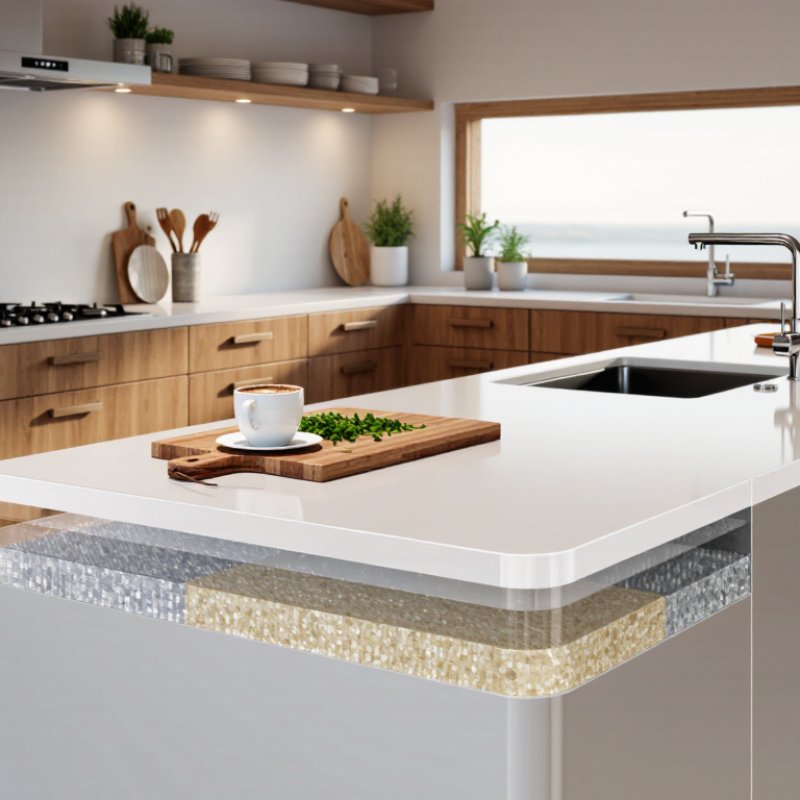
A solid surface countertop is a manufactured sheet material made from acrylic, polyester, or a blend of both. Mineral fillers add weight, color, and a stone-like appearance. Unlike natural stone, its pattern usually runs through the material, not just across the top. A small cut or sanding repair may therefore become less noticeable.
The surface is nonporous, so spilled coffee, cooking oil, and everyday moisture cannot easily penetrate it. This makes cleaning simple and supports good kitchen hygiene. Seams can also be joined and sanded nearly smooth, creating a continuous appearance around sinks and backsplashes. In practical installations, this detail helps prevent crumbs from collecting in narrow joints.
It is not indestructible. Hot pans can damage the surface, and sharp knives may leave visible marks. Use trivets and a cutting board. Minor scratches can often be professionally sanded, but deeper damage may require a replacement section. That repairability is useful, though color matching is not always perfect.
Solid surface works well for homeowners who value clean lines, integrated sinks, and flexible shapes. It can be thermoformed into curved edges and custom details. However, it may not satisfy someone seeking the natural variation of granite or the strongest resistance to heat. Inspecting sample pieces under your actual kitchen lighting is wise. Colors can look unexpectedly different near windows.



Copyright © CUSTOM Building Products 2025
Products | Resources | Interactive Tools | Warranties | Privacy Policy | Terms of Use | Technical Training
