



Global plastics production reached an estimated 400.3 million tonnes in 2022, according to PlasticsEurope’s Plastics—The Fast Facts 2023. At this scale, even small changes in processing can matter to manufacturers and buyers. SILIMER 5091 is considered here as a processing additive, with potential benefits assessed through practical criteria: flow, surface quality, production consistency, and total operating cost. The real result depends on the polymer, formulation, equipment, and dosage.
For global buyers, the key question is not whether an additive sounds promising. It is whether performance can be verified on their own production line. A smoother film surface, fewer visible defects, or steadier output may be valuable—but only when supported by comparable trials and clear technical data. OECD’s Global Plastics Outlook reports that the world generated 353 million tonnes of plastic waste in 2019. That wider industry context makes efficient material use worth examining, though an additive alone cannot solve waste challenges.
This overview explores ten potential benefits of SILIMER 5091, while keeping claims tied to evidence buyers can request, such as trial conditions, product specifications, and application-specific results. Ask for the details. Suppliers’ claims should be checked against actual processing data, not assumed to apply across every resin or facility. Some benefits may be modest. That deserves an honest look, too.
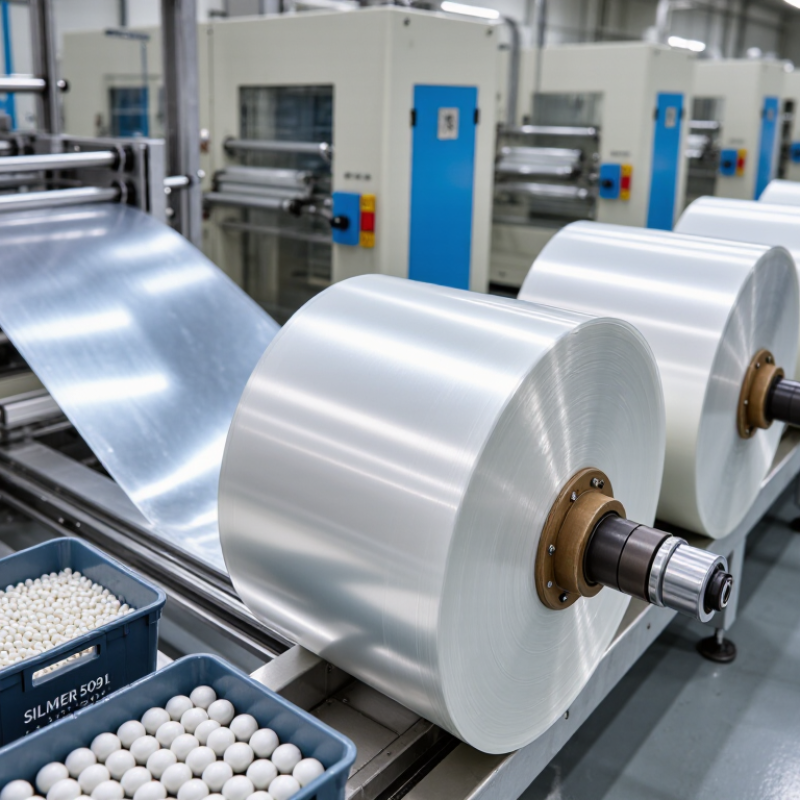
In polymer processing, a processing aid is blended into the resin, then dispersed as the material melts. Its lubricating components can reduce friction between the polymer melt and metal surfaces inside the barrel and die. The goal is steadier flow, less melt fracture, and fewer deposits around the die lip. Small changes matter. At a film line, that can mean a cleaner die and more consistent output, not a cure for every defect.
The scale is significant: Plastics Europe’s Plastics – the Fast Facts 2024 reports 413.8 million tonnes of global plastics production in 2023. The OECD’s Global Plastics Outlook reports 460 million tonnes produced in 2019, with only 9% of plastic waste recycled after losses. These figures underline why process efficiency and scrap control deserve attention. Still, additive performance depends on resin type, dosage, temperature, and screw design. Too much may affect surface feel or downstream printing and sealing. A small production trial, with melt pressure and output recorded, is more convincing than a supplier claim alone. Real lines are imperfect; one formulation may behave differently across shifts.



Copyright © CUSTOM Building Products 2025
Products | Resources | Interactive Tools | Warranties | Privacy Policy | Terms of Use | Technical Training
