Top Block Forming Machine Manufacturers Worldwide
Choosing among the top Block Forming Machine manufacturers worldwide requires more than comparing catalog prices. Production managers must examine output consistency, mold flexibility, vibration control, automation, energy use, and after-sales support. A reliable machine should produce sharp edges, stable dimensions, and uniform density, even during long shifts. The factory floor often reveals more than a brochure. Watch the feeder, inspect the curing area, and ask how quickly operators can change molds.
Dr. Robert L. Telford, a concrete equipment consultant with extensive precast manufacturing experience, once noted, “A forming machine proves its value through repeatable blocks, not impressive specifications.” This principle guides the manufacturers examined in this article. Their systems serve different markets, from small regional plants to highly automated facilities producing thousands of blocks daily. Some emphasize compact design. Others invest heavily in robotics, remote monitoring, and rapid production cycles.
The comparison will consider engineering quality, practical usability, global service networks, and long-term operating costs. Certification matters, but it does not replace hands-on testing. Spare-part availability matters even more when a production line stops at dawn. No ranking is perfectly universal. A manufacturer leading in Europe may not suit a contractor in Africa or Southeast Asia. Local aggregates, labor skills, electricity stability, and building standards can change the result. That limitation deserves attention. The best Block Forming Machine is not always the fastest model. It is the one that delivers dependable blocks, manageable maintenance, and measurable value in its actual working environment.
Block Forming Machines: Types, Functions, and Industrial Applications
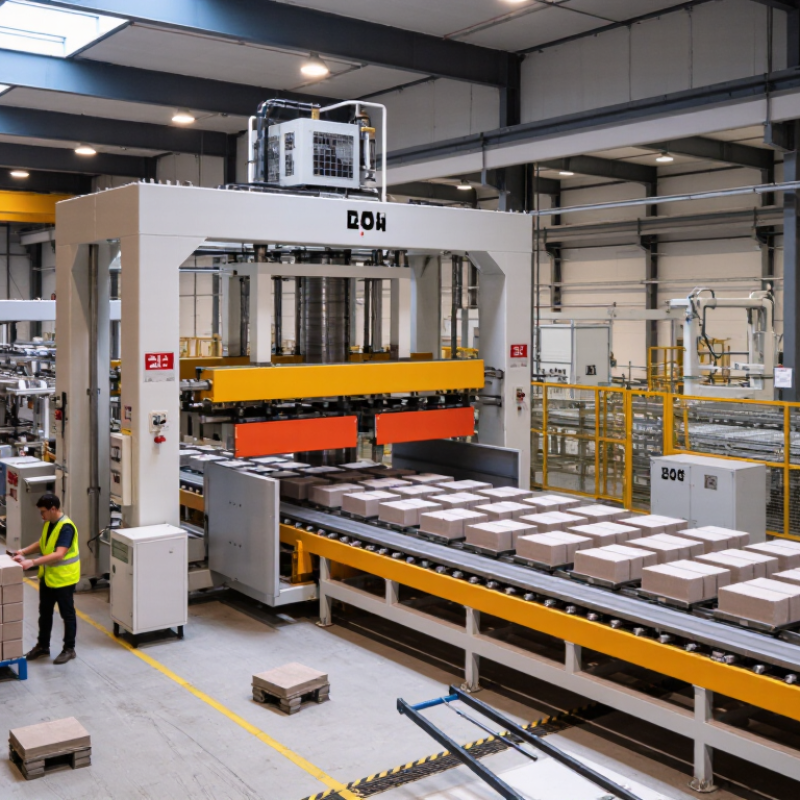
Block forming machines convert concrete mixtures into uniform masonry units through controlled filling, vibration, and pressing. The main types include manual, semi-automatic, and fully automatic models. Manual machines suit small projects and changing product sizes. Automatic systems support continuous production with fewer operators.
Different machines produce hollow blocks, solid blocks, paving units, kerbstones, and insulation blocks. Their functions extend beyond shaping. Modern equipment can control material dosing, mould pressure, vibration time, and pallet movement. These settings affect block density, surface quality, and dimensional accuracy. Small changes matter.
Industrial applications include housing construction, road development, landscaping, and infrastructure projects. High-output plants often use automatic curing rooms and conveyor systems. A reliable manufacturer should provide mould options, operator training, spare parts, and clear maintenance guidance. Dust control and machine guarding also deserve close attention.
In practice, no machine performs perfectly. Material moisture changes during the day. This can create weak edges or uneven surfaces. Operators must check fresh blocks, measure dimensions, and adjust the mix carefully. A machine may have impressive output figures, yet poor maintenance can reduce its real production rate. Energy use, local service support, and available floor space should influence the final choice. Numbers alone can mislead.
Block Forming Machines: Types, Functions, and Industrial Applications
The chart compares indicative production capacities commonly associated with major block forming machine configurations. Manual and semi-automatic machines are generally used by small and medium-sized producers, while fully automatic and high-speed systems support continuous industrial production. Actual output varies according to block size, raw material, curing method, mold design, and operating conditions.
Leading Block Forming Machine Manufacturers by Region
Top Block Forming Machine Manufacturers Worldwide
Leading Block Forming Machine Manufacturers by Region
Regional manufacturers often reflect local construction habits, climate, and material availability. In Asia, producers commonly offer compact machines for dense urban projects and high-volume concrete block production. Their equipment may include automatic feeding, vibration control, and adjustable mold systems. Factory visits should include frame inspections, electrical testing, and sample-cycle observation. Output claims need practical verification.
European manufacturers often emphasize energy efficiency, precise molds, and strict process documentation. Their machines suit projects requiring consistent dimensions and smooth surface finishes. North American suppliers usually focus on durable structures, operator safety, and flexible production layouts. Buyers should check replacement-part access, software support, and local technician coverage before signing contracts.
Manufacturers in the Middle East and Africa frequently adapt machines for heat, dust, and uneven site conditions. Simple maintenance can matter more than advanced automation. Latin American producers may prioritize affordable configurations and adaptable molds for regional building materials. I have found that impressive brochures rarely reveal cleaning time or vibration stability. A live test using local aggregates is more useful. No regional comparison is perfect. Factory capacity, training quality, and after-sales response can change the final result.
Key Factors for Selecting a Reliable Block Machine Manufacturer
Top Block Forming Machine Manufacturers Worldwide
Selecting a reliable block machine manufacturer requires more than comparing purchase prices. A dependable supplier should show documented production records, factory testing, and clear after-sales procedures. Ask for references from plants producing similar blocks, not just attractive showroom samples. In my experience, unstable vibration, uneven mold wear, and inconsistent curing create higher costs than expected. Small details matter.
Technical evidence should guide the decision. UNEP and the Global Alliance for Buildings and Construction reported that buildings and construction consumed 34% of global energy and produced 37% of energy and process-related emissions in 2022. Energy-efficient motors, accurate hydraulic systems, and low-waste material handling deserve careful review. Request measured power consumption, cycle time, block density, and dimensional tolerance. Check whether testing follows relevant standards, such as ASTM C90 or EN 771-3. Certification alone is not proof. Factory discipline still matters.
Tips: Compare three complete proposals. Require a live production test with your aggregates. Inspect welds, electrical cabinets, mold alignment, and spare-parts availability. Confirm operator training and response times in writing. Ask for maintenance intervals and warranty exclusions before signing. A cheaper machine may win the quotation but lose the project. That assumption deserves testing. Review independent inspection records where possible, and keep performance promises tied to measurable acceptance criteria.