



Choosing an Industrial Pipeline is not just a matter of selecting a diameter and material. The line must carry a specific fluid at defined pressures and temperatures, while withstanding corrosion, vibration, and cleaning demands. A carbon-steel pipe may suit a dry utility line but fail quickly in a corrosive process. Small details matter: fluid chemistry, start-up temperature, and the location of a low-point drain can change the decision.
Industry data underline why containment and maintenance deserve attention. The International Energy Agency’s Global Methane Tracker 2024 estimated that fossil-fuel operations emitted about 120 million tonnes of methane in 2023. These emissions do not come from pipelines alone, but they show why leak prevention and inspection belong in pipeline planning. For process facilities, ASME B31.3 provides a widely used framework for process-piping design, materials, fabrication, and examination. It is a starting point, not a substitute for project-specific engineering or qualified review.
A sound selection process compares operating conditions, material compatibility, pressure rating, installation constraints, and whole-life cost. Include the valves, joints, supports, and instruments—not only the pipe wall. Then check how the system will be inspected and repaired after commissioning. The answer may still involve trade-offs. A higher-grade alloy can resist corrosion, yet increase cost and lead time; a cheaper option may demand more monitoring. There is no universal best pipe. The right choice is the one supported by documented service conditions, credible standards, and a realistic maintenance plan.
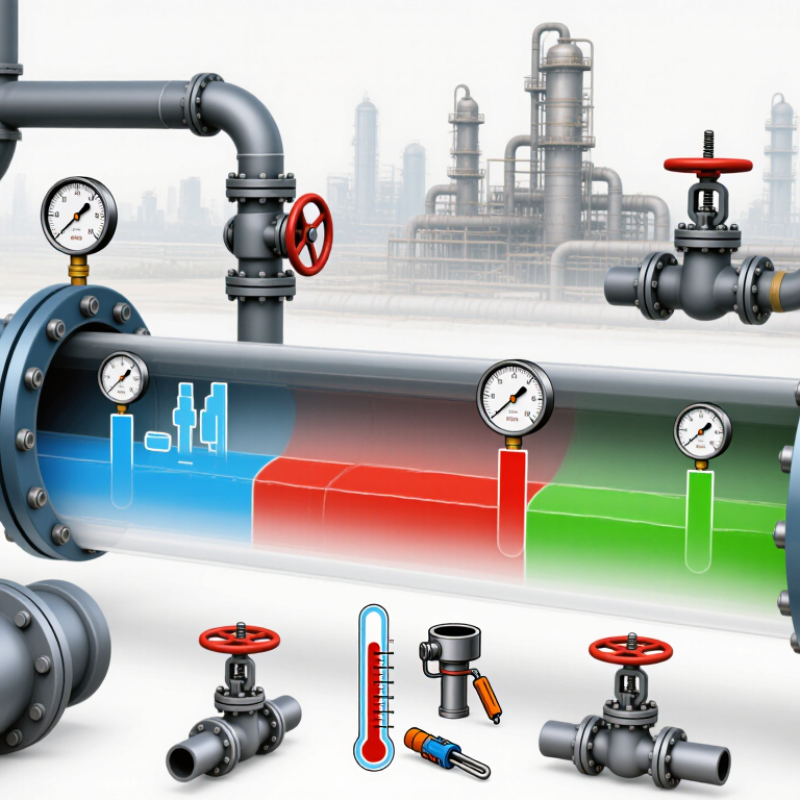
Under ASME B31.3, design pressure and temperature should reflect the most severe conditions expected to occur together during the piping system’s life. Normal operating readings alone are not enough. Check the process data, control limits, startup and shutdown conditions, and credible upset cases. A blocked outlet, pump shutoff, or pressure surge may change the design basis. Small details matter.
Define conditions at the relevant points in the line, not just at the equipment outlet. Account for elevation-related static head and pressure losses where they affect the local pressure. Design temperature should represent the expected pipe metal temperature, which may differ from the fluid temperature. Insulation, ambient exposure, heat tracing, and nearby hot equipment can all influence it. Be careful with assumptions here; a tidy process datasheet can still miss a real operating case.
These values guide material selection, wall-thickness calculations, and checks against component pressure-temperature ratings. Higher temperatures can reduce allowable stress, while low temperatures may raise toughness concerns. Record the source and reasoning for each design condition, then compare them with the latest process documents and operating experience. If field readings conflict with the original basis, investigate before accepting either number. The answer is not always obvious. A short review with process, piping, and operations personnel can expose gaps before drawings are issued.



Copyright © CUSTOM Building Products 2025
Products | Resources | Interactive Tools | Warranties | Privacy Policy | Terms of Use | Technical Training
