
China Top Nylon Turf Manufacturers How to Choose?

Choosing among China’s top Nylon Turf manufacturers requires more than comparing catalog photos or factory prices. Product performance depends on fiber shape, pile density, backing stability, drainage design, and installation quality. A sample may look bright under showroom lights, yet flatten after repeated foot traffic. That detail matters.

Grand View Research valued the global artificial turf market at approximately USD 3.37 billion in 2023. Its report also forecasts continued growth through 2030, driven by sports facilities, landscaping, and water-saving projects. MarketsandMarkets identifies synthetic turf as a growing segment across commercial and recreational applications. These findings suggest strong demand, but market growth does not guarantee consistent factory quality. Buyers still need evidence.

Look for manufacturers that provide traceable material specifications, production photographs, laboratory results, and clear warranty terms. Ask whether the Nylon Turf uses virgin or recycled polymers. Confirm yarn thickness, tuft gauge, pile height, tensile strength, UV resistance, and water permeability. For sports projects, request testing aligned with applicable ASTM, EN, or FIFA requirements. For landscaping, examine color retention, heat behavior, odor, and drainage after installation.

Factory experience helps. It is not everything.

A reliable supplier should explain differences between monofilament and fibrillated yarns in practical terms. They should also identify limitations, including heat buildup, seam visibility, and infill maintenance. Be cautious when a quotation hides backing weight or offers unusually low pricing. That may indicate omitted specifications, not genuine savings. This guide compares Chinese Nylon Turf manufacturers through documentation, manufacturing capability, customization, quality control, export experience, and after-sales support. No supplier is perfect. Careful verification remains the buyer’s strongest protection.
China Top Nylon Turf Manufacturers How to Choose?

What Is Nylon Turf and Why Does Manufacturer Choice Matter?

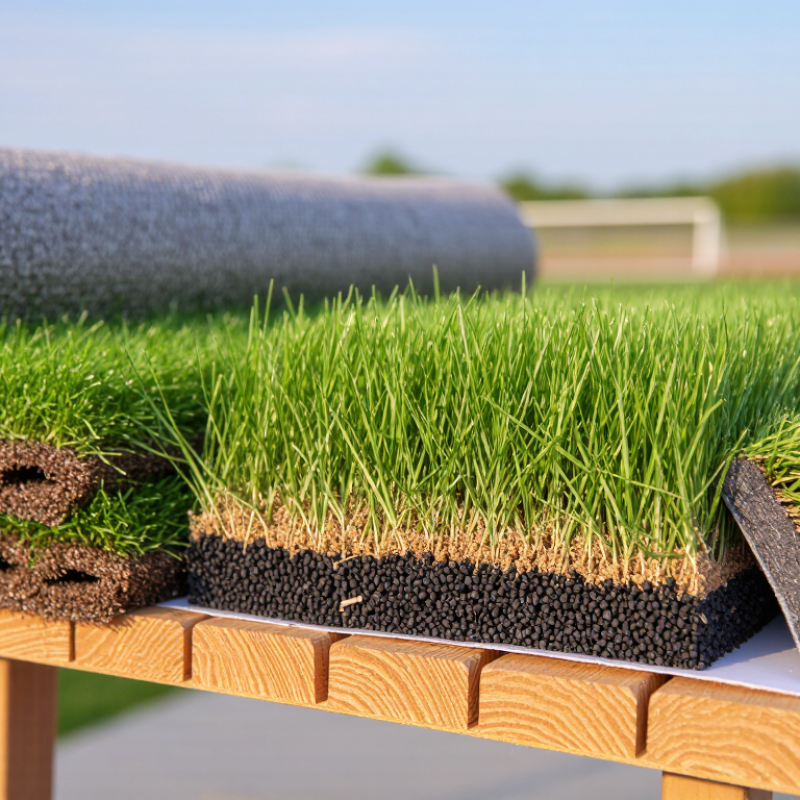
Nylon turf is synthetic grass made with resilient polyamide fibers. Unlike softer polyethylene turf, nylon fibers resist crushing and recover quickly after heavy foot traffic. They usually feel firmer under shoes and keep their upright shape near entrances, sports areas, and busy commercial spaces. It is not simply plastic grass. Fiber thickness, blade shape, color stability, and heat resistance all affect daily performance.

Manufacturer choice matters because production quality can vary widely. An experienced manufacturer should explain yarn specifications, stitch rate, pile height, backing structure, drainage design, and ultraviolet testing. Ask for technical data, independent test reports, and a physical sample. A reliable supplier should also describe how batches are inspected, not only display attractive project photos. Small details matter, such as consistent tuft spacing and backing that remains stable after temperature changes.

Site experience should guide the decision. A turf product suitable for a shaded garden may perform poorly on a hot rooftop. Manufacturers should discuss climate, traffic levels, pets, maintenance, and installation conditions before recommending a specification. Be cautious with impressive promises. Even durable nylon can flatten when drainage is poor or the base is uneven. I have found that samples can look excellent while revealing weaknesses after repeated brushing and exposure. That is an uncomfortable but useful reminder: real performance deserves more attention than polished marketing.

Which Standards Define a Reliable China Nylon Turf Manufacturer?

A reliable China nylon turf manufacturer should meet recognized quality standards, not rely on attractive samples alone. ISO 9001 shows that the factory controls purchasing, production, inspection, and corrective actions. ISO 14001 can indicate stronger environmental management, although it does not prove turf performance. For sports surfaces, EN 15330-1 testing may cover requirements such as shock absorption, ball interaction, and durability.

Ask for recent test reports from an independent, accredited laboratory. Check whether the report identifies the exact yarn, backing, pile height, and production batch. A serious manufacturer should also provide data on tensile strength, tuft bind, UV resistance, color stability, water permeability, and wear cycles. Request a traceability record. It should connect raw materials to the finished roll.

Factory experience matters in small details. During a site visit, inspect yarn storage, backing temperature controls, needle alignment, and roll packaging. Uneven stitching is easy to notice under bright light. Smell the backing after opening a sample; a strong chemical odor deserves further questions. This is not a laboratory test, but it can reveal poor storage or curing.

I would not trust certificates alone.

Manufacturers should explain rejected-roll procedures and replacement terms in writing. They should also retain samples from each batch for future comparison. Some suppliers may offer excellent first samples but inconsistent later production. That weakness is easy to miss. A pre-shipment inspection, random roll testing, and clear installation guidance make quality claims more dependable.

China Top Nylon Turf Manufacturers How to Choose? - Which Standards Define a Reliable China Nylon Turf Manufacturer?

Evaluation Dimension Relevant Standard or Reference Practical Benchmark Documents to Request Why It Matters
Quality management system ISO 9001:2015 A current certificate issued by an accredited certification body, with the manufacturing scope clearly covering artificial turf, synthetic fibers, or related products. Valid certificate, certification scope, audit or surveillance status, and factory address. Shows that production, inspection, corrective action, and document control are managed through a defined system.
Environmental management ISO 14001:2015 An active environmental management certificate covering the relevant production site, supported by documented waste, water, and chemical controls. Certificate, scope, environmental policy, waste-handling records, and applicable permits. Helps assess whether the supplier controls environmental risks consistently rather than relying only on product claims.
Fiber polymer and yarn structure Technical specification and supplier test report The specification should identify nylon type, yarn shape, total yarn weight, pile height, stitch rate, gauge, and tuft density. Values must match the approved sample and purchase order. Technical data sheet, production specification, sample approval record, and batch inspection report. Nylon 6 and nylon 6,6 can have different performance characteristics; transparent specifications make comparisons more reliable.
Color and ultraviolet resistance EN 15330-1; ISO 4892-3 or ASTM G154 for accelerated UV exposure where specified The test method, exposure cycle, color-change rating, and acceptance limit should be stated. Avoid accepting an unsupported claim such as “UV resistant.” Independent laboratory report, UV exposure conditions, color-change result, and retained reference sample. Outdoor sunlight can cause fading and embrittlement; test conditions are necessary for meaningful comparison.
Abrasion and wear resistance EN 15330-1; application-specific laboratory wear testing The report should identify the wear apparatus, load, number of cycles, yarn appearance, mass loss, and post-test condition. There is no universal pass value for every end use. Full test method, cycle count, before-and-after photographs, and laboratory accreditation details. A reliable supplier should match the test severity to the intended use, such as landscaping, playgrounds, or sports fields.
Tuft bind and backing integrity EN 15330-1 and the project specification The manufacturer should provide tuft-bind and backing-strength results using a stated method, sample direction, specimen size, and unit of measurement. Factory quality-control report, third-party test report, backing construction details, and batch traceability. Adequate binding reduces the risk of yarn withdrawal, seam problems, and backing separation during installation and use.
Flammability performance EN 15330-1, local building regulations, and project-specific fire test requirements The supplier must identify the exact fire-test standard and classification. Fire performance depends on the complete system, including backing, adhesive, infill, and underlay. Current fire-test report for the proposed construction, product composition, and installation conditions. A fiber-only test may not represent the installed turf system, so system-level evidence is important.
Chemical compliance REACH Regulation (EC) No. 1907/2006; RoHS Directive 2011/65/EU where applicable to supplied components The declaration should cover the turf, backing, coatings, pigments, and any supplied accessories. It should be linked to the exact product or material batch. REACH declaration, restricted-substance test report, safety data sheets for chemicals, and material composition statement. Supports regulatory compliance and reduces the risk of restricted substances entering the supply chain.
Sports-field suitability FIFA Quality Programme for Football Turf; EN 15330-1 where applicable For football applications, request evidence from the complete installed system, including shock pad, infill, seams, and maintenance conditions. A product brochure alone is not certification. Independent field-test report, system construction, maintenance plan, and installation reference data. Sports performance depends on the full field system, not only on the nylon pile.
Impact attenuation for play areas EN 1177 or ASTM F1292, when the turf is used in a playground system The critical fall height or impact result must apply to the complete surface assembly, including base, underlay, infill, and installation depth. Laboratory report, tested system build-up, installation instructions, and maintenance requirements. The same turf product can produce different safety results when installed over different shock-absorbing systems.
Dimensional consistency and batch control Approved inspection plan and ISO 9001 quality-control procedures Roll length, roll width, pile height, total weight, color, and packaging should be checked against agreed tolerances before shipment. Pre-shipment inspection report, batch numbers, roll labels, packing list, and retained production samples. Consistent dimensions reduce installation waste, visible color variation, and disputes between approved samples and delivered goods.
Traceability and corrective action ISO 9001:2015 documented-information and improvement practices Each shipment should be traceable to raw materials, production date, machine or line, inspection results, and responsible personnel. Lot-traceability procedure, nonconformance records, corrective-action reports, and customer complaint process. Traceability allows defects to be isolated quickly and demonstrates whether the manufacturer learns from recurring problems.
Independent verification ISO/IEC 17025-accredited laboratory testing Prefer reports from laboratories whose accreditation scope includes the requested test method. The tested sample description should match the quoted product. Signed laboratory report, accreditation scope, sample identification, test date, and complete results rather than a summary page. Independent testing provides stronger evidence than self-declared performance figures.
Supplier assessment score Purchaser-defined weighted evaluation 80–100: Preferred 60–79: Conditional Below 60: High Risk Scoring sheet covering certification, test evidence, production control, traceability, communication, lead time, and after-sales support. A weighted assessment prevents price alone from determining the final supplier decision.
Recommended verification sequence: Confirm the product specification, check the certificate scope and validity, compare independent test reports with the quoted construction, approve a physical sample, complete a pre-shipment inspection, and retain batch documentation for future traceability.

How to Compare China’s Top Nylon Turf Manufacturers Step by Step

Choosing among China’s top nylon turf manufacturers requires more than comparing catalog photos. Start by defining the project: sports field, rooftop, playground, or landscape area. Record the required pile height, fiber shape, yarn denier, stitch rate, backing type, and drainage speed. A reliable manufacturer should explain each specification clearly, not hide behind general claims.

Request physical samples from several factories. Bend the fibers, inspect the backing, and check whether the tufting looks even under strong light. Ask for laboratory data covering UV resistance, color stability, tensile strength, and water permeability. For sports use, request impact and abrasion testing. Factory experience matters, so review production equipment, quality checkpoints, export history, and staff expertise. Video inspections help, but an independent audit is stronger.

Compare the quotation line by line. Include mold fees, sample charges, packaging, delivery terms, replacement policies, and expected production time. Ask how the factory handles uneven color, loose tufts, or damaged rolls. A written inspection standard is essential. Request a pre-shipment inspection before payment is completed. Do not choose the lowest price too quickly. Cheaper yarn may flatten earlier, while weak backing can create visible seams. I would still test a larger installation sample, because small samples can make performance look better than it is. Check the warranty wording carefully. Vague promises deserve another question.

How to Compare China’s Top Nylon Turf Manufacturers Step by Step

Use measurable procurement criteria to compare nylon turf suppliers. The weighting model prioritizes product performance, quality control, customization, delivery reliability, and total cost.

Step 1: Verify nylon type, pile height, yarn density, backing construction, and drainage performance. Step 2: Request laboratory test reports for UV resistance, abrasion resistance, color fastness, and dimensional stability. Step 3: Compare production capacity, sample approval procedures, lead time, inspection controls, warranty terms, and landed cost. The percentages represent a practical buyer evaluation framework rather than rankings of individual companies.

What Should You Check in Samples, Certifications, and Factory Audits?

China Top Nylon Turf Manufacturers: How to Choose?

When comparing nylon turf manufacturers, inspect samples beyond color and softness. Check yarn thickness, stitch density, backing strength, and drainage holes. Run your fingers across the surface. Loose fibers or uneven tufts deserve questions. Fold the sample repeatedly and examine cracking around the backing. Outdoor samples should also include UV exposure and wear-test data. A bright showroom sample can hide weak construction.

Tips: Request samples from different production batches. Compare them under sunlight and indoor lighting. Ask for a cut section showing the backing layers. Record pile height, roll width, weight, and tolerance in writing. Small differences matter. I once saw a visually attractive sample with inconsistent tuft spacing. It looked acceptable until measured closely.

Certifications need careful verification. Ask whether each report matches the exact nylon yarn, backing, and production site. Check the laboratory’s credentials, test dates, and sample identification. A factory quality certificate may describe management systems, not turf performance. Request evidence for UV resistance, tensile strength, color fastness, and fire behavior where relevant. During a factory audit, inspect yarn storage, tufting machines, coating lines, drainage testing, and final packing. Review inspection records, rejected rolls, and corrective actions. Do not rely only on polished meeting rooms. No audit is perfect. One missed process detail can become a costly field problem.

How Can You Choose the Best Supplier for Your Project and Budget?

Choosing among China’s top nylon turf manufacturers starts with your project, not a ranking list. Define use, area, traffic, climate, and installation method. A training field needs different yarn strength than a hotel terrace. Ask for technical data: fiber shape, pile height, stitch rate, backing, roll width, and drainage performance. Request independent test reports, production photos, and a physical sample. Digital images can hide uneven tufting.

A dependable supplier explains what affects cost. Nylon grade, density, backing layers, coating, packaging, and shipping terms can change the final budget. Compare complete landed costs, not only the quoted price. Check minimum order quantities and replacement-roll availability. Ask how batches are inspected before loading. Traceable lot numbers, written tolerances, and pre-shipment checks show stronger control. Still, paperwork is not proof by itself. Inspect the sample against the specification. Not always.

Communication matters during revisions. A capable technical team should answer clearly about color variation, seam behavior, UV exposure, and maintenance. Keep every promise in the purchase contract. Do not accept vague phrases like premium quality. One practical mistake is choosing the densest turf automatically; it may cost more and drain less efficiently. A pilot installation can reveal heat, glare, or edge problems before full production. Leave room for contingency funds. Unexpected freight, site preparation, or local labor can disturb an otherwise careful budget. Keep records.

Article Source:

Resources

Copyright © CUSTOM Building Products 2025
Products | Resources | Interactive Tools | Warranties | Privacy Policy | Terms of Use | Technical Training