



Choosing a Cigarette Display Rack is not simply a matter of finding the widest shelf. It is a practical decision involving visibility, security, durability, compliance, and daily staff use. A rack may look impressive in a catalogue, yet feel awkward behind a narrow counter. That difference matters.
Martin M. Pegler, a respected visual-merchandising authority, wrote, “The purpose of visual merchandising is to sell the merchandise.” His principle remains useful here, although a cigarette display also requires restraint. The product should be organized clearly without creating an aggressive or unsuitable presentation. Good design supports responsible retail operations.
Measure the counter first. Note the available width, depth, ceiling height, and staff movement around the checkout area. A crowded counter slows service. A poorly placed door can expose products, obstruct cleaning, or create unnecessary handling. Small details become daily frustrations.
Look for strong hinges, smooth edges, stable shelves, and materials that tolerate frequent wiping. Transparent panels can improve visibility, while lockable construction may support store security and local requirements. However, visibility is not the only goal. Age-related sales controls and advertising restrictions differ between jurisdictions, so the rack must fit the store’s compliance process.
Some choices remain imperfect. A compact rack saves space but limits capacity. A larger unit offers flexibility but can dominate the counter. The best Cigarette Display Rack is the one staff can use consistently, clean easily, and monitor responsibly. Appearance helps. Practical discipline matters more.
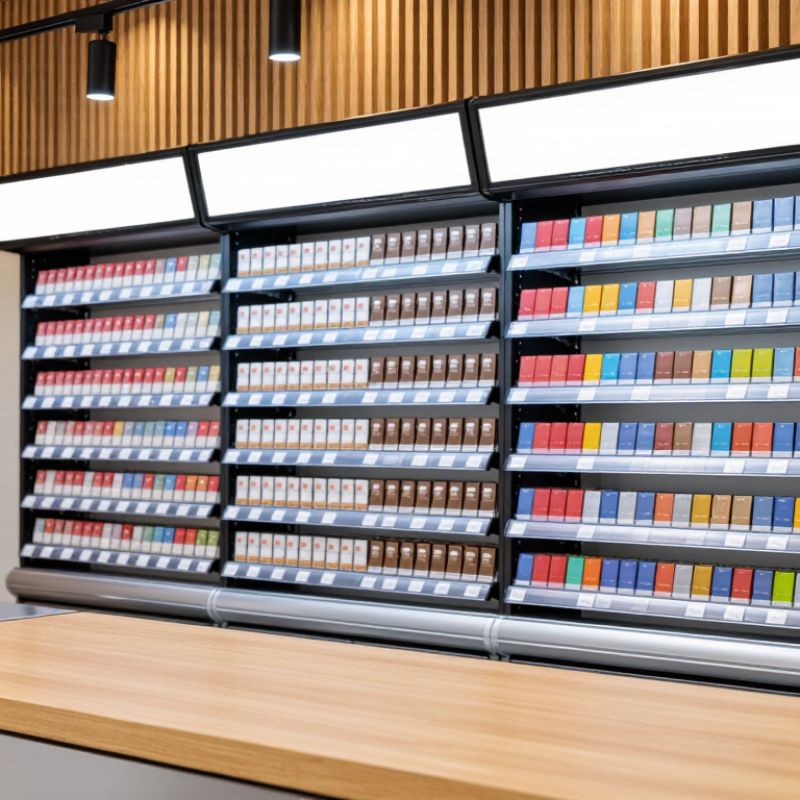
Store layout should guide movement without making customers feel crowded. Measure the available wall or counter space before selecting a cigarette display rack. Leave clear walking paths near entrances, checkout areas, and emergency exits.
A rack placed too close to the counter may slow service during busy hours. I have seen attractive displays become practical obstacles.
The rack should support secure storage, quick staff access, and clear product organization. Adjustable shelves can accommodate different package sizes and reduce empty-looking spaces.
Choose durable materials that tolerate frequent cleaning and daily contact. Smooth surfaces are easier to maintain.
Good lighting helps staff identify products accurately, but bright lights may create glare. Test the rack from the customer’s normal standing position.
Check current requirements with the appropriate authority before installation. The display should not encourage access by minors or interfere with staff supervision.
Keep high-demand items within easy reach, while maintaining an orderly arrangement. Stock records can reveal whether the rack is too small or unnecessarily large.
Customer flow changes. Monitor the area for one or two weeks, then adjust shelf height or rack position carefully. One small change can improve service.
However, appearance should never replace safety, compliance, or reliable daily operation.



Copyright © CUSTOM Building Products 2025
Products | Resources | Interactive Tools | Warranties | Privacy Policy | Terms of Use | Technical Training
