


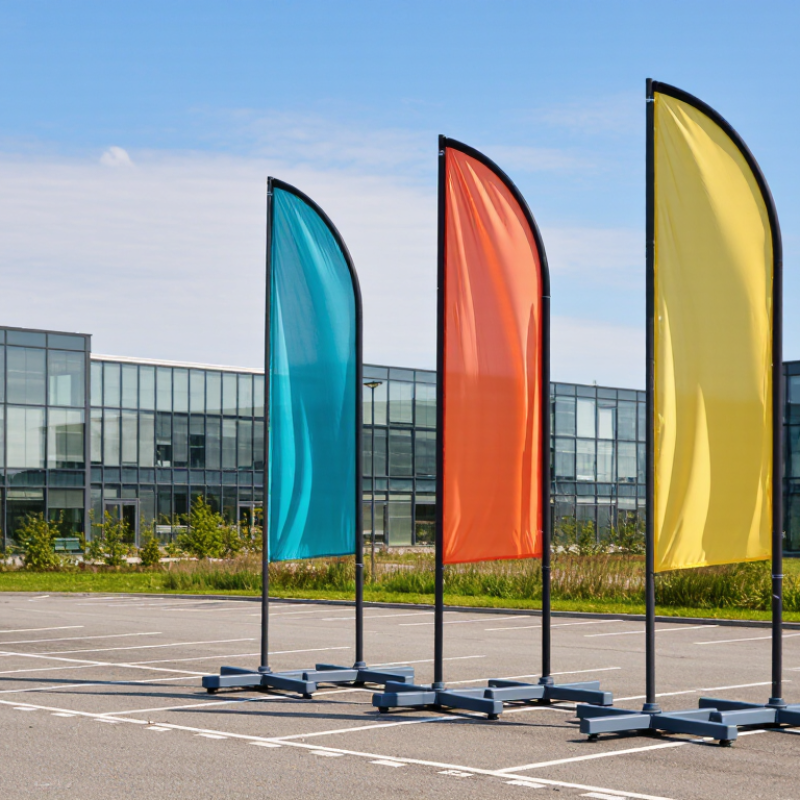
Choosing the right Feather Flags begins with more than color, height, or a low quoted price. It requires practical judgment.
The Outdoor Advertising Association of America reported that U.S. out-of-home advertising revenue reached approximately $9.1 billion in 2023. That figure reflects continued demand for visible, location-based promotion. Feather Flags fit this environment well. They can mark an entrance, guide visitors across a parking lot, or add movement beside a trade-show booth.
PPAI’s 2023 Sales Volume Estimate placed the promotional products market at about $25.8 billion in the United States. This broader industry data shows how strongly businesses invest in physical brand reminders. However, a flag is not automatically effective because it is printed. Fabric quality, pole strength, stitching, base selection, and message length all influence performance.
Small details matter.
A flag that looks sharp indoors may collapse in wind outdoors. A dark logo can disappear against a crowded event background. Some suppliers also describe polyester weights differently, making direct comparisons difficult. That is where careful buying research becomes essential.
This guide, “10 Tips for Buying the Best Feather Flags,” focuses on measurable choices and real-use conditions. It considers print quality, weather exposure, portability, replacement parts, and total ownership cost. Recommendations are informed by manufacturer specifications, promotional-display practices, and established advertising research. Still, no single flag suits every location. Site conditions can defeat a perfect design. That limitation deserves honest attention.
The best purchase balances visibility, durability, safety, and brand consistency. A convincing sample is useful. A tested specification is better.
10 Tips for Buying the Best Feather Flags
Define Feather Flag Types and Standard Heights: 2.5–5 M Options
Buying a feather flag starts with its shape, not its artwork. A single-sided flag suits short campaigns and lighter visual needs. A double-sided model improves visibility from both directions, but it weighs more. Check whether the panel is feather, teardrop, or rectangular before comparing prices. The feather shape has a tall edge and a curved fly, helping it move clearly in light wind. Tip one: match the shape to your viewing angle. Tip two: inspect stitching, pole joints, and fabric density. Cheap seams can open after repeated setup.
Height changes the flag’s presence. The 2.5 m option fits shop entrances, indoor halls, and crowded sidewalks. It is easier to carry. The 3 m and 4 m sizes offer a practical balance for markets, sports areas, and building forecourts. A 5 m flag creates strong roadside visibility, but it needs more clearance and a stable base. Tip three: measure overhead space. Tip four: measure the walking path. Tip five: choose a base for grass, soil, asphalt, or concrete. Tip six: confirm the pole’s assembled height, because advertised sizes can vary slightly.
Material matters in daily use. Polyester dries quickly, while heavier fabric may hold color and shape better. Tip seven: ask about outdoor testing and UV resistance. Tip eight: examine the carry bag and replacement pole policy. Tip nine: check print direction and readable distance. Tip ten: review setup time before ordering many units. I once chose a taller flag for a narrow entrance. It looked impressive, but people brushed against it. That mistake changed my checklist: visibility matters, yet placement and maintenance matter more.


Copyright © CUSTOM Building Products 2025
Products | Resources | Interactive Tools | Warranties | Privacy Policy | Terms of Use | Technical Training
