



Choosing a toothbrush mold in 2026 means balancing product design, production needs, and reliable quality—not simply finding the lowest quoted price. The mold must reproduce the handle’s shape consistently, hold fine details, and work with the intended plastic and manufacturing process. A small mismatch can affect grip, appearance, assembly, or cycle time. Details matter.
Before comparing suppliers, define the toothbrush you plan to make. Consider its handle dimensions, ergonomic contours, grip texture, material, expected production volume, and any replaceable-head features. Ask how the mold design supports cooling, ejection, maintenance, and dimensional consistency. Request clear information about cavity count, expected cycle time, tool life assumptions, and inspection methods. These figures depend on the design and operating conditions, so treat them as questions to verify—not guarantees.
This guide explains how to assess mold construction, materials, supplier capability, sampling, and total ownership cost. It also highlights practical checks, such as reviewing sample parts for flash, uneven texture, warping, and sharp edges. A polished sample is useful, but it does not prove stable production over time. Ask what happens when adjustments are needed, and make sure responsibilities and acceptance criteria are written down. There is no universal best mold. The right choice depends on your product, process, budget, and production plan—and some trade-offs deserve a second look before approval.
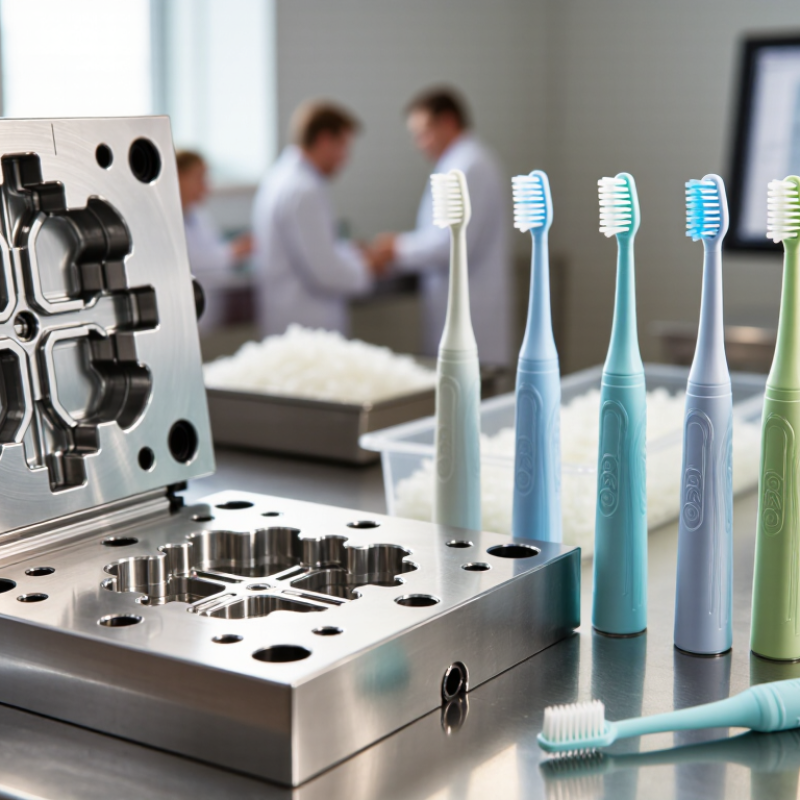
Before comparing mold designs, define the toothbrush clearly. Record the handle’s overall length, grip width, neck angle, and head dimensions. Specify where soft-touch areas, hanging holes, or decorative features belong. Small details matter. A shallow grip texture may look subtle on a drawing but can affect filling and release. Share a dimensioned drawing and a physical reference sample when available.
Production needs shape the mold as much as the product does. Estimate annual volume, target cycle time, preferred machine size, and expected production shifts. These details help determine cavity count, runner layout, cooling channels, and mold steel. Also confirm the planned handle resin and its shrinkage behavior with the material supplier. A beautiful mold that runs slowly or needs frequent cleaning can become an expensive compromise.
Ask how the mold will be tested, adjusted, and maintained. Request trial parts for dimensional checks, surface review, and assembly testing with the brush head and bristles. Check for flash around parting lines and uneven texture near the grip. Sometimes a specification is incomplete; that is not unusual. Leave room for sample-based corrections, but document every approved change. Clear requirements make troubleshooting less subjective and help the moldmaker build for repeatable production.



Copyright © CUSTOM Building Products 2025
Products | Resources | Interactive Tools | Warranties | Privacy Policy | Terms of Use | Technical Training
