



Choosing the right Machined Motor Shaft begins with understanding the motor’s real working conditions. Speed, torque, radial load, axial load, temperature, and duty cycle all matter. A shaft that performs well on a test bench may fail inside a dusty conveyor or a continuously running pump.
Dr. Alexander H. Slocum, a respected authority in precision machine design, has emphasized, “Design is an iterative process, not a one-time decision.” That principle fits shaft selection closely. Engineers must compare material strength, shaft diameter, keyway geometry, surface finish, bearing seats, and dimensional tolerances. Small details create large consequences. A rough bearing seat can increase vibration. A poorly positioned keyway can create a stress concentration. Excessive hardness may improve wear resistance but complicate machining and increase cost.
Real experience often exposes the overlooked issues. Measure the available housing. Check the coupling bore. Confirm whether the shaft faces reversing torque, shock loading, or frequent starts. Do not rely only on a catalog drawing. It may hide fit requirements, runout limits, or corrosion concerns.
The “strongest” shaft is not always the best choice. Weight, machinability, balance, lead time, and maintenance requirements also influence performance. Some recommendations may need revision after inspection. That is normal engineering, not failure.
This guide explains how to evaluate a Machined Motor Shaft with practical criteria and reliable technical reasoning. It also highlights common selection mistakes, because even experienced teams can miss one critical dimension.
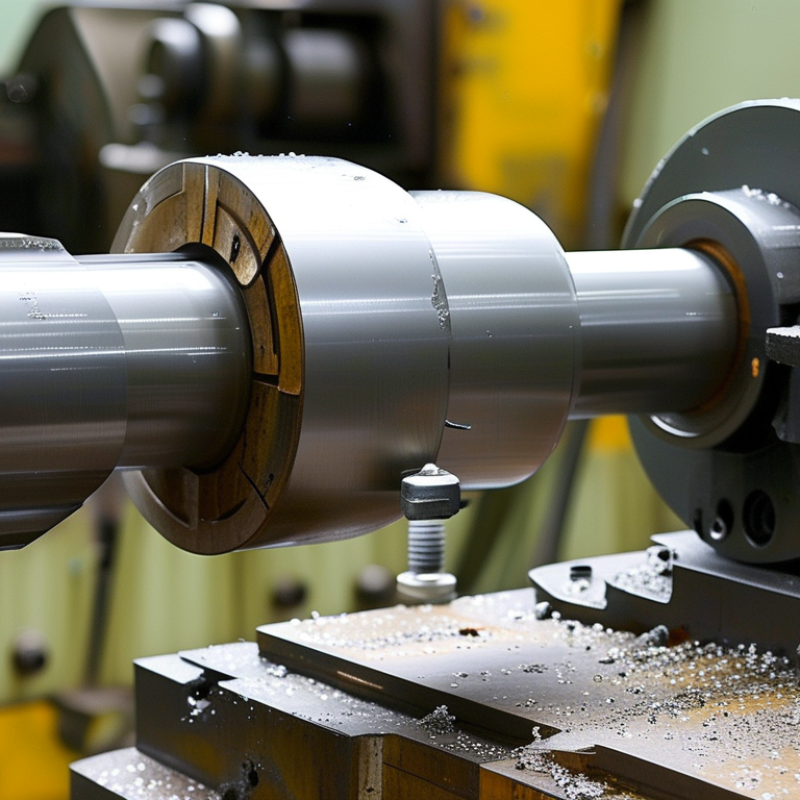
Choosing a machined motor shaft starts with the motor’s real operating conditions, not only its diameter. IEC 60034-1 defines how motors are rated for torque, speed, temperature rise, and duty. Identify the duty type carefully. S1 means continuous operation at steady load. Intermittent duties may include starts, stops, and cooling periods. A shaft designed for S1 may fail under repeated acceleration.
Calculate torque from power and speed:
where P is kilowatts and n is revolutions per minute. Check the highest starting and overload torque, not just the average value. Speed also affects the shaft’s critical speed, balance, and bearing loads. Small details matter. A keyway reduces the effective shaft section. Misalignment adds bending stress. Coupling weight can change everything.
Specify the shaft material, diameter, length, tolerance, keyway, surface finish, and runout requirement. For vertical motors, include axial loading. For reversing applications, inspect the key and fit more carefully. I have seen drawings that matched nominal torque but ignored short acceleration peaks. That was a costly assumption. IEC 60034-1 helps define the motor’s operating framework, but it does not replace a shaft stress calculation. Review torque, speed, duty cycle, inertia, and environment together before approving the machining drawing. Something may still be missing.



Copyright © CUSTOM Building Products 2025
Products | Resources | Interactive Tools | Warranties | Privacy Policy | Terms of Use | Technical Training
