



A room can look quiet and still feel tiring. In a glass meeting room, voices bounce between hard walls, making speech harder to follow. Acoustic Panels can reduce reflections, but the right choice depends on the room, its use, and the problem you want to solve. A panel’s appearance alone tells you little.
Professional standards offer useful reference points. ANSI/ASA S12.60 sets classroom criteria that include a maximum reverberation time of 0.6 seconds for certain smaller learning spaces. That figure is not a universal target for offices, restaurants, or homes. It does show why room volume and intended use matter. Reverberation time describes how long sound continues after its source stops; it is not the same as blocking noise from a neighboring room. That distinction is easy to miss.
A practical selection starts with listening: are conversations echoing, does speech feel unclear, or is outside noise intruding? Then consider panel absorption ratings, coverage, placement, ceiling height, and surface materials. ASTM C423 is a recognized method for measuring sound absorption, while product ratings should be checked against the test conditions and frequency data. More panels do not automatically mean a better room. Sometimes the real issue is the layout, an untreated ceiling, or sound leaking through a door. This guide explores how to match panel performance and placement to your space, while treating published ratings as evidence—not promises.
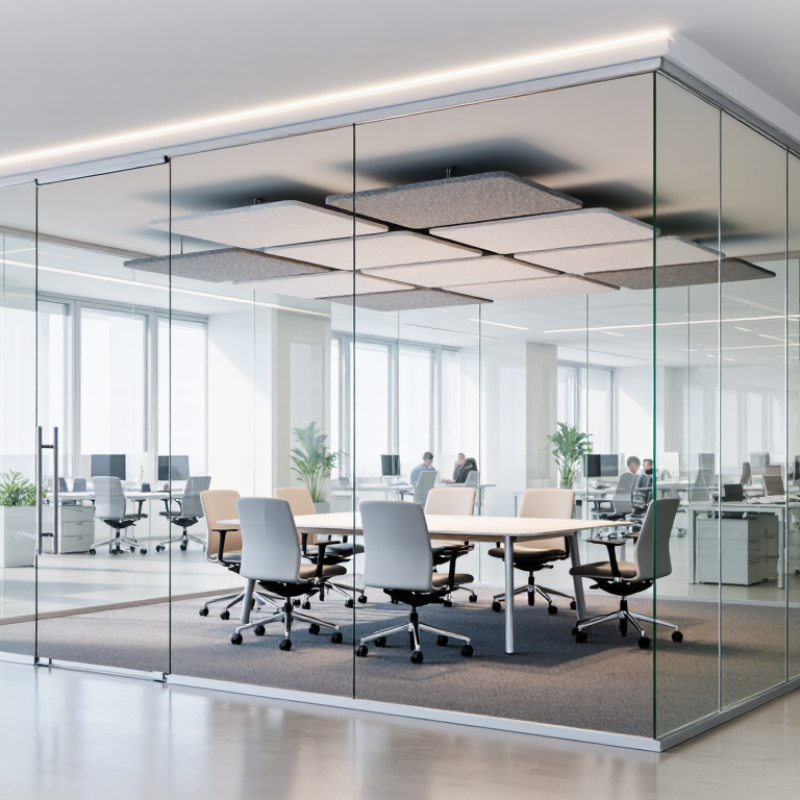
Before choosing acoustic panels, decide what the room must support: clear speech, music, or quiet concentration. RT60 is the time sound takes to decay by 60 dB after the source stops. ANSI/ASA S12.60-2010/Part 1 sets unoccupied classroom limits of 0.6 seconds for rooms up to 10,000 cubic feet, and 0.7 seconds for rooms between 10,000 and 20,000 cubic feet. These are classroom criteria, not universal targets for every home office or café. Measure before buying.
For broader planning, DIN 18041:2016 offers room-acoustic guidance based on room use, including speech-focused spaces. Record RT60 at several listening positions, with doors and furnishings in their usual state. A bare meeting room with glass walls may ring longer than a carpeted room of similar size. Compare measurements with a relevant use-based benchmark, then estimate the absorption needed. Panel coverage, ceiling height, and placement all affect results. A few decorative panels may change the sound without meeting the target. Phone apps can flag a problem, but calibrated measurement is more dependable. Recheck after installation.



Copyright © CUSTOM Building Products 2025
Products | Resources | Interactive Tools | Warranties | Privacy Policy | Terms of Use | Technical Training
