


Choosing Sus201 Stainless Coils for international projects requires more than comparing price lists. Buyers must connect material grade, production quality, service conditions, and delivery risks. Sus201 is an austenitic stainless steel containing less nickel than many common alternatives. This can reduce cost, but it may also provide lower corrosion resistance in humid, salty, or chemically aggressive environments. The cheapest offer is not always the safest decision.
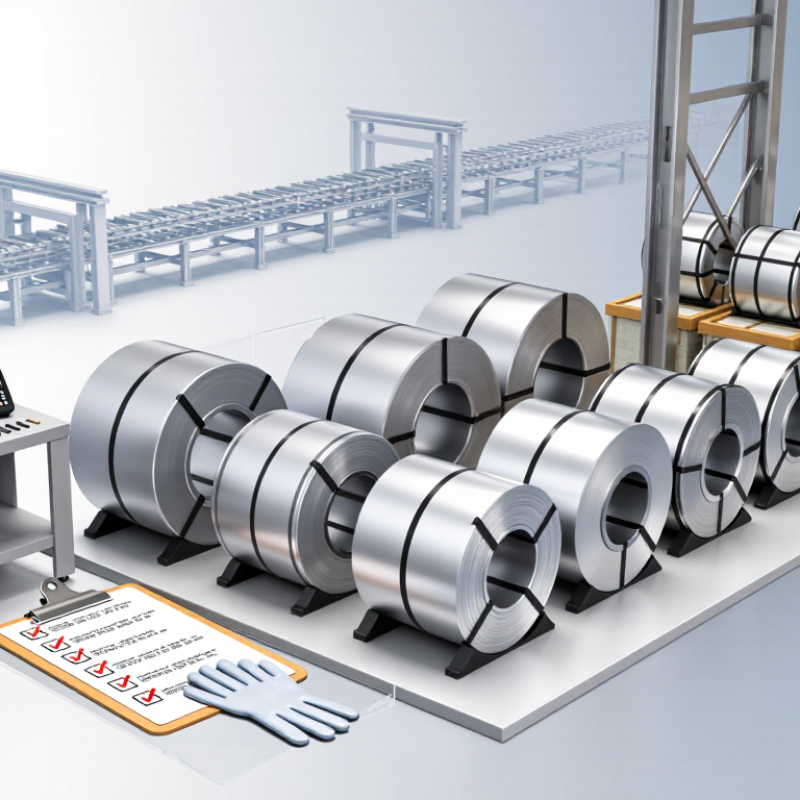
Experienced buyers usually begin with the application. Indoor panels, kitchen equipment, decorative trims, and light structural parts may suit Sus201. Coastal installations may require more careful evaluation. Ask suppliers for chemical composition, mechanical properties, surface finish, thickness tolerance, and coil weight. Mill test certificates should match the supplied batch. Independent inspection can verify dimensions, surface defects, hardness, and packaging condition before shipment.
Details matter. A coil with a bright surface can still contain edge cracks or inconsistent thickness. Check whether the finish is 2B, BA, brushed, or customized. Confirm inner diameter, outer diameter, loading limits, and seaworthy packaging. Also review the supplier’s production history, quality system, export experience, and response to claims. These checks reflect practical purchasing experience, not just catalog information.
There is no universal choice.
Some buyers overestimate price savings. I have seen specifications copied without checking the operating environment. That mistake can create staining, early replacement, and unexpected maintenance costs. Global procurement teams should compare total lifecycle value, not only the initial quotation. A reliable decision combines verified documents, realistic service conditions, clear inspection terms, and honest communication with the manufacturer. When uncertainty remains, ordering a small trial coil can reveal problems before full-scale purchasing.
When global buyers choose SUS201 stainless coils, composition deserves careful attention. SUS201 is an austenitic stainless steel with less nickel than many common grades. Manganese and nitrogen help maintain its structure and strength. Typical chemistry includes about 16–18% chromium, 3.5–5.5% nickel, and 5.5–7.5% manganese. Carbon, silicon, and nitrogen limits may differ by specification.
Chromium supports a passive surface film, which helps resist everyday atmospheric corrosion. However, SUS201 usually performs less reliably than higher-nickel grades in salt spray, acidic moisture, or coastal conditions. It also work-hardens during bending and rolling. A formed coil may become partly magnetic. This surprises inexperienced buyers.
Check the surface closely. Look for uniform brightness, clean edges, and no deep polishing lines. Ask for a heat number, chemical analysis, mechanical results, and applicable standard, such as ASTM A240 or EN 10088. Verify thickness across several points, not only one location. A low price can mislead. It is not flawless.
In practical use, SUS201 can suit indoor panels, kitchen equipment, decorative parts, and general fabrication. Welding and forming results depend on thickness, tooling, and process control. Confirm the intended environment before ordering large volumes. One overlooked detail matters: storage near carbon steel dust can create misleading rust marks. Proper packaging and dry transport protect the coil before installation.



Copyright © CUSTOM Building Products 2025
Products | Resources | Interactive Tools | Warranties | Privacy Policy | Terms of Use | Technical Training
