



Choosing Decorative Walls for global projects requires more than matching colors to a concept board. Materials must respond to climate, regulations, maintenance capacity, and local construction skills. A textured wall that performs well in a dry hotel lobby may deteriorate quickly in a humid coastal airport. The right decision begins with evidence, not visual preference.
The United Nations Environment Programme reported in its 2023 Global Status Report that buildings and construction consumed 32% of global energy and produced 34% of global carbon dioxide emissions. This context makes material selection a measurable responsibility. Decorative Walls can support lower-impact design when manufacturers provide verified environmental data, recycled content details, responsible sourcing evidence, and realistic service-life information. Environmental Product Declarations are especially useful because they allow project teams to compare products across defined life-cycle stages.
Market expectations are also changing. Dodge Construction Network’s World Green Building Trends 2021 report found that 42% of surveyed professionals expected most of their projects to incorporate green building practices by 2024. That expectation affects finishes, procurement documents, and client approval processes. Designers should examine fire performance, acoustic ratings, moisture resistance, cleaning requirements, and replacement methods before approving a sample. Local certifications may matter as much as international labels.
No material is perfect. A premium finish may require specialist installers or costly replacement panels. A lower-cost option may offer easier maintenance but weaker visual depth. I have seen attractive wall samples fail because the substrate was ignored. Global selection therefore needs a practical review: test the finish in its actual environment, confirm supplier support, and document assumptions clearly. Beauty matters, but reliable performance matters longer.
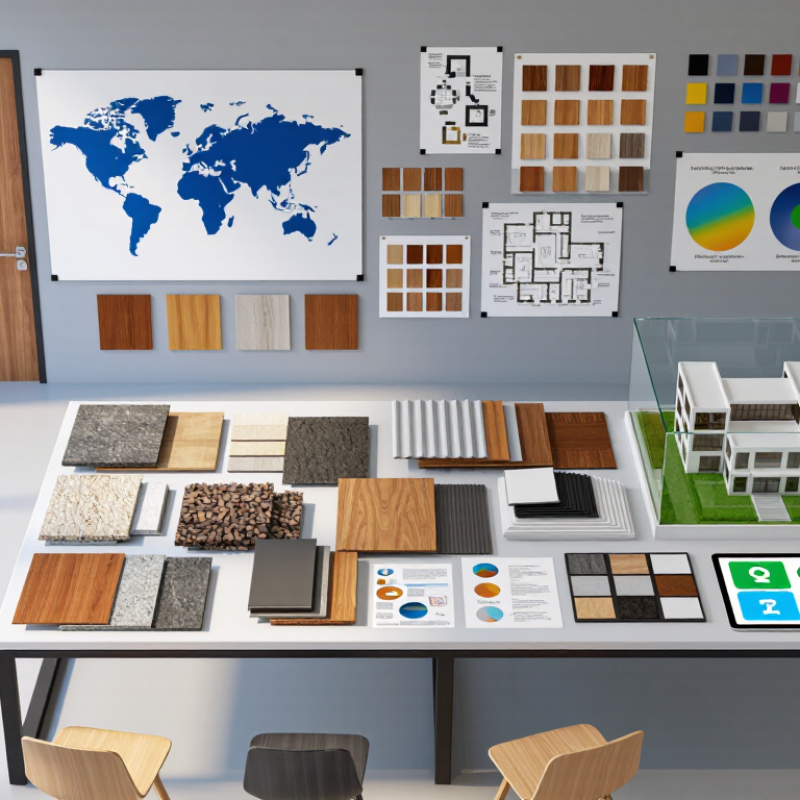
A wall that looks perfect in a showroom may fail in a coastal clinic. Start with climate: humidity, salt air, heat, freeze-thaw cycles, and seasonal movement. In humid regions, specify moisture-resistant cores and sealed edges. In dry climates, check joint gaps and surface cracking after rapid temperature changes. I have seen small, unprotected cut edges absorb water behind a durable-looking finish. That detail was easy to miss.
Occupancy changes the performance target. Corridors in hospitals need cleanable, impact-resistant surfaces. Hotel bedrooms may prioritize acoustics and visual warmth. Schools often require stronger resistance to scratches, stains, and repeated cleaning. Confirm fire, smoke, hygiene, accessibility, and acoustic requirements with local professionals. Codes differ between countries and sometimes between cities. Do not rely on a familiar specification. Service life also needs a realistic maintenance plan, including replacement access and cleaning methods. No specification is flawless; assumptions should be challenged early.
Tips: Create a project matrix for climate, occupancy, codes, and expected service life. Request current test reports for the exact wall assembly. Inspect sample joints, corners, and penetrations, not only flat panels. Ask installers how repairs will work five years later. A beautiful finish is not enough.



Copyright © CUSTOM Building Products 2025
Products | Resources | Interactive Tools | Warranties | Privacy Policy | Terms of Use | Technical Training
