



Brass Elbow fittings help plumbing systems turn tight corners without forcing pipes into sharp bends. This can make an installation beneath a sink or inside a cabinet neater. It may also reduce strain on connected lines. Still, choosing a fitting involves more than appearance. Material, connection type, pressure rating, and water chemistry all matter.
Brass is valued for its strength, machinability, and corrosion resistance in many common plumbing settings. Installers may use brass elbows near water heaters, under sinks, or where supply lines change direction. The fitting must match the pipe size and thread standard, and its rating should suit the system. Check the manufacturer’s specifications. Inspect the fitting for cracks, damaged threads, and clear labeling before installation. A solid appearance alone does not confirm compatibility.
This overview explores why brass elbows are commonly selected, where they can perform well, and what limitations to consider. It also covers connection styles and practical steps that help prevent leaks. No fitting suits every job. Water quality, nearby materials, and system requirements can affect the choice. Even experienced installers should verify the details rather than rely on habit. That extra check takes time, but correcting a leak inside a finished wall takes longer.
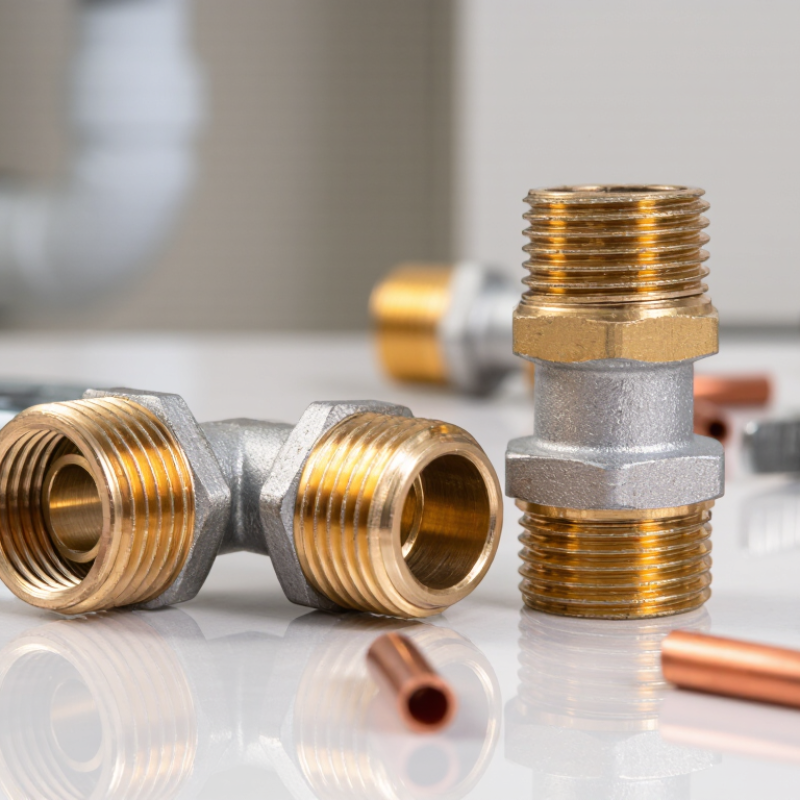
A brass elbow fitting is a shaped connector that changes a pipe’s direction, commonly by 45 or 90 degrees. Its curved passage guides water around corners in supply lines and equipment connections. Brass, a copper-zinc alloy, is often selected for its machinability and durability. The Copper Development Association’s Copper Tube Handbook provides pipe and fitting dimensions used to check compatibility. A fitting that looks sturdy can still be the wrong choice if its thread type or size does not match the pipe.
The bend also affects flow. Crane Technical Paper 410 compares fitting resistance by geometry, using loss coefficients and equivalent pipe lengths. As a general engineering estimate, a smooth 90-degree elbow may have a loss coefficient around 0.3–0.9; tighter or rougher designs can be higher. These are not guaranteed product values. Actual pressure loss depends on flow rate, internal diameter, bend radius, and connection design. Small details matter.
Tips: Check the fitting’s marked size and connection type before installation. Keep the inside passage free of debris, and follow the specified tightening method. A rushed joint can leak later.



Copyright © CUSTOM Building Products 2025
Products | Resources | Interactive Tools | Warranties | Privacy Policy | Terms of Use | Technical Training
