



Artistic Decorative Tiles can turn a plain wall, quiet entryway, or simple backsplash into a feature with character. Their color, pattern, texture, and handcrafted variation bring depth that paint alone rarely provides. Yet beauty is only part of the decision. A tile must also suit the room’s light, scale, cleaning needs, and daily use. A glossy surface may brighten a dim kitchen, while a textured finish can add warmth but collect grime in a busy cooking area. Small details matter.
Arts and Crafts designer William Morris offered a useful standard: “Have nothing in your houses that you do not know to be useful, or believe to be beautiful.” Artistic Decorative Tiles can meet both aims when selected with care. Samples viewed beside cabinets, floors, and natural light reveal more than a screen image. Check shade variation, grout width, edge finish, and maintenance guidance before committing. These steps are practical, not glamorous. Still, one sample may not show how a full wall will feel, and even a well-planned design can look different after installation. That uncertainty deserves a little humility. The strongest project is not always the boldest; it is the one whose decorative detail feels intentional, performs reliably, and continues to please after the room’s first impression fades.
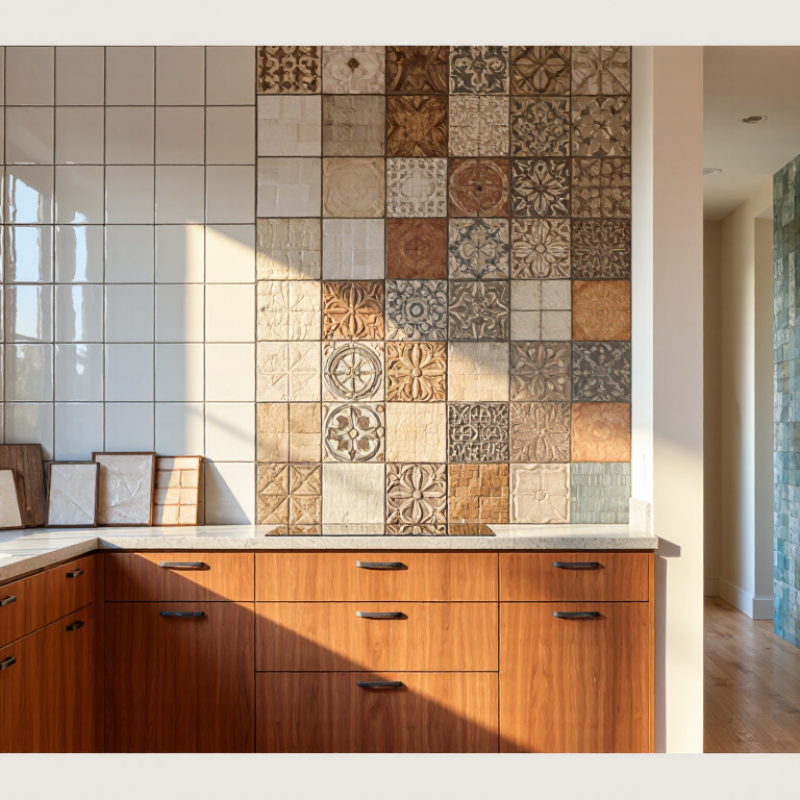
Artistic decorative tiles are not defined by ornament alone. They combine visual intention with practical qualities, such as a durable body, suitable finish, and dimensions that fit the space. Patterns may be painted, printed, carved, molded, or created through glaze. Texture, color variation, and edge detail give a surface depth that plain field tile often lacks. That matters.
A tile feels artistic when its design has a clear point of view. A repeating geometric rhythm can create order. A hand-drawn botanical motif may feel softer. Sometimes a restrained shift in tone is enough. Craftsmanship shows in crisp pattern alignment, even glaze coverage, and edges that sit neatly together. Small variations can add handmade character, but they should not conceal defects. The distinction can be subtle.
The setting also shapes how a tile reads. Glossy surfaces reflect light on a kitchen backsplash, while matte relief adds shadow to a quiet bathroom wall. For floors or wet areas, consider slip resistance, water absorption, and cleaning needs alongside appearance. View samples in the room’s actual light; a color that looks warm under showroom lamps may turn cool at home. A design can still miss the mark, so consider how its pattern and finish will work with nearby materials.



Copyright © CUSTOM Building Products 2025
Products | Resources | Interactive Tools | Warranties | Privacy Policy | Terms of Use | Technical Training
