



China’s slim-profile door industry is attracting architects, developers, and international distributors. Slim frame aluminum sliding doors combine larger glass areas with reduced visual obstruction. This design suits modern villas, apartments, hotels, and commercial interiors. Grand View Research reports continued growth in the global doors and windows market, supported by renovation, urbanization, and energy-efficiency demand. Mordor Intelligence also identifies aluminum systems as a significant segment because of their durability, low maintenance, and design flexibility. The opportunity is real. Yet, market growth does not guarantee supplier quality.
Choosing the best supplier requires more than comparing catalogue prices. Experienced buyers should examine alloy grades, wall thickness, thermal-break construction, glass specifications, drainage design, and hardware performance. Factory audits can reveal important details, including extrusion consistency, powder-coating control, and packaging methods. A well-made sliding panel should move smoothly, remain stable, and close without excessive force. Small defects become expensive after installation. That point is often underestimated.
Reliable Chinese manufacturers should provide tested performance data, technical drawings, samples, and installation guidance. Relevant benchmarks may include air permeability, water tightness, wind-load resistance, and thermal performance under applicable regional standards. Reports from the International Energy Agency continue to emphasize buildings’ major role in global energy consumption, making insulation a practical purchasing concern. Still, a low U-value alone cannot prove a complete system is suitable. Project location, glass configuration, installation quality, and local climate matter. No supplier is perfect. The strongest candidate is transparent about limitations, responds with precise documentation, and supports the product after delivery. This guide examines how to identify China’s best supplier of slim frame aluminum sliding doors through evidence, not attractive photographs alone.
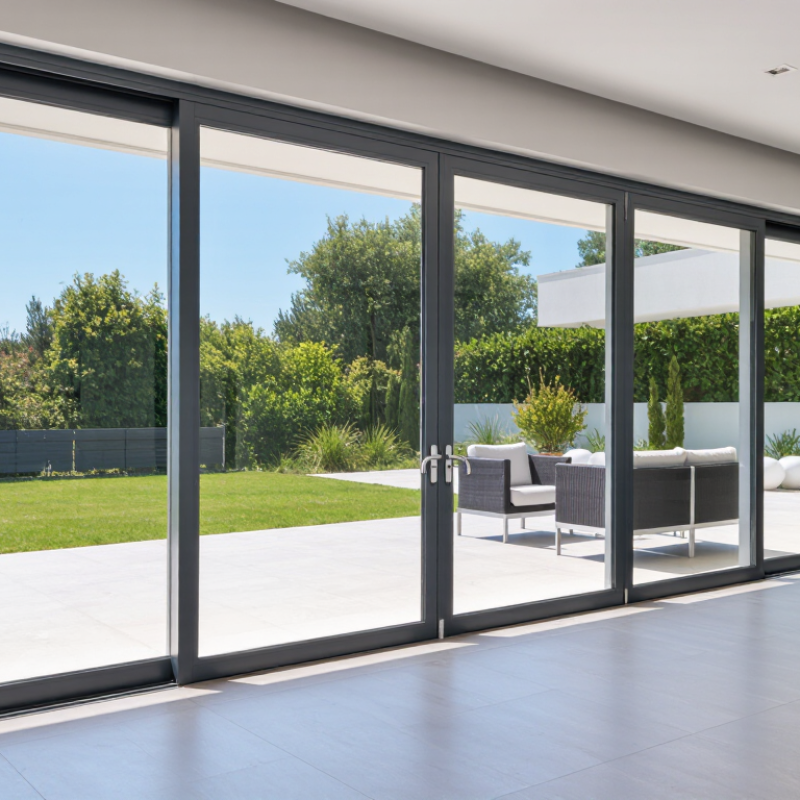
China’s best slim-frame aluminum sliding door supplier is not defined by appearance alone. It is defined by controlled production, honest communication, and tested performance. A reliable supplier should explain aluminum grades, wall thickness, surface treatments, and thermal-break options clearly. Vague answers create problems later.
Experienced suppliers usually provide working samples, not only polished photographs. Inspect the frame corners, roller movement, gasket compression, and drainage holes. Ask for air, water, wind, and operation test records when the project requires them. Factory audits can reveal cutting accuracy, powder-coating consistency, and storage conditions. Small details matter. A door that looks slim but rattles after installation is not a successful product.
A capable Chinese supplier should support custom dimensions, glass specifications, hardware choices, packaging, and installation guidance. Clear drawings and dimensional tolerances reduce mistakes between the factory and the building site. Confirm production schedules, inspection points, replacement procedures, and export documents before placing an order. Communication speed is useful, but technical accuracy matters more. I have found that sample approval can expose weaknesses in rollers or seals that brochures never mention. No supplier fits every climate or building design. Even a strong quotation deserves careful questions, especially about thermal performance and long-term maintenance.



Copyright © CUSTOM Building Products 2025
Products | Resources | Interactive Tools | Warranties | Privacy Policy | Terms of Use | Technical Training
