



Choosing the best Premium Plywood from China requires more than comparing prices or surface appearance. Quality begins with carefully selected veneers, stable core construction, and controlled bonding conditions. A clean face can still hide open gaps inside. Look closer.
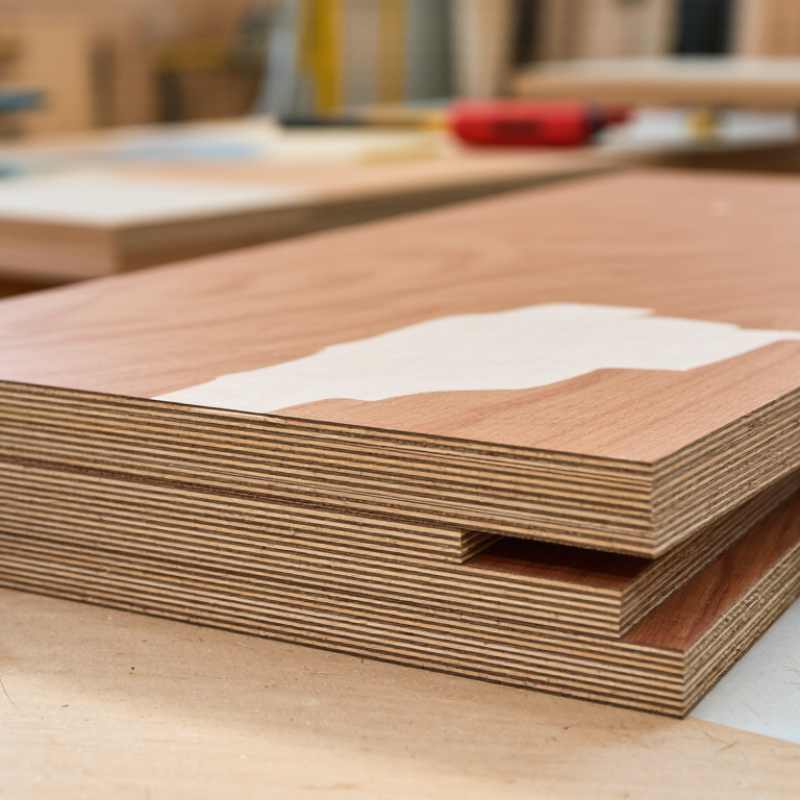
The strongest panels usually show consistent thickness, tight edges, balanced layers, and minimal core voids. Their surfaces should feel smooth, not waxy or excessively patched. Ask for test reports covering bonding strength, moisture resistance, formaldehyde emissions, and dimensional stability. Standards matter, but paperwork alone does not prove every shipment is excellent.
Wood-products researcher Dr. Fred M. Kamke has expressed a practical principle: “Plywood performance depends on the wood, the process, and the intended use.” That principle is useful when evaluating Chinese manufacturers. A furniture-grade panel may not suit exterior construction. A structural panel may feel too rough for visible cabinetry. The right choice depends on application, climate, loading, and finishing requirements.
Factory experience also matters. Visit the production line when possible, or request recent batch photographs, core samples, and independent inspection records. Check whether the supplier controls veneer drying, adhesive mixing, hot-press temperature, and final calibration. Small production details create large differences.
There is no universal winner.
Some buyers focus too heavily on species names. Others trust attractive certificates without checking their scope or validity. That approach needs reconsideration. The best Premium Plywood from China is the panel that consistently matches its declared grade, performs under real conditions, and arrives with traceable quality evidence. A thoughtful buyer should test samples before approving full production.
What Is the Best Premium Plywood from China?
Premium Chinese plywood is defined by performance, not a polished surface. The key benchmark is EN 314-2 Class 3 bonding. This class is intended for exterior conditions, including repeated moisture exposure. The adhesive line must resist delamination during severe water-based testing. A clean face is not enough. The core must also remain stable.
A practical inspection checks veneer thickness, core gaps, panel moisture, and glue spread. Test reports should identify the standard, laboratory, production batch, and test date. EN 314-2 Class 3 does not automatically prove low formaldehyde emissions or structural strength. Those properties require separate evidence. That distinction is often missed.
FAOSTAT’s 2023 Forestry Production and Trade database records China’s plywood output at more than 200 million cubic metres. This scale supports strong manufacturing capability, but volume can hide uneven quality. The ITTO Biennial Review and Assessment of the World Timber Situation 2023 also identifies China as a major force in global wood-product manufacturing and trade. Buyers should still examine factory controls, not only national statistics. In real procurement work, one weak core veneer can ruin an otherwise impressive panel. A certificate alone is not enough. Mistakes happen. Supplier records, independent testing, and incoming inspections provide better confidence.
A standards-based comparison framework for evaluating premium plywood without relying on company or brand names.
| Evaluation Dimension | Premium Benchmark | What to Check in the Product or Test Report | Relevant Standard or Technical Reference |
|---|---|---|---|
| Bonding quality | EN 314-2 Bonding Quality Class 3, suitable for exterior exposure when the panel is correctly designed, finished and installed. | Request a valid test report identifying the panel construction, adhesive system, test method, production lot and failure results. Class 3 confirms bonding durability; it does not by itself define strength, appearance or service life. | EN 314-1 and EN 314-2 |
| Exterior durability | Designed for repeated humidity or outdoor conditions, with all edges sealed or otherwise protected where required. | Confirm the intended use, face and back protection, edge-sealing requirements, installation details and whether the panel is exposed to weather, wetting or only high humidity. | EN 314-2 Class 3; project-specific durability requirements |
| Formaldehyde emissions | E1 classification for products placed on markets using the European harmonised wood-based panel framework. | Look for a laboratory result using the applicable method. Under EN 13986, E1 corresponds to chamber emissions of no more than 0.124 mg/m³ under EN 717-1, subject to the applicable product route and regulatory requirements. | EN 13986; EN 717-1 |
| Veneer quality | Uniform veneer thickness, tight joints, limited core gaps, minimal overlaps and consistent grain orientation. | Inspect cut edges and panel surfaces for open gaps, loose knots, core splits, telegraphing, patches, overlaps, sanding-through and excessive face repairs. | EN 635 series; project appearance specification |
| Panel construction | Balanced cross-laminated veneers with stable lay-up, appropriate face orientation and a clearly specified number of plies. | Verify nominal thickness, actual thickness tolerance, veneer sequence, core species, face species and whether the lay-up is balanced for the intended application. | EN 315; EN 323; product technical specification |
| Dimensional stability | Flat panels with controlled thickness, squareness and moisture content appropriate to the end use. | Check moisture content, thickness swelling, edge straightness, squareness, warping and the storage conditions before installation. | EN 322; EN 12872; EN 315 |
| Mechanical performance | Declared bending strength, modulus of elasticity, density and shear performance that match the required use. | Do not infer strength from the words “premium” or “Class 3.” Compare tested values with the design requirements for flooring, formwork, furniture, transport, cladding or structural use. | EN 310; EN 789; EN 12369-2 where applicable |
| Surface finishing | Smooth, evenly sanded faces with consistent appearance and a surface suitable for coating, laminating or direct use. | Check sanding marks, dents, resin pockets, face repairs, color variation and coating compatibility. A smooth face does not automatically indicate exterior durability. | EN 635-2; agreed visual grading specification |
| Thickness and dimensions | Consistent nominal thickness and accurately controlled length, width and squareness throughout the shipment. | Measure samples from different pallets and production lots. Confirm whether dimensions are specified before or after sanding and identify the applicable tolerance class. | EN 315; EN 324-1; EN 324-2 |
| Traceability and quality control | Each shipment can be linked to a production date, batch, specification, test results and inspection record. | Request batch identification, packing-list details, inspection records, retained samples and a documented process for handling nonconforming panels. | Factory quality plan; applicable product conformity system |
| Best-practice buying decision | Select the panel whose verified bonding, emissions, appearance, mechanical properties and dimensional tolerances meet the project specification—not simply the lowest price. | Require a representative sample, independent testing where risk is high, written acceptance criteria and inspection before shipment. | Project specification and applicable destination-market regulations |



Copyright © CUSTOM Building Products 2025
Products | Resources | Interactive Tools | Warranties | Privacy Policy | Terms of Use | Technical Training
