



Opaque Stained Glass Sheets can bring a bold, steady color to a window panel, cabinet insert, lamp, or mosaic. They can also add privacy where clear glass would reveal too much. But “opaque” does not mean every sheet looks or behaves the same. Some surfaces are matte; others have ripples, streaks, or subtle color shifts. Light may pass through some sheets, while others appear nearly solid.
A line often attributed to glass artist and designer Louis Comfort Tiffany says, “Color is to the eye what music is to the ear.” It’s a useful thought when choosing glass: color changes with the light around it. Check a sample near the project site, not only under bright studio lamps. Notice how it looks at noon and again in the evening. Small details matter.
This guide to the 10 best Opaque Stained Glass Sheets considers color, surface texture, consistency, and practical handling. It also looks at how each option may suit a particular project, from a quiet privacy panel to a vivid decorative accent. Before buying, confirm the sheet’s thickness and dimensions, and check whether its finish matches your design. If possible, test a small offcut with your scoring and cutting tools. That extra step can prevent an expensive mismatch. It is not foolproof, though; glass can vary, and careful planning cannot remove every surprise.
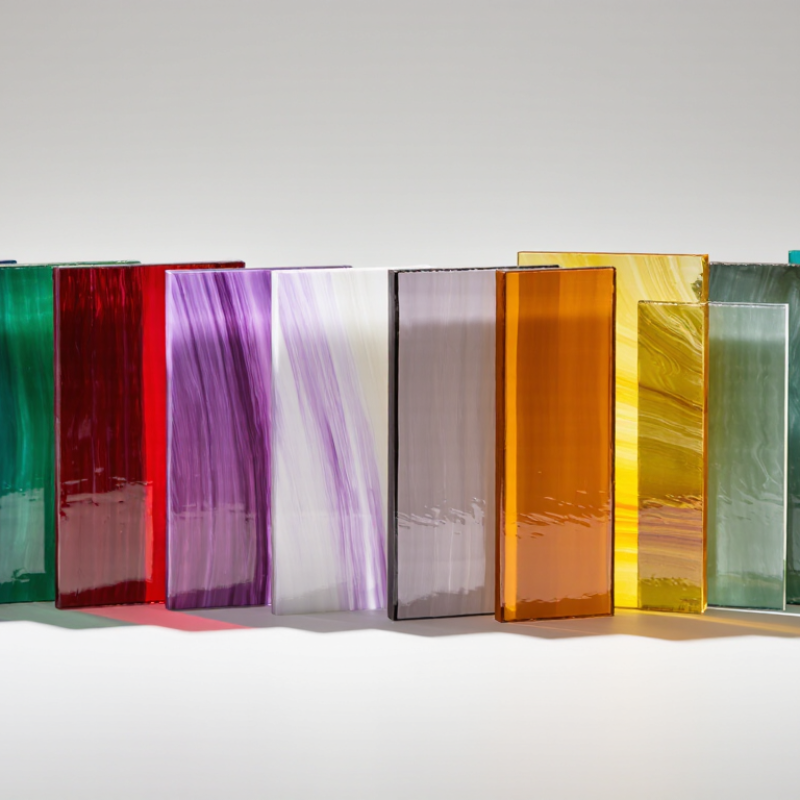
Opaque stained glass is made to conceal what lies behind it, rather than provide a clear view through the sheet. Its color and surface remain visible, while objects on the other side appear blurred or hidden. Unlike transparent glass, it does not create crisp views or sharp light patterns. Light behaves differently. Depending on the glass’s density and finish, a strong light source may show through faintly, or barely at all. Hold a sample near a window and then against a darker background; the color can look surprisingly different.
Opaque sheets are useful when a project needs bold color, privacy, or a solid visual field. Makers use them in panels, cabinet inserts, decorative accents, and designs where clear glass would distract from the shapes. The material may be smooth, mottled, or textured, so the surface affects how neighboring pieces look together.
In practice, a color that seems even in a small sample can vary across a larger sheet. That can be frustrating. Check the sheet under the lighting your finished piece will use, and consider how its edges will sit beside transparent or translucent glass. These categories can overlap in appearance, so a quick visual check is not always enough. A small test piece can reveal more than a color chart.



Copyright © CUSTOM Building Products 2025
Products | Resources | Interactive Tools | Warranties | Privacy Policy | Terms of Use | Technical Training
