



A greenhouse cover does more than keep rain off a crop. It shapes how much light reaches leaves, how heat builds during the day, and how quickly a grower must replace worn material. Greenhouse Covering Film comes in several forms, from simple polyethylene sheets to specialized films with UV, anti-drip, or thermal properties. The right choice depends on climate, crop, structure, and budget. Small details matter.
This guide compares seven greenhouse films for buyers working in different growing conditions. It looks at light transmission, thickness, durability, heat retention, and practical handling—not just the claims on a product label. A film that performs well in a cool, windy region may not suit a hot site with intense sunlight. Installation quality also matters; loose edges and poor tension can shorten a cover’s useful life. No film is perfect.
Product specifications can vary by manufacturer, and published performance figures may not reflect every farm’s conditions. Treat them as a starting point, then confirm details such as UV treatment, warranty terms, and recommended service life with the supplier. Where possible, compare samples or speak with growers using similar structures. I would not rank one material as universally best. The better question is which film offers a dependable balance for your crop, local weather, and replacement cycle.
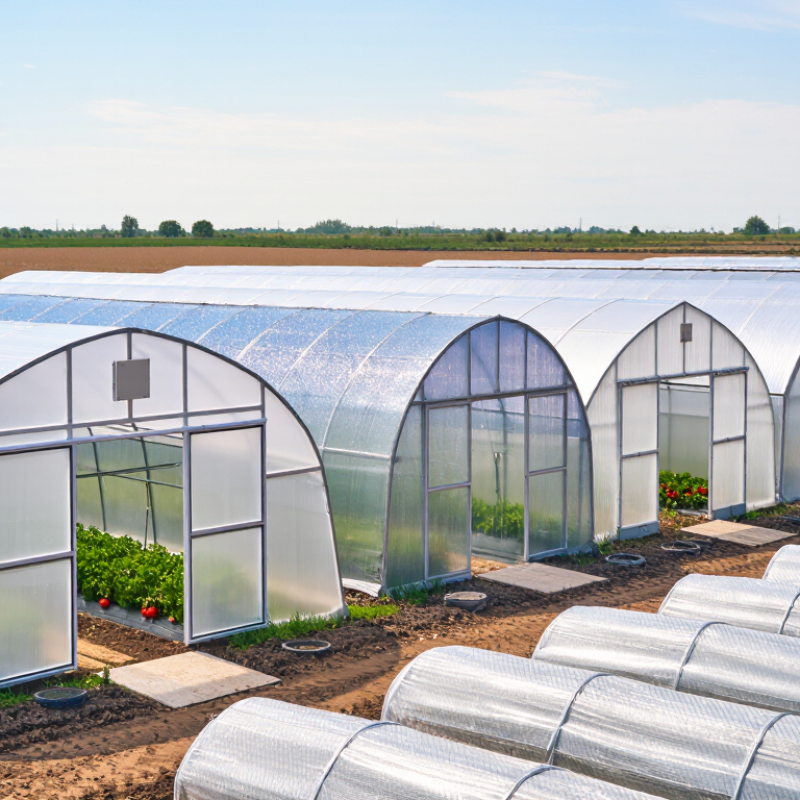
7 Best Greenhouse Covering Films for Global Buyers
Understanding Greenhouse Covering Films and Their Purpose
A greenhouse covering film is more than a rain shield. It controls sunlight, heat loss, and exposure to wind and rain. Clear films admit strong light, while diffusing films soften harsh sun and reduce sharp leaf shadows. The best option depends on the crop, climate, season, and frame design—not price alone. FAO’s 2013 Good Agricultural Practices guide for greenhouse vegetable crops identifies cover selection as part of managing light and growing conditions.
UMass Extension’s greenhouse energy guidance reports that double-layer polyethylene can reduce heat loss by about 30% compared with a single layer. That matters on cold nights. Yet extra layers can reduce light slightly, and dusty or aging film can weaken performance. A high-spec film can still disappoint if it is poorly installed. Film is not maintenance-free.
Tips: Check light-transmission and anti-drip specifications against crop needs. Inspect the film after storms, tighten loose edges, and replace cloudy sections before plants stretch toward weak light.



Copyright © CUSTOM Building Products 2025
Products | Resources | Interactive Tools | Warranties | Privacy Policy | Terms of Use | Technical Training
