


Buying a 358 fence across borders is not simply a matter of comparing prices. The cheapest quotation can hide weak steel, incomplete accessories, or expensive inland delivery. Global buyers need a clearer method.
Daniel Mercer, a perimeter-security consultant with more than twenty years of field experience, says, “A 358 fence should be judged as a complete security system, not as separate wire panels.” That principle matters. A panel may look strong under warehouse lighting, yet perform differently after outdoor installation. Check wire diameter, mesh accuracy, panel size, post strength, coating thickness, and connection hardware. Small gaps can affect both security and installation speed.
This guide presents seven practical buying tips for international purchasers. It considers factory experience, material specifications, surface treatment, packaging, certifications, lead time, and after-sales support. Ask for test reports and clear technical drawings. Request close-up photographs of welds and coating edges. Confirm whether the quoted price includes posts, clamps, bolts, gates, and export packaging. It often does not.
Do not ignore the destination site. Coastal air, heavy rain, strong wind, and uneven ground can change the required specification. A powder-coated 358 fence may need different protection from a hot-dip galvanized model. Local installers can also reveal problems that a sales brochure misses.
Some buyers focus too heavily on the first invoice. I understand why. Budget pressure is real. Still, replacement panels, delayed containers, and missing fittings can cost more than a modestly higher purchase price. Compare the complete delivered solution, then challenge your own assumptions before placing the order.
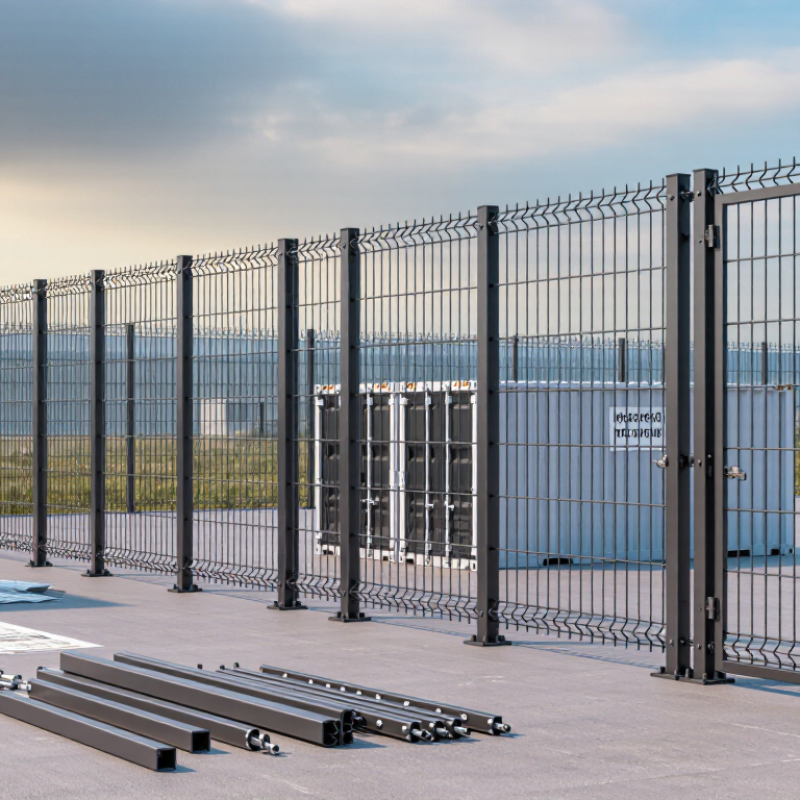
358 security fence uses welded steel mesh with narrow 76.2 × 12.7 mm openings. This design limits climbing footholds and restricts hand access. It also preserves clear sightlines around sensitive sites. Common applications include airports, rail facilities, data centers, utilities, schools, and correctional facilities. MarketsandMarkets’ 2023 Perimeter Security Market report valued the sector at approximately USD 9.4 billion in 2023. It forecasts about USD 14.2 billion by 2028. Demand is rising, but fence selection still depends on site risk, climate, and maintenance access.
Tips: Global buyers should verify wire diameter, panel height, coating thickness, and welded-joint quality. Ask for test records under EN 10223-7 or an equivalent national standard. Galvanized steel suits humid areas, while additional polymer coating may improve corrosion resistance. Do not judge protection by height alone. Gate design, hinges, locks, lighting, and camera coverage can create weaker points. Visibility matters.
Installation details deserve careful review. Concrete strength, post spacing, soil movement, and drainage affect long-term stability. A 2024 International Facility Management Association survey reported that maintenance and lifecycle planning remain major concerns for facility professionals. That supports choosing replaceable panels and accessible fasteners. Some assumptions fail. A taller fence may still perform poorly beside trees, equipment, or uneven ground. Measure twice. Request samples, coating certificates, and independent inspection before shipment.


Copyright © CUSTOM Building Products 2025
Products | Resources | Interactive Tools | Warranties | Privacy Policy | Terms of Use | Technical Training
