



In 2026, the Arched Front Door is moving beyond period-style decoration. It is becoming a practical focal point for warmer, more distinctive entrances. Homeowners now want doors that soften rigid façades, improve daylight, and create a stronger first impression. The curve can feel architectural, not merely ornamental.
Industry evidence supports this direction. The National Association of Home Builders’ 2024 What Home Buyers Really Want report identifies attractive exterior design and welcoming outdoor entry features as important buyer priorities. Houzz’s 2024 U.S. Houzz & Home Study also shows continued investment in exterior renovations, although it does not isolate arched doors as a separate category. That limitation matters. Trend claims should not outrun the available data.
Energy performance remains essential. The U.S. Department of Energy warns that poorly sealed doors can increase air leakage and comfort problems. Therefore, leading 2026 designs will pair arched profiles with insulated cores, low-emissivity glazing, reliable weatherstripping, and professionally installed thresholds. Materials will likely include natural oak, walnut stains, textured fiberglass, and dark metal hardware. Some designs may use narrow glass panels to balance privacy with daylight.
Small details matter.
A successful entrance should also suit the building’s proportions. A tall arch may look elegant on a two-story façade but crowded beside a low roofline. I have seen beautiful doors weakened by mismatched trim and careless installation. That is the uncomfortable lesson: visual drama cannot compensate for poor engineering. This guide examines the strongest Arched Front Door trends for 2026 through design evidence, performance standards, and realistic homeowner experience.
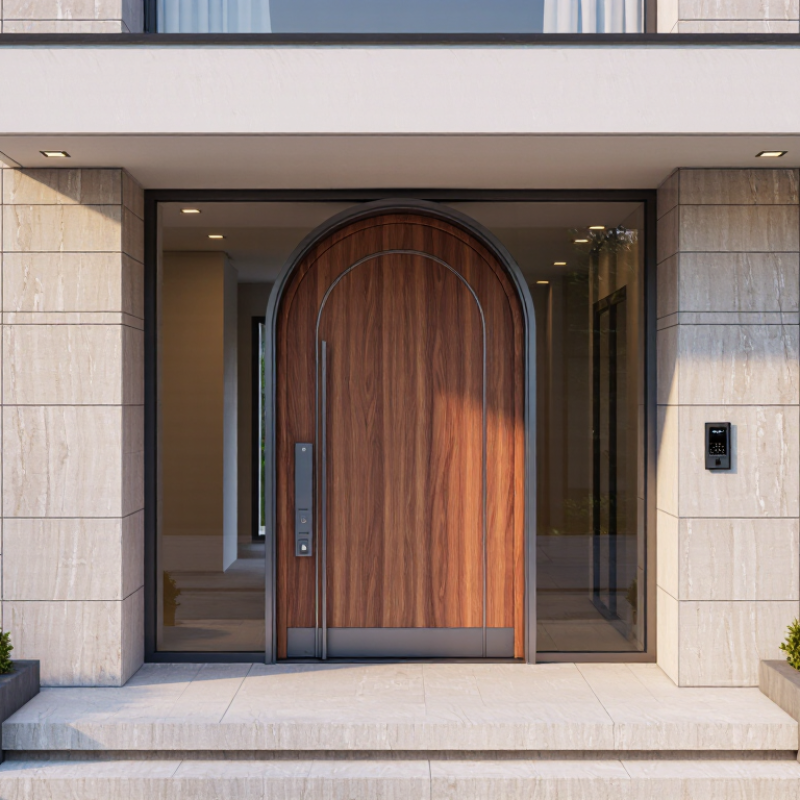
A 2026 arched front door is defined by proportion, performance, and personal character. The curve should follow the home’s architecture, not dominate it. A narrow arch suits compact façades, while a broad radius creates a stronger entrance statement. Current design research supports this direction. The American Institute of Architects’ 2024 Home Design Trends Survey reported continued interest in natural light, flexible spaces, and stronger indoor-outdoor connections. An arched door can support all three through taller glazing and a wider visual opening.
Materials also matter. Fiberglass and engineered wood offer stable performance in changing weather, while solid timber provides warmth and visible craftsmanship. The U.S. Department of Energy advises careful weatherstripping and low-emissivity glazing to reduce air leakage and heat transfer. In practice, the best 2026 door combines a thermal break, insulated glass, multipoint locking, and a properly sealed threshold. Decorative appeal cannot repair poor installation.
Tips: Measure the opening before choosing the arch. Request a full-size elevation drawing. Check the door’s U-factor and air-leakage rating. Match the handle height with nearby windows.
A useful detail is the interior reveal. A deep, shadowed frame makes the curve feel intentional. Soft bronze hardware and textured glass can add depth without looking theatrical. Still, not every home needs an oversized arch. That assumption deserves reconsideration. A modest arch may age better, especially when the surrounding façade already has strong visual features.



Copyright © CUSTOM Building Products 2025
Products | Resources | Interactive Tools | Warranties | Privacy Policy | Terms of Use | Technical Training
