



Choosing the right gate valve in 2026 requires more than comparing sizes, prices, and connection standards. Global buyers now evaluate pressure class, temperature range, fluid behavior, materials, actuation, and maintenance access. A valve that performs well in clean water may struggle with abrasive slurry, steam, or corrosive chemicals. The operating environment decides the design.
This guide examines rising gate valve types for industrial plants, energy projects, water networks, and process facilities. It compares resilient-seated, metal-seated, wedge, parallel-slide, slab, and cryogenic designs. Each option has practical strengths and limitations. Some offer tight shutoff. Others tolerate heat, solids, or repeated cycling better. None is ideal everywhere.
Valve engineer Richard W. Greene is often associated with a useful principle: “Valve selection is an engineering decision, not a catalog exercise.” That idea still matters for international purchasing teams. Buyers should verify standards, body materials, bonnet construction, stem design, testing records, and supplier support. Small details can cause large failures. A poorly chosen coating may blister. An undersized actuator may stall during emergency operation. I have also seen product comparisons overstate service life without explaining testing conditions. That deserves caution.
The following overview helps readers connect valve type with real operating demands. It also highlights overlooked questions, including installation direction, spare-part availability, inspection access, and total lifecycle cost. Price matters. Reliability matters more.
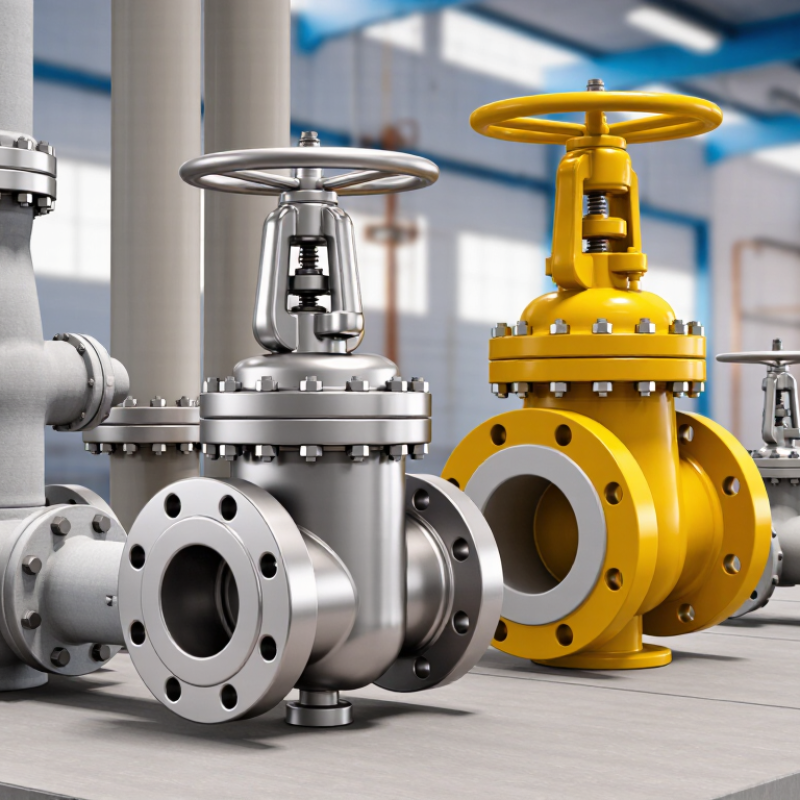
A gate valve controls flow by moving a gate perpendicular to the pipeline. When fully open, it creates limited resistance and supports efficient fluid movement. When fully closed, it provides dependable isolation. It is not normally suitable for throttling. Partial opening can cause vibration, seat damage, and uneven wear.
Small details matter.
Common designs include wedge, slab, rising-stem, and non-rising-stem valves.
Wedge gates suit many water, steam, and industrial services. Slab gates are often selected for pipelines requiring a clear, low-turbulence passage.
A rising stem gives visible position confirmation. A non-rising stem saves space, but its condition is harder to check.
Selection should begin with medium, pressure, temperature, and pipe size. Confirm the valve body and trim materials against corrosion risks.
Metal seats handle demanding temperatures, while resilient seats often provide tighter sealing in cleaner services. Check the end connection, face-to-face dimension, actuator torque, and available installation space.
Manual operation may suit small valves, but larger sizes can require a gearbox or powered actuator. Review applicable testing and safety standards for the destination market.
A neglected point is maintenance access. A valve that fits the line may still be impractical to service.
The final choice is rarely perfect. Recheck the data.



Copyright © CUSTOM Building Products 2025
Products | Resources | Interactive Tools | Warranties | Privacy Policy | Terms of Use | Technical Training
