


The 2026 Kids Bed market is moving beyond bright colors and simple frames. Global buyers now want safer designs, flexible functions, and stronger proof of quality. A bed may include hidden storage, adjustable rails, reading lights, or a compact desk. However, every added feature needs careful testing. More functions can also create more failure points.
Dr. Harvey Karp, pediatrician and child-sleep expert, has said, “The safest place for a baby to sleep is on a firm, flat surface.” This principle remains important for every Kids Bed category, even as children grow older. Buyers should examine mattress support, guardrail height, edge finishing, ventilation, and assembly strength. They should also request test reports, material declarations, and clear age recommendations from suppliers. Safety is not a visual feature.
Sustainability will influence purchasing decisions in 2026. Buyers may prefer certified wood, water-based coatings, recycled packaging, and replaceable hardware. Modular beds can reduce waste because families may reuse parts after a child grows. Still, “eco-friendly” claims require evidence. Marketing language is not enough.
Regional preferences will remain different. European buyers may emphasize compact dimensions and minimalist styling. North American buyers may seek storage and larger sleeping surfaces. Asian markets may favor multifunctional designs for smaller rooms. One global design may fail locally. That is a useful warning.
The strongest suppliers will combine practical experience, transparent documentation, and responsive after-sales support. Trends matter, but children’s comfort matters more. The best Kids Bed is not always the most impressive one. It is the one that works safely in real homes.
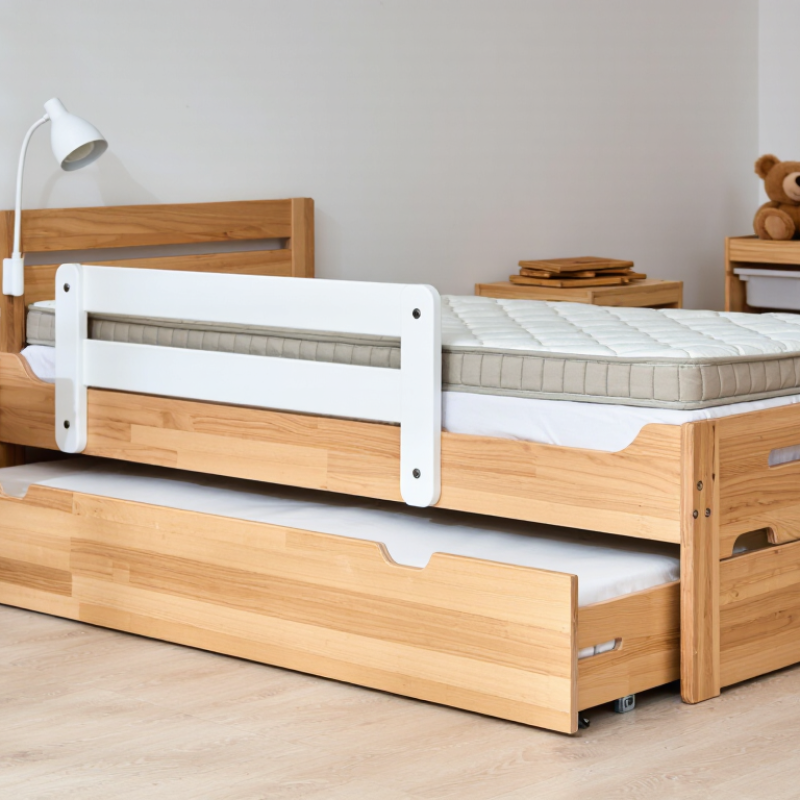
Children’s beds are moving from simple furniture to adaptable, space-saving products. The United Nations World Population Prospects 2024 reports global fertility at about 2.25 births per woman in 2024. Fewer children in many markets may increase demand for longer-lasting beds, not larger volumes. Urban households also face smaller bedrooms. OECD Family Database data shows that housing costs remain a major pressure for families across many developed economies. Buyers may prefer bunk beds, storage drawers, and adjustable frames that survive several growth stages.
Safety and sustainability now influence purchasing decisions. The U.S. Consumer Product Safety Commission continues to highlight entrapment, fall, and mattress-fit risks in children’s furniture. Global buyers should request test records, material declarations, and clear assembly instructions. Euromonitor’s 2025 Home and Garden analysis points to stronger interest in durable, repairable household products. Yet “eco-friendly” claims can be vague. That weakness deserves more scrutiny. Recycled content alone does not prove safer materials or lower emissions.
Tips: Measure the room, staircase, and doorway before ordering. Check guardrail height and mattress compatibility. Ask whether replacement parts remain available. Avoid designs that look attractive but cannot adapt. A beautiful bed may become waste after two years. Growth-adjustable structures, low-VOC finishes, and washable surfaces offer practical value, but buyers should verify every claim through independent documentation.



Copyright © CUSTOM Building Products 2025
Products | Resources | Interactive Tools | Warranties | Privacy Policy | Terms of Use | Technical Training
